
Australian sawfly
Hemichroa australis
Description
How to identify
The Australian sawfly (Hemichroa australis) is a member of the Hymenoptera order and the Tenthredinidae family. Despite the name, it is a significant pest that affects various deciduous trees in specific regions.
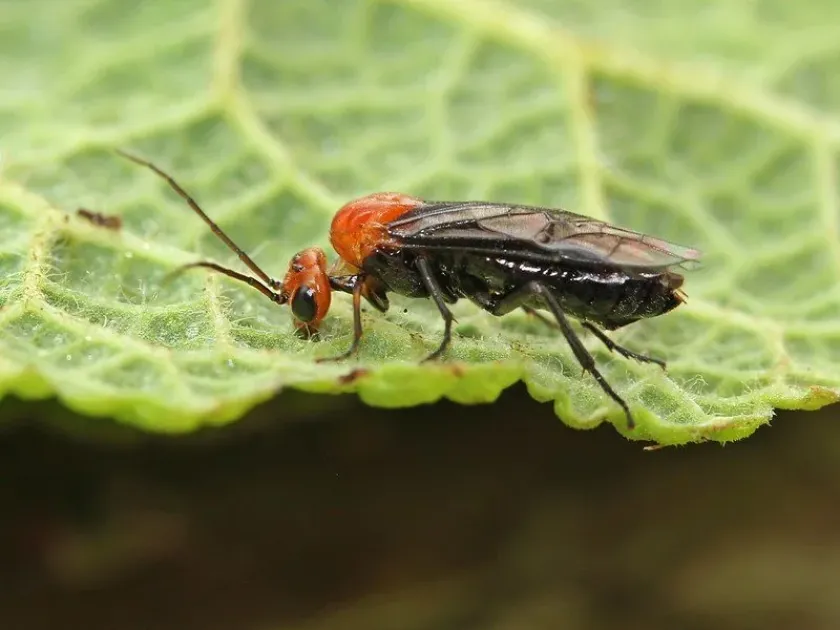
Adult sawflies look like small wasps but lack the narrow waist characteristic of other Hymenoptera. Females have a specialized saw-like ovipositor used to cut into plant tissue to deposit their eggs.
The larvae resemble butterfly caterpillars but can be distinguished by the number of prolegs. They often exhibit gregarious behavior, feeding in groups to protect themselves and consume foliage more efficiently.
The life cycle undergoes complete metamorphosis, including egg, larva, pupa, and adult stages. The timing of each life stage is strictly synchronized with the phenology of their host plants.
Identification often requires careful inspection of the larval feeding patterns and morphological features, as different species of sawflies may inhabit the same host tree species.
What it damages
The Australian sawfly primarily feeds on trees within the Betulaceae family, such as birch and alder. They are known for their voracious appetite during the larval stage.
The larvae feed on the leaf blades, often causing heavy defoliation if the population density is high. This process significantly impairs the plant's ability to perform photosynthesis.
When a tree loses a significant portion of its leaves, it experiences a decline in vigor, which may stunt its growth and reduce the quality of timber in managed forest stands.
Severe infestations can leave the tree vulnerable to secondary stressors, including drought, opportunistic pathogens, and wood-boring insects that attack weakened trees.
In ornamental landscaping, the damage is primarily aesthetic, as the skeletonized or missing foliage ruins the visual appeal of the trees in parks and gardens.
Signs of infestation
The most visible sign of infestation is the skeletonization of leaves, where larvae consume the softer tissues while leaving the harder veins behind. This creates a distinct lacy pattern on the foliage.
Presence of frass (larval excrement) on the leaves or the ground beneath the canopy is a strong indicator of an active feeding colony.
As the feeding continues, leaves may turn yellow, curl, or drop prematurely. If a tree is heavily infested, the canopy will show significant thinning and gaps.
During the day, one can often spot larvae clinging to the edges of the leaves or along the midrib. They are sometimes found in clusters, moving in a synchronized manner as they feed.
Early-season signs include small slits in the leaf surface, which indicate where the female sawfly has inserted her eggs. Finding these slits can help in early intervention.
Control measures
Manual removal is a practical approach for small trees or isolated infestations. Shaking the tree and collecting the larvae from a cloth spread on the ground is highly effective.
Biological control involves maintaining a habitat that supports natural predators, such as parasitic wasps, predatory bugs, and insectivorous birds that feed on sawfly larvae.
Chemical insecticides are recommended only for severe infestations. Systemic or contact insecticides applied during the early larval stage provide the best results in protecting the canopy.
Cultural practices, such as ensuring adequate irrigation and fertilization, help maintain the health of the host trees, allowing them to recover from damage more effectively.
Regular monitoring starting in late spring is crucial. Catching the infestation early, before the larvae reach their final instars, significantly reduces the damage to the trees.
Taxonomy
- Latin name
- Hemichroa australis
- Order
- Hymenoptera
- Family
- Tenthredinidae
- EPPO code
- HEMHAU
Discussion
No discussions yet — be the first.