
Bolinus brandaris
Haustellum brandaris
Description
How to identify
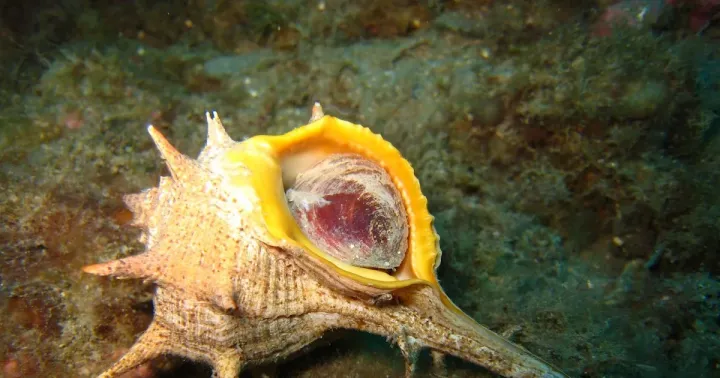
Bolinus brandaris (syn. Haustellum brandaris) is a predatory sea snail belonging to the family Muricidae. It is recognized by its long siphonal canal and spiny shell structure.
These snails can reach lengths of up to 90 mm. Their shells are usually beige or brownish, often covered with algae or deposits that act as natural camouflage in the marine environment.
It belongs to the order Neogastropoda. Unlike herbivorous species, this snail is an active predator equipped with a specialized radula used for boring into the shells of its prey.
The life cycle begins with planktonic larvae, which eventually settle on the seabed. Adults are typically found in shallow, warm coastal waters, often burying themselves in sediment during the day.
This species is well-known in history as one of the sources of Tyrian purple dye, though in the modern agricultural context, it is primarily viewed as a pest for shellfish farms.
What it damages
The primary economic impact of Bolinus brandaris is observed in the aquaculture sector, specifically within mussel and oyster farms.
The snail feeds by drilling small, clean holes into the shells of bivalves. It injects chemicals to paralyze and digest the soft tissue, leaving only empty shells behind.
A single snail can decimate a large number of bivalves over a short period, leading to significant losses for farmers specializing in commercial shellfish production.
Damage is most severe among younger shellfish, which have thinner shells that are easier for the predator to penetrate using its specialized mouthparts.
Continuous predation leads to reduced farm productivity, forcing farmers to implement frequent manual checks and invest in expensive anti-predatory measures.
Signs of infestation
The most reliable sign of an infestation is the presence of empty bivalve shells featuring perfectly circular, drilled holes.
Detection is often achieved through routine monitoring of submerged culture equipment. Clumps of snails can often be found congregating around the richest feeding areas.
The presence of yellow, scroll-shaped egg capsules attached to ropes, nets, or other farm infrastructure indicates active breeding of the pest.
Unexplained thinning of the cultured population, accompanied by shell debris at the base of the farm, serves as a clear indicator of predator activity.
Observations at night are highly effective as these snails are nocturnal, often emerging from the sediment to feed when environmental conditions are calm.
Control measures
Manual removal remains the most effective control method. Workers should regularly inspect culture lines and remove any snails found attached to the infrastructure.
The installation of fine-mesh exclusion nets can physically block the access of large predators to the cultured shellfish stocks.
Proper site management, including regular cleaning of farm structures to remove organic debris, helps reduce the attractiveness of the site to predatory snails.
Integrated pest management strategies may involve the use of baited traps placed strategically around the perimeter of the farming zone to intercept the snails.
Strict biosecurity measures, such as inspecting new equipment or seed stock before deployment, are essential to prevent the introduction of eggs to new areas.
Taxonomy
- Latin name
- Haustellum brandaris
- Order
- Molluscs
- Family
- Muricidae
- EPPO code
- MUREBR
Discussion
No discussions yet — be the first.