
Weevils
Haustellum
Description
How to identify
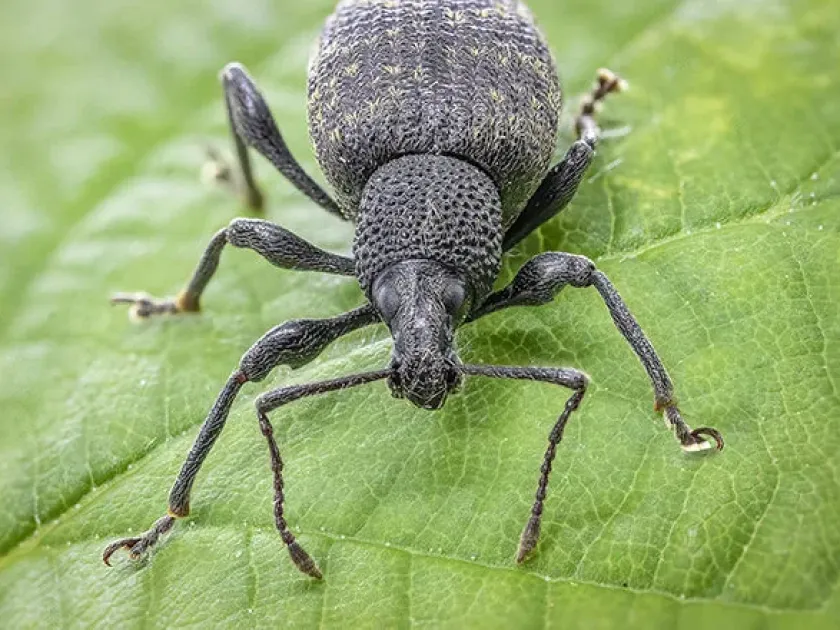
Weevils, belonging to the family Curculionidae, are one of the most diverse groups of beetles. They are easily identified by their elongated rostrum, a snout-like extension of the head which is often mistaken for a simple mouthpart.
Their physical appearance varies significantly, ranging in size from very small to quite large species. Many are covered with scales or fine hairs, and their color can range from dull earthy tones to vibrant, iridescent metallic colors.
The life cycle follows complete metamorphosis, consisting of the egg, larva, pupa, and adult stage. Larvae are typically legless, C-shaped grubs with white bodies and darker head capsules, adapted for burrowing inside plant tissues.
These insects are highly adapted to diverse environments. While some species prefer living in the soil, many others are specialized to feed on specific parts of plants such as fruits, stems, or leaves throughout their developmental cycle.
Adult weevils are known for their ability to enter a state of dormancy, which allows them to survive harsh weather conditions by overwintering in soil, leaf litter, or crevices in bark.
What it damages
Weevils are major agricultural pests affecting grains, fruits, vegetables, and ornamental plants. The damage is caused by both adults feeding on foliage and larvae consuming the inner tissues of seeds, stems, or fruits.
Infestation of grain crops often leads to significant economic loss as larvae hollow out the kernels, rendering them unsuitable for food production and reducing the quality of seed material.
In orchards, weevils cause extensive damage by destroying flower buds before they open, leading to total crop failure. The feeding activity creates entry points for secondary infections like fungal rots and bacterial blights.
Root damage caused by larval feeding weakens the plant, reducing its ability to absorb nutrients and water. This often results in stunted growth, yellowing foliage, and premature plant death in heavily infested areas.
The cumulative damage often goes unnoticed in the early stages because the most destructive part of the life cycle occurs deep within the plant tissues, out of sight from simple surface inspections.
When it appears
The activity of weevils typically begins in early spring, as temperatures rise and plants begin their seasonal growth. Adults emerge from their overwintering sites to feed on new leaves and buds.
The mating and egg-laying period often coincides with the flowering or budding stage of various crops. During this time, females use their rostrum to drill holes in plant organs, depositing eggs directly into the protected space.
Larval development generally takes place during the warm summer months. Depending on the species and geographical climate, some populations can produce multiple generations within a single growing season.
As autumn approaches, adult weevils enter a period of intensified feeding to build up the fat reserves necessary for survival through the coming winter months before finding suitable sheltered spots.
Monitoring for adult activity during the early spring is crucial for effective pest management, as it allows growers to implement control measures before egg-laying significantly increases the population density.
Signs of infestation
The most recognizable sign of adult weevil infestation is the presence of characteristic notches or semi-circular cuts on the margins of leaves, resulting from their daytime feeding habits.
Wilting or premature dropping of flower buds is a strong indication of larval activity. Dissecting these buds usually reveals the presence of small larvae feeding on the delicate reproductive structures.
Small, pin-sized holes on the surface of fruit or grain kernels serve as clear entry points where females have deposited their eggs. In many cases, these spots may show localized necrosis or discoloration.
The presence of fine, dark frass or excrement on the foliage or at the base of plants is a reliable indicator that the pests are actively feeding and reproducing in the immediate vicinity.
Overall plant weakness, poor fruit set, and general failure to thrive are common late-stage symptoms that point to either larval root damage or heavy foliage consumption by the adult population.
Control measures
Effective control starts with good cultural practices, such as deep tilling of the soil after harvest to disturb overwintering adults, larvae, and pupae, exposing them to environmental stress and predators.
Crop sanitation is essential; removing fallen fruits, buds, and plant debris reduces the available food sources and nesting sites, significantly limiting the population of the next generation.
Physical barriers such as sticky bands applied to the trunks of fruit trees can prevent adult weevils from crawling upwards to feed on buds, providing a non-chemical method of crop protection.
Chemical control involving systemic or contact insecticides should be timed precisely with the developmental phases of the pest to target the adults before they start the egg-laying process.
Integrated pest management (IPM) may also include the use of biological agents such as parasitic wasps or entomopathogenic fungi, which can naturally control larval populations in the soil and on plants.
Taxonomy
- Latin name
- Haustellum
- Order
- Molluscs
- Family
- Muricidae
- EPPO code
- HAUSSP
Discussion
No discussions yet — be the first.