
Haplothrips setiger
Haplothrips setiger
Description
How to identify
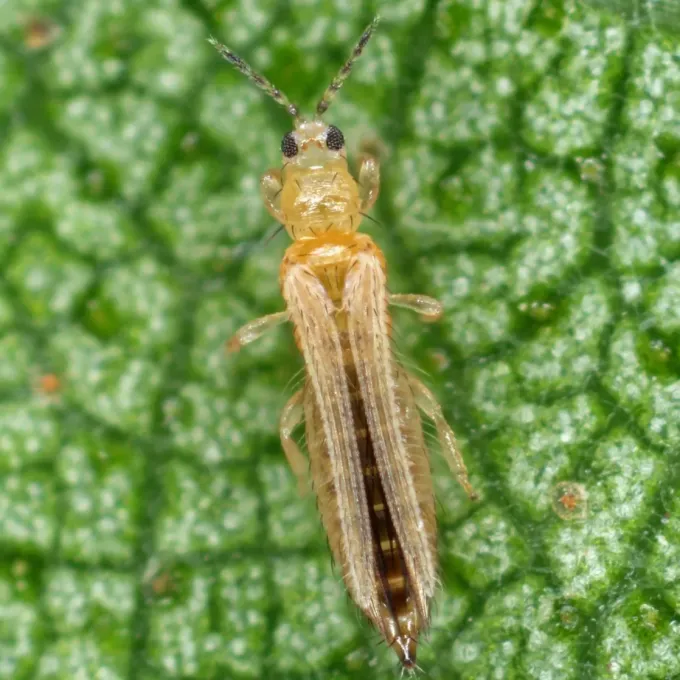
Haplothrips setiger is a species of thrips belonging to the order Thysanoptera and the family Phlaeothripidae. This small insect typically measures between 1.5 and 2.5 millimeters in length and has a dark, black-colored body.
Adult individuals possess two pairs of narrow wings, which are fringed with long, hair-like structures. Their mouthparts are of the piercing-sucking type, specialized for feeding on the cellular sap of plants.
The larvae progress through several developmental stages and are usually brighter in color, ranging from yellow-orange to red. While the early larval stages are highly mobile, they become less active before searching for a suitable site for pupation.
A distinctive feature of this species is the presence of long setae (bristles) on their body, which help the insect maintain its grip on plant structures. Identification in the field can be challenging due to the morphological similarity with other species of the genus Haplothrips.
The pest primarily overwinters as adults under crop residues or within the top layer of the soil, providing protection against harsh winter temperatures.
What it damages
The primary hosts for Haplothrips setiger are cereal crops, specifically winter and spring wheat. It can also be found on barley, rye, and various wild grasses.
During the growing season, adults and larvae congregate within the grain ears, feeding on both floral structures and developing kernels. This feeding activity drains the plant's resources and leads to deformation of the grain heads.
The most significant damage occurs during the milk stage of grain development, when the pests feed intensively on the ovaries. This causes a substantial reduction in the thousand-grain weight and overall grain quality.
Infested ears often appear bleached or shriveled, reducing the total yield per hectare. Furthermore, the puncture wounds created during feeding serve as entry points for pathogenic fungi, potentially leading to secondary infections.
Under conditions of high population density, yield losses can range from 10 to 20 percent, making this pest a significant concern for cereal production.
When it appears
The emergence of the pest from overwintering sites begins in the spring when average daily temperatures exceed 10-12 degrees Celsius. Initially, adults feed on wild weeds.
Migration to cereal fields typically aligns with the jointing stage of the plants. Upon arrival, the pests colonize the upper leaves before moving into the heads.
The life cycle includes egg, larva, prepupa, pupa, and adult stages. Depending on the local climate, the species may produce one or two generations per growing season.
Eggs are deposited in leaf sheaths or directly into the spikelets. Warm, dry weather conditions during June favor rapid population growth and development.
As the grain matures, the adults migrate towards the base of the plant or other suitable substrates to prepare for the overwintering period.
Signs of infestation
The first clear sign of an Haplothrips setiger infestation is the presence of adult insects inside the grain ear when examined closely. Feeding marks appear as small, light-colored spots on the leaves or chaff.
Kernels damaged by larvae often appear shriveled and weigh significantly less than healthy grains. Upon inspection of the head, small orange-colored larvae may be visible.
- Yellowing or premature drying of parts of the grain head.
- Presence of black fecal matter on the glumes.
- Deformation and underdevelopment of spikelets.
- Reduced grain density observed during threshing.
Field monitoring should involve inspecting 20-50 grain heads or using a sweep net to estimate the population density of the pest.
Control measures
Agronomic management practices include deep plowing in the autumn, which helps incorporate crop residues and destroys overwintering sites for the pest. Consistent weed control is also essential.
Implementing effective crop rotation breaks the life cycle of the thrips and reduces the pest pressure in the field. Planting at optimal times allows the crops to pass through the most vulnerable growth stages before the population peaks.
Chemical control is warranted when the economic threshold is exceeded. Insecticides from the organophosphate or pyrethroid groups are effective when applied during the ear formation stage.
When selecting a chemical treatment, it is important to consider the impact on natural enemies, such as predatory bugs and other beneficial insects that naturally suppress thrips populations.
Regular field scouting from the jointing stage until the milk ripeness stage is crucial for timely decision-making regarding insecticide applications.
Taxonomy
- Latin name
- Haplothrips setiger
- Order
- Thrips
- Family
- Phlaeothripidae
- EPPO code
- HAPLSE
Discussion
No discussions yet — be the first.