
Haplothrips
Haplothrips
Description
How to identify
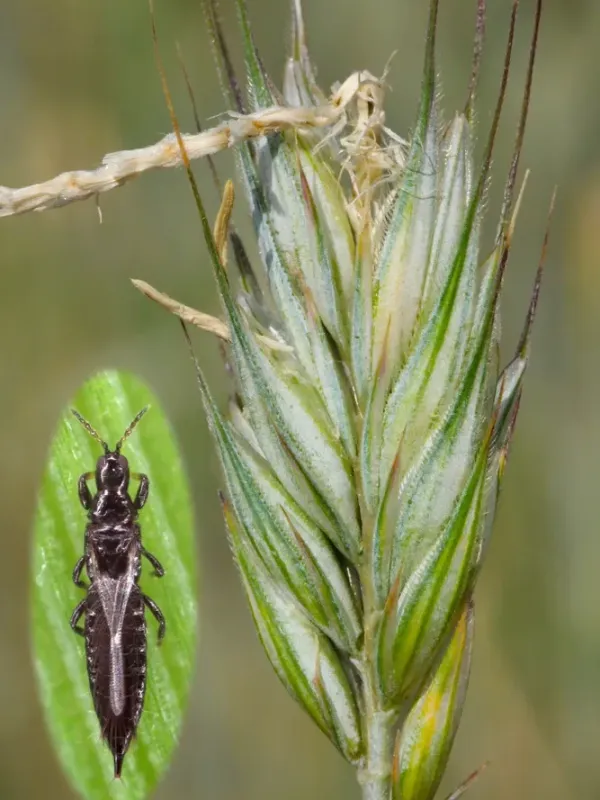
Haplothrips is a genus of insects belonging to the order Thysanoptera and the family Phlaeothripidae. These are relatively small insects, typically measuring between 1.5 and 3 mm in length, usually displaying dark brown or black coloration.
The most distinctive morphological feature is the presence of a tubular extension at the tip of the abdomen, which is characteristic of the Phlaeothripidae family. They possess narrow, fringed wings that allow for active flight during warmer periods.
In field conditions, these pests are primarily found within the inflorescences or ears of cereal crops. Both adults and larvae exhibit cryptic behavior, often clustering inside the glumes or floral parts to hide.
While there are subtle differences in body structure between males and females, identifying specific species often requires professional microscopic examination of the antennal segments and body setae.
The genus includes numerous species, with the Wheat Thrips (Haplothrips tritici) being the most economically significant pest causing widespread damage to cereal production globally.
What it damages
The primary hosts for Haplothrips include various cereal crops, most notably wheat, barley, and rye. In some cases, they may also infest legumes and wild asteraceous plants.
The pest causes damage by feeding on the reproductive organs of the plant. Adults and larvae use their piercing-sucking mouthparts to extract sap from the developing grain and ovaries, disrupting the grain-filling process.
This feeding activity leads to the development of shriveled, lightweight grains, which significantly degrades both the yield quantity and the milling/baking quality of the harvest.
Heavy infestations can cause visible deformation of the ear. Furthermore, the damage provides entry points for secondary fungal infections, which can exacerbate crop loss.
In hot and arid climatic conditions, the metabolic activity and reproduction of these pests accelerate, leading to more severe damage during the flowering and grain-maturation stages.
When it appears
The life cycle of Haplothrips consists of the egg, larva, prepupa, pupa, and adult stages. They typically overwinter as late-instar larvae within plant debris, stubble, or the upper layers of the soil.
Spring activity begins as temperatures rise, leading to the emergence of adults. This emergence is often synchronized with the tillering and booting stages of cereal crops, allowing them to invade fields efficiently.
Females deposit eggs on the surface of the ear or leaf sheaths. The embryonic stage lasts approximately one week, followed by the hatching of larvae that begin feeding immediately on plant tissues.
Depending on the climatic zone and temperature, one or two generations can occur per growing season. High temperatures are a critical factor that facilitates rapid development and population buildup.
As the crop reaches maturity, the larvae seek out hibernation sites, migrating from the ears into the soil or plant remains to prepare for the dormant winter period.
Signs of infestation
The first indication of Haplothrips presence is the observation of small, dark insects within the grain ears. Closer inspection often reveals bright orange or red larvae hidden beneath the glumes.
Initial feeding damage is characterized by discolored or yellowish spots on the glumes at the points where the insects have pierced the plant tissue.
High population densities often result in a condition sometimes described as "white-head," where the top part of the ear dries out prematurely and becomes bleached, significantly reducing photosynthetic capability.
The presence of fecal pellets, which appear as tiny black dots within the ear, is a reliable sign of active infestation and larval feeding.
Distorted and shriveled grain kernels are the final outcome of severe infestations, indicating that the plant's vascular system was unable to supply sufficient nutrients due to pest pressure.
Control measures
Agronomic practices are fundamental for suppression. Deep autumn plowing is highly effective in burying and killing larvae that overwinter in stubble and surface debris.
Effective crop rotation practices help break the pest's life cycle. Avoiding the planting of wheat or barley in fields immediately adjacent to the previous year's infested crops can reduce initial invasion pressure.
Chemical control becomes necessary when population counts exceed the economic threshold. Insecticide applications are most effective when timed with the early booting or heading stages of the crop.
Commonly used products include organophosphates, neonicotinoids, and pyrethroids. Integrated Pest Management (IPM) requires careful selection of compounds to minimize impacts on beneficial pollinators and predators.
Monitoring using yellow sticky traps is a recommended proactive strategy to detect the arrival of adults and determine the optimal timing for field-wide insecticide applications.
Taxonomy
- Latin name
- Haplothrips
- Order
- Thrips
- Family
- Phlaeothripidae
- EPPO code
- HAPLSP
Discussion
No discussions yet — be the first.