
Hallomyia gall midge
Hallomyia
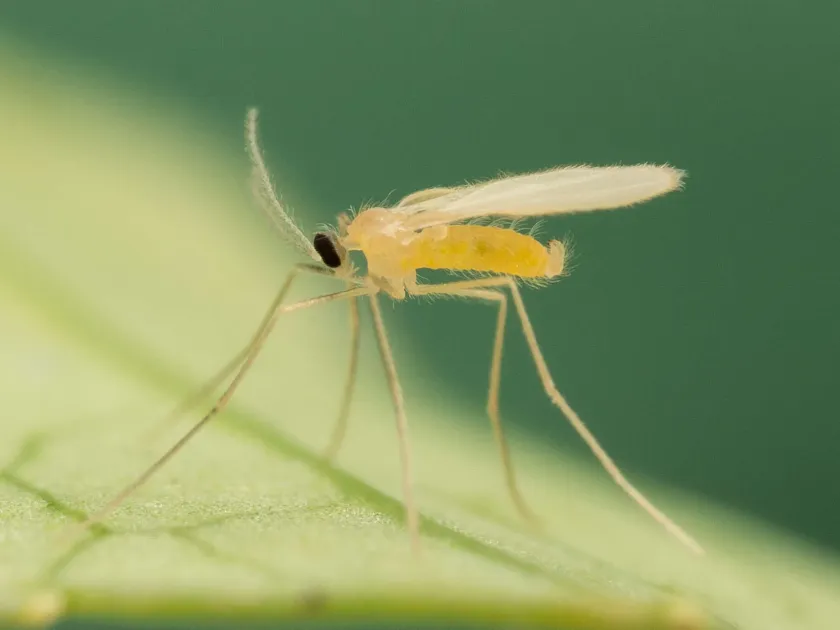
Description
How to identify
The Hallomyia gall midge is a member of the Cecidomyiidae family, belonging to the order Diptera. These are tiny flies, often reaching only a few millimeters in length, making them difficult to spot without close observation.
The larval stage of the insect is responsible for the damage. Larvae are typically legless, small, and may vary in color from translucent to yellowish, inhabiting internal plant tissues.
Adult midges are characterized by delicate wings and long antennae. They are primarily nocturnal or crepuscular, meaning they are most active during twilight hours, complicating visual detection.
Classification within the genus Hallomyia is precise and often requires professional identification due to the morphological similarity between various gall midge species.
The life cycle of the midge is tightly integrated with the phenological cycles of the host plants, allowing them to optimize the timing of larval development and feeding.
What it damages
The primary damage caused by Hallomyia involves the formation of galls — abnormal outgrowths of plant tissue. These structures serve as protection and a food source for the developing larvae.
The pest attacks various parts of plants, including leaves and stems, which disrupts normal plant physiological processes such as nutrient transport and photosynthesis.
Weakened plant tissues are highly susceptible to secondary pathogens, including fungi and bacteria, which can cause further tissue necrosis and decay.
Severe infestations lead to stunted growth, leaf deformation, and early leaf drop, significantly impairing the plant's overall health and aesthetic value.
For commercial crops, high populations of this midge can lead to reduced biomass production and significant economic losses due to the degradation of the harvest.
When it appears
The activity of the pest typically begins in the spring, coinciding with rising temperatures that trigger the emergence of adults from overwintering sites in the soil or plant debris.
Larval damage peaks during the rapid growth phase of the host plant, particularly when tender shoots and young leaves are most abundant, facilitating gall formation.
Depending on the climatic zone and temperature conditions, multiple generations can emerge during a single growing season, leading to potential population explosions.
By autumn, larvae enter a state of diapause, moving into the soil or sheltered spots to survive the winter. During this time, they are dormant and highly resistant to environmental stressors.
Monitoring the first flight of adults using adhesive traps is a standard practice for agronomists to determine the optimal timing for protective intervention.
Signs of infestation
The most distinctive sign of infestation is the appearance of galls, which can take various forms such as lumps, swellings, or specific deformations on the host tissue.
Curled, discolored, or asymmetrical leaves often indicate internal larval activity, as the tissue responds to the chemical secretions of the insect.
Small exit holes may sometimes be visible on the surface of the galls, indicating that adult midges have emerged or that the internal cavity has been breached.
Stunted growth of the main shoot and a general loss of vigor are common indicators that a plant is suffering from chronic midge infestation.
In advanced cases, the accumulation of larval waste products within the gall cavities can cause local tissue death, leading to visible dark spots or necrosis.
Control measures
Sanitation is the first line of defense; manually removing and destroying galls before adults emerge is highly effective for reducing the local population.
Soil cultivation in late autumn helps disrupt the overwintering cycle by exposing larvae and pupae to predators and freezing temperatures.
Systemic insecticides are the most effective chemical control, as they are absorbed by the plant and target the larvae hidden within the internal tissues of the galls.
Encouraging biological control by protecting natural predators, such as parasitic wasps and predatory mites, can help keep population numbers in check.
- Implement strict sanitation by removing galls.
- Use systemic insecticides during peak larval activity.
- Practice crop rotation where applicable.
- Monitor adult flight using specialized sticky traps.
Taxonomy
- Latin name
- Hallomyia
- Order
- Diptera (flies)
- Family
- Cecidomyiidae
- EPPO code
- HALLSP
Discussion
No discussions yet — be the first.