
Common crane
Grus
Description
How to identify
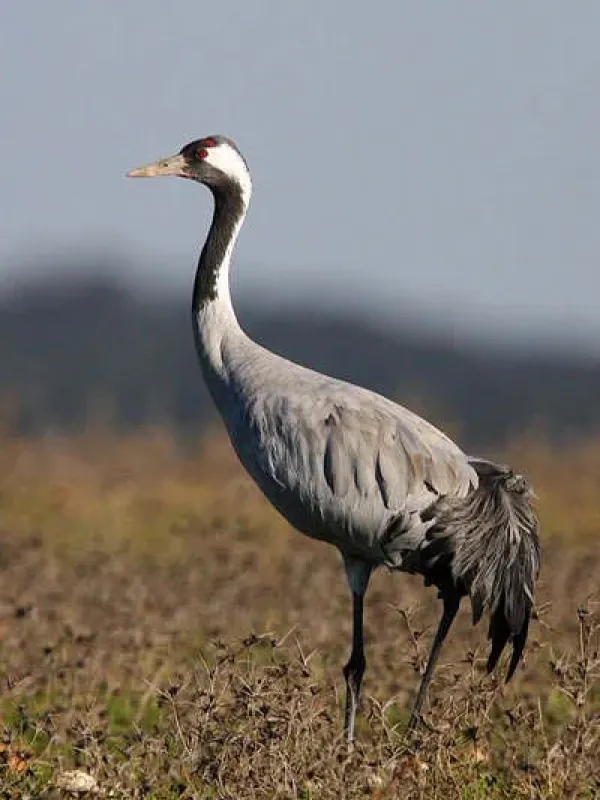
The Common crane (Grus grus) is a large migratory bird species within the order Gruiformes and the family Gruidae. It is characterized by its tall stature, long legs and neck, grey plumage, and a distinctive patch of red skin on the crown of adult birds.
With a wingspan of up to 2.5 meters, these birds cover vast distances during seasonal migrations. In agricultural settings, they are commonly observed in flocks, particularly during the spring sowing season and after harvest when food sources are abundant.
The biology of the species is primarily linked to wetlands for nesting, but they utilize agricultural fields extensively for foraging. They are highly wary birds, which makes managing their impact on large fields a significant challenge for farmers.
Unlike insect pests, cranes are large vertebrates that actively target crops for high-energy food sources. Their presence is often announced by loud, trumpeting calls that can be heard over long distances, signaling their arrival to feed.
The lifecycle involves complex migration patterns that coincide with critical stages of agricultural crop development. Their intelligence and ability to adapt their foraging behavior make them persistent visitors to productive farmlands.
What it damages
Common cranes cause substantial damage to cereal crops such as wheat, barley, oats, and maize. The most vulnerable period is during the germination phase, when seeds are easily accessible near the soil surface.
The birds forage by digging up newly sown seeds, which results in thin stands and significant crop loss. This often forces farmers to perform expensive re-seeding operations on affected areas of the field.
During the ripening stage, cranes consume grain heads and trample the stalks. The flock-feeding behavior leads to localized but intense destruction, potentially ruining large patches of the harvest.
Besides cereals, cranes may forage in legume and vegetable fields, pulling out young seedlings or damaging mature crops. Such damage is often patchy but can spread across fields if not addressed.
Secondary damage includes soil compaction caused by the weight of large flocks staying in one area for extended periods. This compaction negatively affects the soil structure and future nutrient uptake by the plants.
Signs of infestation
The first sign of crane activity is the presence of large, distinct footprints on soft or freshly tilled soil. These prints are deep and clearly define the path taken by the flock through the field.
The appearance of bare patches or thinned sprouts is a clear indicator that seeds have been consumed. Small, funnel-shaped holes made by the birds' beaks are often visible at the site of the damage.
Large amounts of droppings found in specific areas are indicative of long-term presence. This accumulation often creates a noticeable layer of waste in areas where the birds gather to rest or feed.
Trampled vegetation and visible trails between crop rows indicate that a flock has been moving across the field. Damage is often concentrated, leaving clear edges between unaffected and ruined portions of the crop.
Direct observation of the birds in the early morning or evening hours is the most definitive sign of their foraging pressure on the fields. Their behavior is typically calm unless they are disturbed.
Control measures
Control methods must be respectful of environmental regulations, as the Common crane is protected in many regions. Management focuses primarily on deterrents rather than lethal control measures.
Visual deterrents, such as raptor decoys, holographic tape, and reflective objects, are effective in discouraging cranes. It is crucial to move these objects periodically to prevent the birds from habituating to them.
Acoustic deterrent systems that broadcast distress calls or synthetic predator sounds are highly effective when configured correctly. These systems should be used strategically during the most vulnerable crop phases.
Agronomic practices, such as ensuring deep and uniform seed placement during sowing, significantly reduce the risk of bird damage. Minimizing the availability of loose grain on the soil surface is essential.
Creating lure crops or diversionary feeding zones away from primary fields can help keep migratory flocks away from valuable harvests. This integrated approach balances the need for crop protection with ecological conservation.
Taxonomy
- Latin name
- Grus
- Family
- Gruidae
- EPPO code
- GRUSSP
Discussion
No discussions yet — be the first.