
Chewing louse
Goniodes
Description
How to identify
Goniodes is a genus of insects belonging to the order Mallophaga, known commonly as chewing lice or biting lice, which act as permanent ectoparasites.
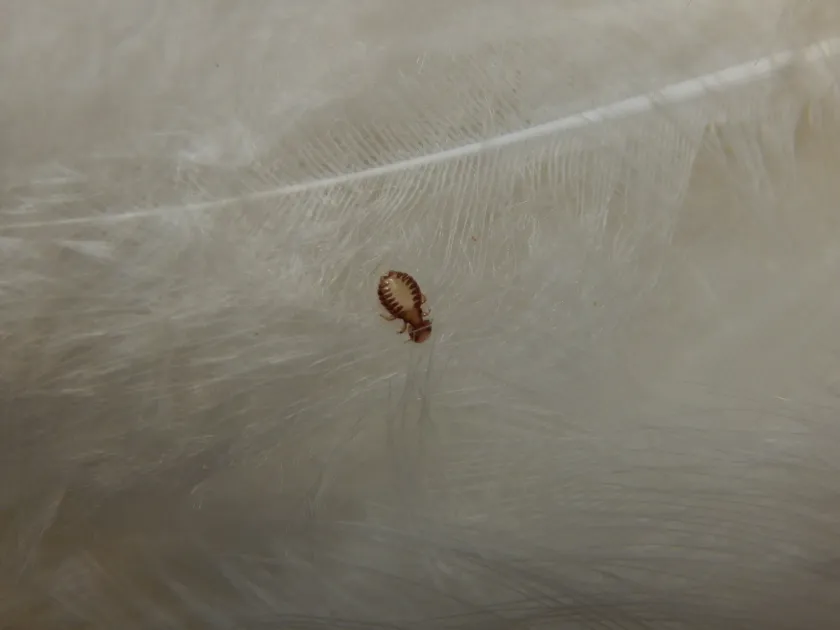
These insects are characterized by a dorsoventrally flattened body and a broad head equipped with strong mandibles for scraping skin debris and feathers.
Adult lice are typically 1 to 3 mm long and exhibit a coloration ranging from pale yellow to dark brown, providing excellent camouflage against bird skin.
The entire life cycle occurs on the host's body; the female lays eggs (nits) that are firmly glued to the base of the bird's feathers.
The genus includes numerous species, which can often be identified by the specific morphology of the antennae and abdominal segments.
What it damages
Goniodes species infest various domestic and wild birds, including chickens, turkeys, pheasants, and waterfowl, causing significant economic losses.
By feeding on feather barbs, down, and skin scales, they cause intense irritation and pruritus, which compels the bird to engage in excessive preening.
Constant irritation leads to chronic stress in the birds, resulting in reduced weight gain, impaired egg production, and increased susceptibility to diseases.
Heavy infestations can cause damage to the plumage, leaving large patches of skin exposed and potentially damaging the feather follicles.
In severe cases, especially among young birds, the physical distress and energy expenditure required to combat the irritation can lead to significant mortality.
Signs of infestation
The first indicator of infestation is behavioral: the birds appear restless, are constantly scratching themselves, and show signs of disrupted preening.
Closer inspection of the skin, particularly near the vent, under the wings, and on the breast, usually reveals clusters of fast-moving adult lice.
Nits (eggs) attached to the base of the feathers appear as whitish or grayish clusters and are a definitive sign of an established infestation.
Infested birds often exhibit ruffled, brittle, and dull feathers due to persistent self-pecking and damage caused by the lice activity.
Signs of skin inflammation and secondary infections due to constant scratching and pecking are common in advanced stages of infestation.
Control measures
Effective management of Goniodes relies on the application of appropriate veterinary-approved insecticides, such as dusts, sprays, or spot-on treatments.
Simultaneous treatment of all birds in the flock is essential to prevent re-infestation from untreated carriers within the same housing environment.
Sanitation of the poultry house, including deep cleaning of nests, perches, and floor litter, is critical to eliminate lice that may fall off the host.
Providing access to dust baths containing sand and wood ash helps birds naturally manage low-level louse populations through grooming behavior.
Strict biosecurity measures, such as quarantining new arrivals and preventing contact with wild birds, are the most effective ways to prevent introduction.
Taxonomy
- Latin name
- Goniodes
- Family
- Goniodidae
- EPPO code
- GONDSP
Discussion
No discussions yet — be the first.