
Gnathotrupes fimbriatus
Gnathotrupes fimbriatus
Description
How to identify
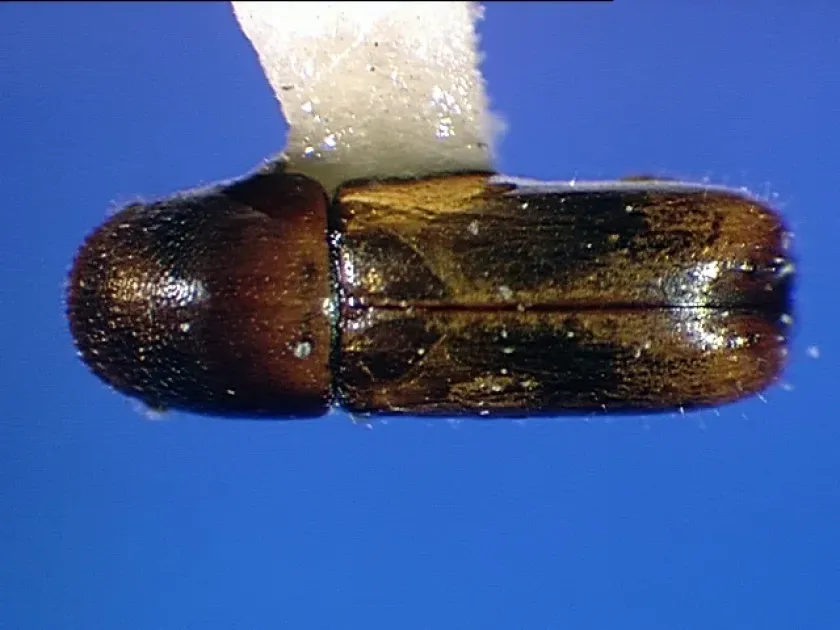
Gnathotrupes fimbriatus is a species of bark beetle belonging to the Curculionidae family, subfamily Scolytinae. These insects are small in size and highly specialized for boring into timber.
The beetles are cylindrical in shape and typically dark brown. The specific epithet refers to the presence of fringe-like hairs on their elytra, a characteristic feature that allows specialists to distinguish this species from others in the same genus.
They lead a hidden lifestyle, spending most of their life cycle inside the wood or bark of host trees. Because they are rarely seen on the surface, their presence is often only detected after damage has occurred.
As ambrosia beetles, they maintain a symbiotic relationship with specific fungi. These fungi are cultivated within the galleries and serve as the primary nutritional source for the beetle larvae.
Precise identification usually requires microscopic analysis of morphological structures, especially the head and elytral features, which are unique to the species within the Gnathotrupes group.
What it damages
This pest primarily attacks coniferous trees, favoring weakened, stressed, or fallen timber. It bores deep into the wood, causing structural degradation and reducing the commercial value of the timber.
The damage is twofold: physical destruction of wood fibers by larval galleries and the introduction of pathogenic fungi that cause sapwood staining and block water conduction in the tree.
Heavily infested trees experience rapid decline and crown dieback. Even if the tree survives, the wood becomes brittle and prone to structural failure, making it unsuitable for construction or high-quality timber use.
The beetles act as secondary pests that exploit trees already weakened by environmental factors such as drought, frost, or other primary diseases, accelerating the process of forest mortality.
During outbreaks, these beetles can destroy significant volumes of lumber in forest storage yards if logs are not processed or removed promptly.
Signs of infestation
The most reliable sign of an infestation is the presence of small, circular entry holes on the bark. These are often accompanied by piles of boring dust, which is fine wood frass ejected by the beetles.
Removing a section of the bark often reveals intricate tunnel systems. These patterns are specific to the beetle and serve as a diagnostic tool for foresters identifying the infestation source.
Visual symptoms on the tree include fading or changing needle color, often shifting from green to yellowish or reddish, which indicates that the tree's vascular system has been compromised by the fungal infection.
Resin flow (pitching) may occur in healthy or moderately stressed trees attempting to flush out the beetles, though this is often insufficient against large populations of the pest.
Blue staining on the cross-section of logs is a clear indication that ambrosia beetles have introduced their symbiotic fungi into the xylem tissue.
Control measures
The most effective management strategy involves sanitation harvesting. Removing infested trees from the forest before the next generation emerges is critical to preventing population explosions.
Pheromone traps are highly effective for monitoring flight patterns and estimating population density. This data is essential for timing intervention strategies during the adult flight season.
Good forest hygiene is essential, which includes the rapid transport of harvested timber away from the forest site. Stored logs should be protected from infestation to maintain their quality.
While chemical treatments are limited in forested areas due to environmental impact, they can be utilized in high-value nurseries or for protecting specific specimen trees using contact insecticides during the peak flight period.
- Sanitary forest thinning
- Rapid disposal of wood debris
- Deployment of pheromone-baited traps
- Monitoring programs to track infestation dynamics
Taxonomy
- Latin name
- Gnathotrupes fimbriatus
- Order
- Coleoptera (beetles)
- Family
- Curculionidae
- EPPO code
- GNARFI
Discussion
No discussions yet — be the first.