
Birch aphid
Glyphina betulae
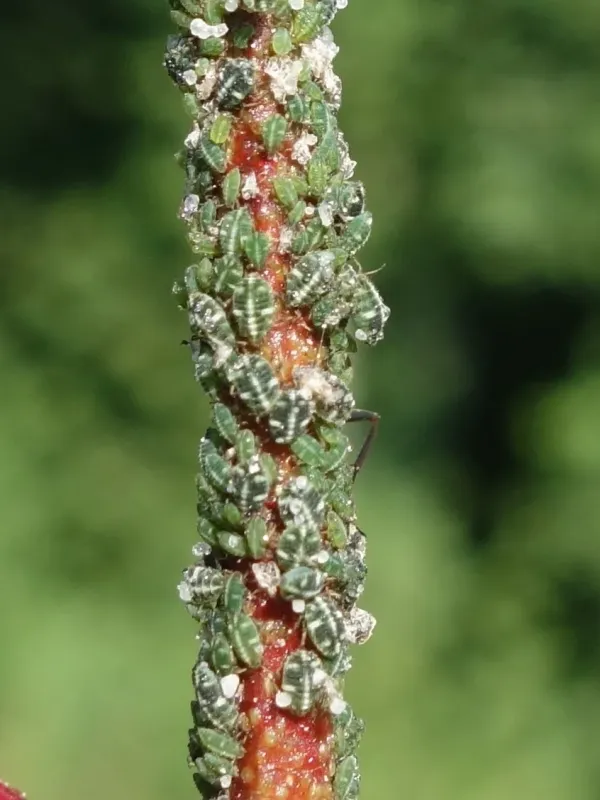
Description
How to identify
The Birch aphid (Glyphina betulae) is a small insect belonging to the family Aphididae, which thrives specifically on birch trees throughout the growing season.
These aphids are generally flattened and possess cryptic coloration that allows them to remain concealed against the bark or leaf tissue of the host plant.
Their life cycle is complex, involving both asexual and sexual reproduction phases to ensure rapid colonization during the spring and summer months.
Winged forms frequently appear to facilitate migration to fresh foliage or neighboring birch trees, ensuring the survival and spread of the species.
Correct identification often requires inspecting the undersides of the leaves where these aphids form dense, protected colonies.
What it damages
The primary damage is caused by the aphid's feeding, as it extracts essential fluids from the vascular system of the birch tree's young shoots.
Feeding activities often result in leaf curling, yellowing, and stunted development of the new growth, which hampers the overall vitality of the tree.
The excretion of honeydew promotes the growth of sooty mold, a fungus that covers the leaf surface and interferes with the plant's photosynthetic process.
Heavy infestations can lead to premature leaf drop and may stress younger, more vulnerable birch trees significantly during the heat of summer.
Over time, the combined impact of sap depletion and secondary fungal growth reduces the tree's resistance to environmental stress and other pests.
When it appears
Activity commences in early spring as soon as the buds begin to open, providing a fresh source of nutrients for the overwintered eggs' progeny.
The population tends to peak during the late spring and early summer, taking advantage of the rapid growth phase of the host birch tree.
As autumn approaches, the aphid shifts its reproductive cycle to produce overwintering eggs, which are deposited in bark crevices for the winter.
Environmental variables like temperature and local humidity are major drivers that influence the growth rate of aphid populations throughout the year.
Frequent monitoring during the peak growth season is essential for early detection of colony build-ups before they reach damaging levels.
Signs of infestation
The most immediate sign of an infestation is the presence of a sticky, glistening substance known as honeydew on the leaves and nearby surfaces.
Increased ant activity around the tree trunk is a strong indicator of an aphid colony, as ants are frequently attracted to the honeydew secretion.
Black sooty mold patches on the leaves serve as a visual marker that an infestation has been present for a significant duration.
Distorted, curled, or chlorotic leaves provide clear diagnostic evidence that sap-sucking insects are active within the canopy.
In cases of severe infestation, one may observe sparse foliage and a noticeable decline in the health of the tree's terminal growth.
Control measures
Systemic insecticides are often the most effective way to manage heavy aphid populations, as they protect the tree from within the vascular system.
Integrated Pest Management (IPM) encourages the preservation of natural predators like ladybugs, hoverflies, and lacewings that naturally hunt aphids.
For smaller infestations, horticultural oils or insecticidal soaps can be applied directly to the colonies to suffocate them without harming the tree.
Maintaining the health of the birch through proper watering and soil fertilization helps the tree resist damage and recover from aphid attacks faster.
Always ensure that any chosen control method is applied during the early stages of the infestation to prevent the spread to adjacent healthy trees.
Taxonomy
- Latin name
- Glyphina betulae
- Order
- Hemiptera (bugs, aphids, leafhoppers)
- Family
- Aphididae
- EPPO code
- GLYPBE
Discussion
No discussions yet — be the first.