
Pill millipede
Glomeris marginata
Description
How to identify
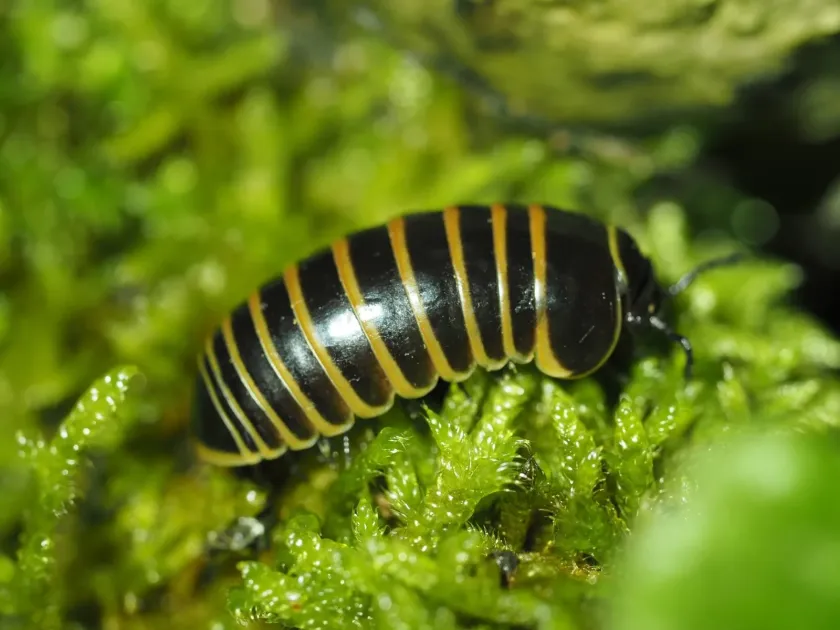
The pill millipede (Glomeris marginata) belongs to the order Glomerida. It is easily recognized by its ability to roll into a tight ball when disturbed, a defense mechanism similar to that of pill bugs.
Adults typically grow to 15-20 mm in length. Their body color is usually dark brown or black with distinct light-colored spots or margins on each segment, giving them a decorative appearance.
The body is composed of 12 segments protected by heavy, rounded plates. Unlike typical long millipedes, their compact shape allows them to squeeze into tight spaces in the soil.
These creatures thrive in damp, dark environments rich in organic matter. They are nocturnal, spending their days buried in leaf litter or beneath stones.
They play a role in soil aeration and organic decomposition, but can become a nuisance in horticultural settings when their population density increases significantly.
What it damages
While primary decomposers, pill millipedes can shift to a herbivorous diet when organic resources are scarce or when seedlings are particularly succulent.
They frequently damage the root systems of young vegetables, causing stunted growth and increasing the vulnerability of the plant to secondary pathogens.
In moist soil conditions, they are known to consume the skin and flesh of root vegetables like potatoes, carrots, and beets, creating unsightly and damaging craters.
Seedlings in greenhouses or high-humidity tunnels are at the highest risk, as the millipedes can easily graze on the tender tissues of stems near the soil line.
Such injuries often lead to the collapse of young plants, making them unable to recover during the critical early stages of their growth cycle.
Signs of infestation
Visible feeding damage consists of small, irregular pits or shallow holes on the surface of root crops or the base of young plant stems.
Stunted or wilting plants in areas with high organic content often indicate root damage caused by millipede feeding activity below the surface.
Finding a group of curled-up specimens when removing garden debris or turning over the top layer of soil confirms the presence of the infestation.
Dark, granular frass deposited near the base of plants serves as an indicator of recent nocturnal feeding activity.
An increased number of millipedes appearing on the soil surface after heavy irrigation or rainfall is a classic sign of high population density.
Control measures
Sanitation is the most effective management strategy; removing excessive leaf litter and decaying plant debris significantly reduces the habitat for these pests.
Proper drainage and moisture management in greenhouses prevent the conditions that favor the rapid reproduction of Glomeris marginata.
Cultivating and tilling the soil in late autumn disrupts the overwintering sites, exposing the millipedes to frost and natural predators.
Simple bait traps made from halved potatoes buried slightly in the soil can be used to attract and physically remove the millipedes manually.
In extreme cases, soil-applied insecticides containing diazinon or other approved chemicals can be used to control high populations in industrial or vegetable plots.
Taxonomy
- Latin name
- Glomeris marginata
- Family
- Glomeridae
- EPPO code
- GLORMA
Discussion
No discussions yet — be the first.