
Gerstaeckeria hubbardi
Gerstaeckeria hubbardi
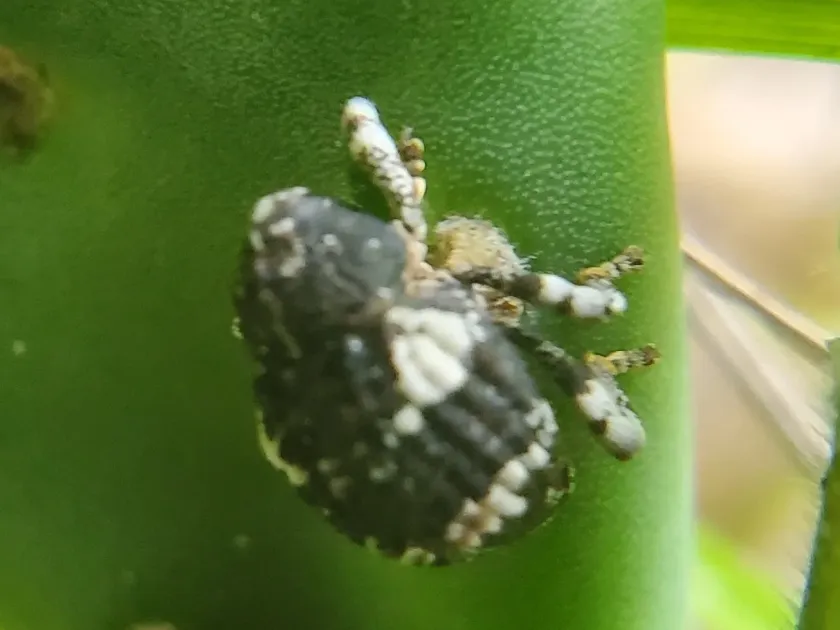
Description
How to identify
Gerstaeckeria hubbardi is a specialized species of weevil belonging to the family Curculionidae that primarily targets various cactus species.
Adult beetles typically measure between 5 to 8 millimeters in length and possess a characteristic elongated rostrum, common to many weevil species.
The body is covered in dense scales that provide excellent camouflage, allowing the insect to blend perfectly with the textured skin of cacti.
The coloration ranges from brown to grayish tones, making these beetles difficult to detect during daylight hours when they remain relatively stationary.
Larvae are legless, cream-colored grubs that live exclusively within the succulent tissues, where they are protected from environmental factors.
What it damages
This pest is highly specialized and feeds almost exclusively on members of the Opuntia genus and other related succulent cacti.
Adult beetles cause damage by chewing small pits into the epidermal layer, leaving characteristic superficial scars as they feed on the surface.
The primary damage is inflicted by the larvae, which burrow deep into the succulent pads or stems, creating tunnels and disrupting internal tissues.
Tunneling activities often compromise the plant's structural integrity and create entry points for secondary bacterial and fungal pathogens.
Heavy infestations lead to stunted growth, internal decay, and the collapse of plant segments, often resulting in the death of the host plant.
When it appears
The life cycle of Gerstaeckeria hubbardi is closely tied to the growing season of its host plants and local climatic variables.
Adults emerge from hibernation sites—typically leaf litter, soil, or crevices—as temperatures rise during the early spring months.
Reproductive activity and oviposition occur throughout the warm summer months when the cacti are actively growing and contain high moisture levels.
Depending on the region, multiple generations may be completed within a single year, provided that conditions remain favorable for development.
As autumn approaches and temperatures drop, the adult beetles seek sheltered areas to enter diapause and survive the winter period.
Signs of infestation
Early signs of an infestation include small entry holes or irregular pits on the surface of the cactus, indicating adult feeding activity.
Yellowing or chlorotic patches on the stem surface often suggest internal tissue damage and the presence of tunneling larvae beneath the skin.
In many cases, the plant may exude sap through the entry holes, which dries into dark, crusty patches on the cactus epidermis.
Localized soft spots or areas with a distinct smell of decay are clear indicators that the internal tissues have been heavily compromised.
- Presence of fine, frass-like debris near the base of the plant or around entry holes.
- Premature abscission or falling of succulent pads.
- Adult beetles visible during night inspections of the collection.
Control measures
Managing Gerstaeckeria hubbardi requires an integrated approach that focuses on early detection, manual removal, and chemical intervention.
Regular visual inspections of the collection, particularly focusing on the base and under-sides of the pads, are essential for early control.
Hand-picking adult beetles at night using a flashlight is a low-impact and effective way to reduce the population density in home collections.
Systemic insecticides, particularly those that are absorbed into the plant's vascular system, are effective against larvae feeding deep within the tissues.
Good sanitation practices, such as removing fallen pads and keeping the area around the plants clean, help in breaking the pest's life cycle.
Taxonomy
- Latin name
- Gerstaeckeria hubbardi
- Order
- Coleoptera (beetles)
- Family
- Curculionidae
- EPPO code
- GERTHU
Discussion
No discussions yet — be the first.