
Ganaspis brasiliensis
Ganaspis brasiliensis
Description
How to identify
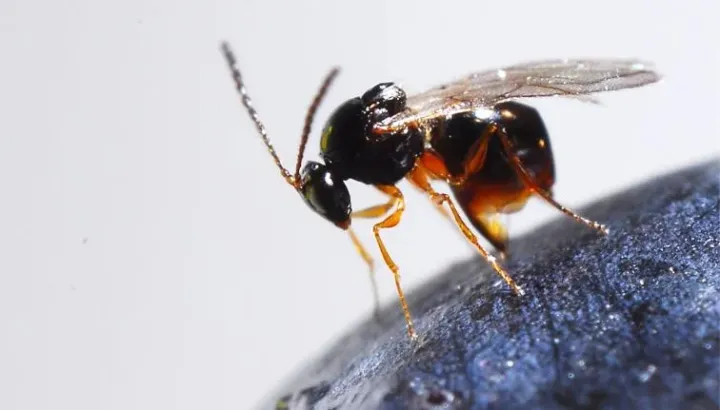
Ganaspis brasiliensis is a hymenopteran insect belonging to the Figitidae family, recognized as a specialized parasitoid.
The adults appear as small, dark wasps with a distinct thoracic structure and clear, veined wings typical of the family.
The life cycle of this insect is closely linked to fruit fly larvae, particularly Drosophila species, where the female deposits her eggs.
Development occurs entirely within the host body, making it a natural biological control agent, though its management in orchards is complex.
Species identification in the field is challenging and often requires microscopic examination of morphological traits by an expert entomologist.
What it damages
The primary impact occurs in fruit and berry agroecosystems where the insect parasitizes larvae of the Spotted Wing Drosophila (Drosophila suzukii).
While the wasp itself is an entomophagous insect, its presence is a reliable bio-indicator of fruit infestation by harmful flies.
The pest favors fruits showing signs of decay or minor skin damage, which serve as optimal breeding grounds for host larvae.
Population spikes of the wasp usually track with the fly population growth, complicating assessments of overall crop quality and losses.
Crops frequently affected include strawberries, raspberries, cherries, and other soft berries highly susceptible to fly attacks.
When it appears
Wasp activity generally initiates during the fruit ripening stage, coinciding with the peak attractiveness of berries to fruit flies.
Population peaks are typically observed during late summer and early autumn, corresponding to the period of maximum fruit availability.
Temperature conditions exceeding 15 degrees Celsius facilitate accelerated development of the parasitoid's generations.
At the end of the season, these insects may enter diapause within the soil layer or plant debris to survive unfavorable weather.
Monitoring for adult presence is best conducted using yellow sticky traps placed near susceptible berry plantations.
Signs of infestation
Visual confirmation of the parasitoid can be obtained by identifying exit holes on the surface of fly puparia extracted from infested fruit.
A decline in the viability of the host fly population often serves as an indirect sign of parasitoid activity in the local ecosystem.
Dissecting infested berries often reveals remnants of fly larvae showing internal damage caused by the maturing parasitoid wasp.
The capture of numerous microscopic hymenopterans on yellow monitoring traps is another strong indicator of the species' presence.
The absence of typical fruit damage despite the presence of flies often points to effective biological regulation by the wasp.
Control measures
The primary management strategy focuses on maintaining an ecological balance that empowers natural enemies to regulate pest numbers.
Avoid excessive use of broad-spectrum insecticides, as these chemicals inadvertently kill beneficial parasitoids and disrupt natural control.
Sanitary practices, such as removing fallen fruit and timely harvesting, eliminate the breeding sites for host larvae.
Implementing selective biological treatments helps protect the harvest without causing harm to the native entomofauna managing fly populations.
Proper agronomic techniques, such as the use of protective netting on berry crops, significantly reduce fruit access for potential hosts.
Taxonomy
- Latin name
- Ganaspis brasiliensis
- Order
- Hymenoptera
- Family
- Figitidae
- EPPO code
- GANABR
Discussion
No discussions yet — be the first.