
Fulmar
Fulmarus
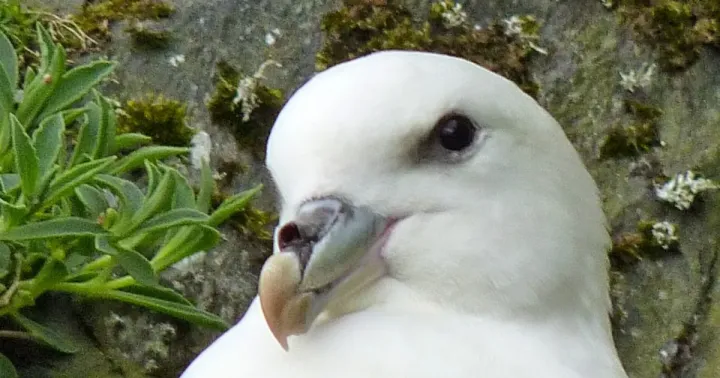
Description
How to identify
The Northern Fulmar (Fulmarus glacialis) is a seabird belonging to the Procellariidae family, within the order Procellariiformes. It is well-adapted to life in the open ocean and cold maritime climates.
The bird has a distinct appearance with a robust body and a specialized bill featuring tubular nostrils. Its plumage ranges from light gray to white, serving as a camouflage against the northern seas.
Fulmars are highly colonial, establishing large nesting sites on sea cliffs and nearby coastal regions. This behavior directly impacts the immediate environment surrounding their colonies.
These birds possess a highly developed sense of smell used for foraging, which is unusual among many bird species, and they have an extensive range during the non-breeding season.
They are long-lived birds with a low reproductive rate, laying only a single egg per season, which implies that colonies remain stable and occupy the same territories for decades.
What it damages
While the Fulmar is not an herbivorous pest, it negatively affects agricultural lands through ecological alteration. Its presence is most felt in coastal regions where farming and seabird habitats overlap.
The accumulation of guano in nesting areas creates excessive nitrogen levels in the soil, which can alter the botanical composition of pastures, favoring nutrient-tolerant, invasive weed species over useful forage grasses.
They act as potential vectors for biological contamination, spreading pathogens or seeds of invasive vegetation across grazing lands, which complicates pasture management and livestock safety.
The physical trampling and excavation of soil for nesting can accelerate local erosion, leading to the degradation of sloping lands that are crucial for fodder production or grazing.
Additionally, the aggressive territorial defense of colonies can disturb livestock and create operational hazards for farm machinery and personnel operating in coastal meadows.
Control measures
Managing the impact of Fulmars on agricultural land requires integrated, non-lethal strategies, as these birds are often protected by international wildlife conservation laws.
Deploying visual deterrents such as holographic tapes, reflective surfaces, and motion-activated devices is a proven way to deter birds from settling in productive pasture areas.
Acoustic deterrents that broadcast predatory bird calls or alarm sounds can be highly effective during the peak nesting season to discourage birds from utilizing specific agricultural plots.
Strategic land use management, including the physical modification of terrain or the planting of tall cover crops where possible, can make nesting sites less attractive to the birds.
Regular soil testing and management of nutrient levels are necessary in areas affected by bird colonies to counteract the chemical imbalances caused by guano deposits and to maintain healthy pastures.
Taxonomy
- Latin name
- Fulmarus
- Family
- Procellariidae
- EPPO code
- FLMRSP
Discussion
No discussions yet — be the first.