
Fleutiauxia armata
Fleutiauxia armata
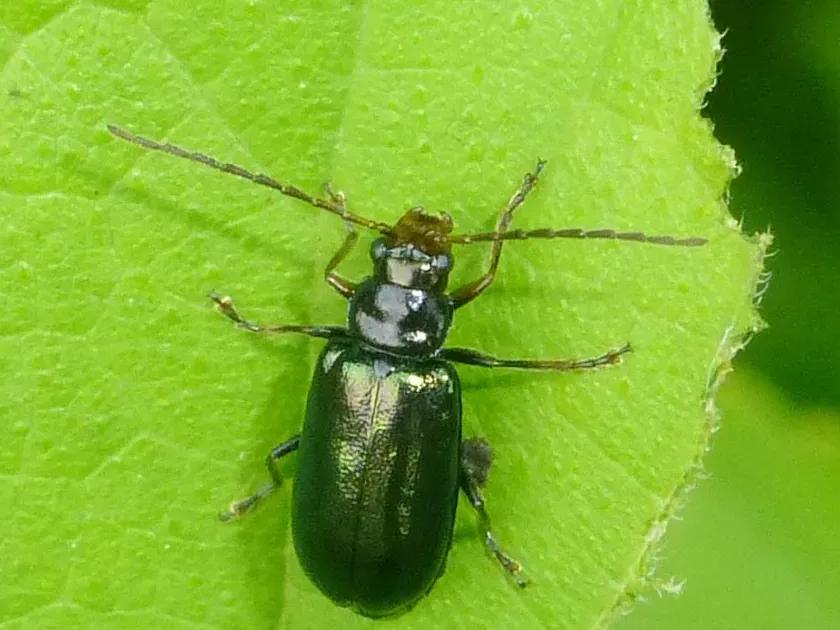
Description
How to identify
Fleutiauxia armata belongs to the leaf beetle family (Chrysomelidae), order Coleoptera. Adult beetles possess a specialized morphology that allows them to thrive while feeding on the foliage of various host plants.
The morphology of the imago is characterized by a robust exoskeleton and chewing mouthparts tailored for consuming plant tissues. Their coloration typically provides camouflage against the leaf background, making them elusive during initial inspections.
Larval development involves several instars, with the larvae actively feeding to gather the resources required for pupation. This phase is critical as the larvae exhibit high consumption rates, significantly impacting the host plant.
The life cycle is closely synchronized with the phenology of the host crops. Beetles emerge and begin their cycle at the start of the growing season, aligning their reproduction and feeding periods with the most nutritious stage of the plants.
Accurate identification requires careful inspection of the lower leaf surfaces and apical parts of the plants, where these insects often congregate during their peak feeding hours.
What it damages
Both adults and larvae are responsible for significant damage to agricultural crops. They feed by consuming leaf blades, leading to perforation and, in severe cases, extensive skeletonization of the plant foliage.
The primary damage is the loss of photosynthetic area, which directly impairs the plant's metabolic efficiency. Reduced photosynthesis results in stunted growth, lower biomass accumulation, and ultimately, decreased final yields.
Young plants are particularly vulnerable, especially in the early seedling stage. Excessive feeding at this time can cause plant mortality, leading to gaps in the field and the need for costly replanting.
As populations increase, the insects spread rapidly across the field, creating clusters of damaged plants. This spatial distribution can lead to inhomogeneous field development and uneven maturity at harvest.
Beyond direct foliage loss, the injuries create entry points for secondary pathogens, such as fungi and bacteria, which can exacerbate the overall damage to the crop.
Signs of infestation
The most prominent sign of an infestation is the presence of numerous circular or irregular holes in the leaves. These patterns are often associated with the feeding habits of both adults and younger larvae.
Dark frass left on the leaf surface is a reliable indicator of active feeding. A thorough field scout usually reveals these signs even before the beetles themselves are visually detected.
Discoloration around the feeding sites, turning yellow or necrotic brown, signals the plant's stress response to the physical damage sustained by the leaves.
In cases of severe infestation, the foliage may curl or wilt as the structural integrity of the leaf is compromised, affecting the plant's turgor pressure.
Early morning scouting is recommended, as the beetles are generally more active and visible, allowing for a better estimation of the infestation level before they descend to cover or drop from the plant.
Control measures
Integrated Pest Management (IPM) strategies for Fleutiauxia armata emphasize preventative measures. Crop rotation is a cornerstone, breaking the pest's cycle by limiting access to preferred host plants in consecutive seasons.
Sanitation practices, specifically the removal of surrounding weeds that act as alternative food sources, are critical to preventing migration into main crop fields.
Chemical control remains an essential component when infestation levels cross the economic threshold. Applying systemic or contact insecticides effectively targets active populations while minimizing crop damage.
Effective management requires alternating pesticide classes to prevent the development of insecticide resistance, ensuring long-term control of this pest in agricultural landscapes.
Biological control alternatives, including the preservation of natural predators and the application of biological agents, offer sustainable options to reduce the reliance on synthetic chemicals.
Taxonomy
- Latin name
- Fleutiauxia armata
- Order
- Coleoptera (beetles)
- Family
- Chrysomelidae
- EPPO code
- FLEUAR
Discussion
No discussions yet — be the first.