
Elm leaf miner
Fenusa ulmi
Description
How to identify
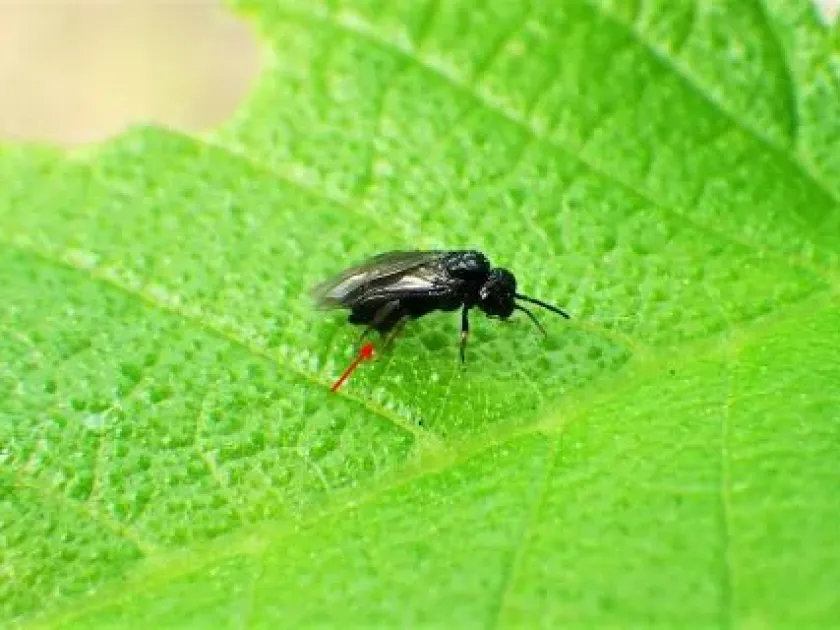
The Elm leaf miner (Fenusa ulmi) is a small hymenopteran insect belonging to the family Tenthredinidae. Adult sawflies are approximately 3-4 mm long with a shiny black body.
The larvae are specialized leaf feeders, having a flattened body adapted to life within the leaf tissues, which they mine between the upper and lower epidermal layers.
The life cycle involves an egg stage, a larval stage, and a pupal stage. They overwinter as larvae in cocoons located in the soil beneath the host trees, emerging as adults in early spring.
Parthenogenetic reproduction is common in this species, meaning females can lay fertile eggs without mating, allowing for rapid population growth in favorable conditions.
Identifying the pest itself is difficult, so arborists and gardeners rely on detecting the characteristic feeding patterns created by the larvae inside the leaves.
What it damages
The primary hosts of Fenusa ulmi are elm trees (Ulmus species), including both native and ornamental varieties planted in urban landscapes.
Larvae consume the inner tissues of the leaf (mesophyll) while leaving the epidermis intact, which results in the formation of transparent or blotchy mines.
Heavy infestations can lead to a significant loss of leaf area, reducing the tree's photosynthetic capacity and causing stress, especially during drought years.
Repeated annual damage weakens the tree, making it more susceptible to opportunistic pathogens and secondary wood-boring insects that thrive on stressed elm wood.
In nursery settings, the aesthetic value of the trees is severely diminished, often making the stock unsaleable due to the scorched appearance of the foliage.
Signs of infestation
The first sign of an infestation is the appearance of small, light-colored translucent spots on the leaves, which expand as the larvae grow and feed.
When held against the light, these spots appear as distinct mines with dark deposits of frass (larval waste) clearly visible inside the tunnels.
As the feeding continues, the blotched areas turn brown and necrotic. Eventually, these dried patches may tear, causing the leaves to appear tattered and sickly.
Significant infestations lead to premature leaf drop, resulting in thin, sparse crowns before the end of the summer growing season.
Observing the undersides of the leaves often reveals an uneven, crinkled texture in the areas where the larvae have mined through the internal leaf structure.
Control measures
Chemical control involving systemic insecticides is the most effective approach, as the chemical is absorbed into the leaf tissue and ingested by the larvae.
Sanitation practices such as raking up and destroying fallen leaves in autumn help reduce the number of overwintering larvae in the soil.
Soil cultivation around the base of the trees during the late season can expose the overwintering cocoons to predators and harsh environmental conditions.
Biological control using entomopathogenic nematodes or specialized sprays can be implemented in areas where chemical use is restricted, such as public parks.
- Monitor for adult activity in early spring to time insecticide applications.
- Use systemic treatments like imidacloprid for effective foliage protection.
- Encourage natural predators by planting nectar-rich flowering plants nearby.
Taxonomy
- Latin name
- Fenusa ulmi
- Order
- Hymenoptera
- Family
- Tenthredinidae
- EPPO code
- FENUUL
Discussion
No discussions yet — be the first.