
Birch leafminer
Fenusa pusilla
Description
How to identify
The birch leafminer (Fenusa pusilla) is a member of the Tenthredinidae family within the order Hymenoptera. This small insect is approximately 3 millimeters in length and features a shiny black appearance, making it difficult to spot during the initial infestation stages.
The larval stage of this pest is the most destructive. These larvae have a flattened, white-to-yellowish body specifically adapted for living and consuming the tissue located between the upper and lower layers of a birch leaf.
The life cycle of the birch leafminer is perfectly synchronized with the spring leaf development of host trees. Depending on the local climate and temperature, this pest may complete two or even three generations within a single growing season.
During the pupal stage, the insects reside in the soil beneath the canopy of the host tree at a depth of about 5 to 10 centimeters. As temperatures rise in the spring, adults emerge from the ground to begin the mating and egg-laying process.
Once the larvae finish feeding inside the leaves, they exit the foliage and drop to the ground to pupate. The soil beneath the birch trees thus serves as a critical reservoir for future pest generations, highlighting the importance of soil management.
What it damages
Birch leafminers primarily target various species of birch trees, including European white birch and gray birch. The insect thrives on younger, succulent leaves, although it can cause widespread defoliation in mature stands during outbreak years.
The larvae feed on the parenchyma tissue inside the leaf. By destroying these chlorophyll-rich cells, they inhibit the tree's ability to perform photosynthesis, which is essential for overall tree health and vigor.
While the birch leafminer rarely kills a healthy, mature tree on its own, chronic annual infestations significantly weaken the host. This stress makes the tree highly susceptible to secondary attacks from borers and pathogenic fungi.
Severe infestations often result in massive premature leaf drop, particularly during the mid-summer months. This defoliation forces the tree to expend stored energy reserves to produce new leaves late in the season.
In landscape settings, the primary impact is aesthetic. A heavily infested birch tree loses its vibrant appearance as the leaves turn brown and wither, detracting from the beauty of parks, gardens, and urban spaces.
Signs of infestation
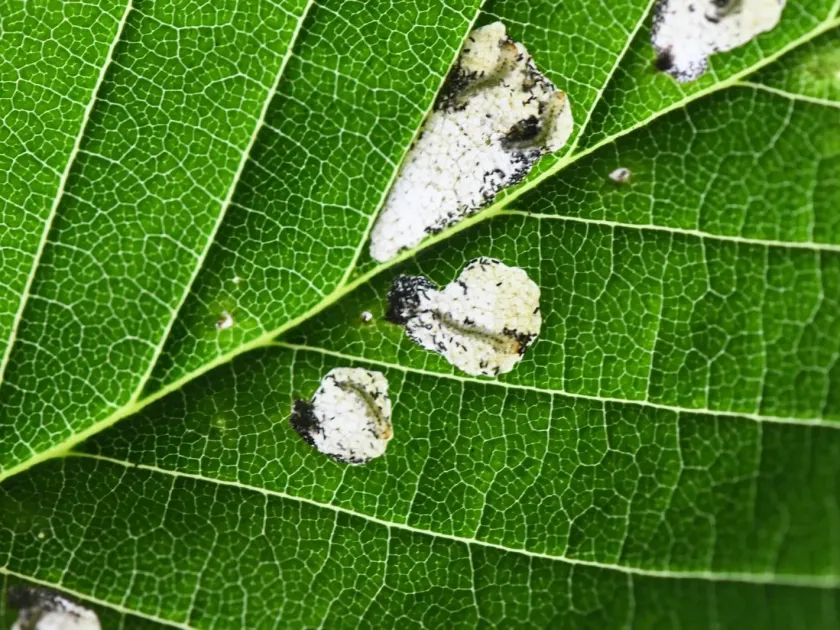
The first signs of infestation are small, pale white or translucent spots on the leaves. As the larvae feed and grow, these spots expand into irregular, blotch-like brown mines that can cover large sections of the leaf surface.
These mines are located between the leaf veins and are visible when looking at the leaf against the light. Upon closer inspection, one might notice small black dots, which are the larval frass (excrement) accumulated within the mine.
As the infestation progresses, the affected areas of the leaf dry out, curl, and turn brittle. Eventually, the damaged leaves may drop prematurely, giving the entire tree a thin, scorched, or autumnal appearance even in early summer.
Small holes or slits on the surface of the mines indicate where the larvae have exited to complete their life cycle in the ground. Observing these exit holes confirms that the larvae have already moved on to the next stage.
Sticky traps can be used to monitor the adult population during their flight period in the spring. Monitoring is essential for identifying the precise timing of emergence and planning effective intervention strategies.
Control measures
Managing the birch leafminer requires a combination of preventative care and timely chemical intervention. The goal is to break the pest's life cycle before it can cause significant damage to the tree canopy.
Cultivating the soil around the base of the tree in the fall or early spring is a proven mechanical control method. This process disturbs the overwintering pupae, exposing them to environmental elements and natural predators.
Chemical control is most effective when applied early in the season, targeting adult flies or newly hatched larvae before they enter the leaves. Recommended treatment approaches include:
- Systemic insecticides applied as soil drenches for long-term protection.
- Foliar applications of insecticides during the early adult flight period.
- Proper timing of applications based on regional phenological observations.
Encouraging biodiversity in the garden helps maintain natural biological control. Birds, parasitic wasps, and predatory beetles can significantly reduce the birch leafminer population, often keeping it below the threshold of economic damage.
Finally, maintaining overall tree health through adequate watering and mulching is crucial. A vigorous tree can tolerate minor infestations much better than a stressed or dehydrated tree in a poor environment.
Taxonomy
- Latin name
- Fenusa pusilla
- Order
- Hymenoptera
- Family
- Tenthredinidae
- EPPO code
- FENUPU
Discussion
No discussions yet — be the first.