
Feltiella occidentalis
Feltiella occidentalis
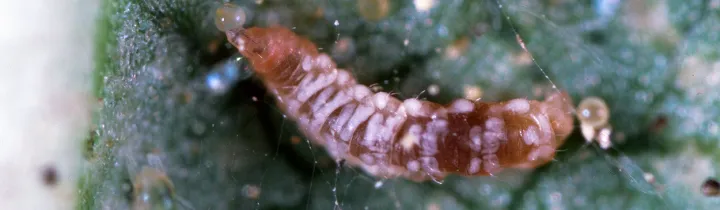
Description
How to identify
Feltiella occidentalis belongs to the order Diptera and the family Cecidomyiidae (gall midges). This tiny insect is of significant interest in agronomy, as members of this genus can display diverse feeding habits, ranging from specialized predators to those that may impact plant health.
The adult is a minute gnat, approximately 1.5–2 mm in length, characterized by long legs and a delicate build. Their coloration is typically brownish-yellow or ochre, allowing them to remain well-camouflaged against the foliage and stems of host plants.
The larvae are elongated, lacking a distinct head capsule and legs. They are highly mobile and actively crawl across plant surfaces to locate food sources or suitable sites for pupation within the canopy.
Identification of this species is difficult in field conditions due to its microscopic size and morphological similarities to other gall midge species. Specialist entomological assessment of adult specimens is often required for definitive identification.
The insect’s life cycle is closely tied to the microclimatic conditions of its environment. Optimal development is observed in greenhouses and indoor growing facilities where stable temperatures and humidity are maintained throughout the year.
What it damages
This pest is known to affect a variety of greenhouse crops, including vegetables and ornamental plants. Significant damage typically occurs during the active growth phases, when plant tissues are most succulent and vulnerable.
Larvae feed by damaging the leaf epidermis and parenchyma, which disrupts essential physiological processes such as photosynthesis. Heavy infestations result in leaf deformation, stunted growth, and a reduction in the overall quality of the harvest.
Localized necrotic spots are a common sign of larval feeding. As these spots coalesce, they lead to premature wilting and abscission of leaves, significantly weakening the plant and increasing its susceptibility to opportunistic pathogens.
The pest is most destructive during periods of peak nutrient movement within the plant. These damaged sites often serve as entry points for bacterial and fungal infections, which can lead to rapid decline if left unmanaged.
Economic damage is defined by decreased yields and loss of aesthetic value. In greenhouse settings, the population can grow rapidly, necessitating early detection and intervention to prevent large-scale outbreaks.
When it appears
In indoor agricultural environments, Feltiella occidentalis can be active year-round, provided that host plants and suitable environmental conditions persist. In outdoor settings, populations peak during the warmer summer months.
Temperatures ranging between 22–26 degrees Celsius, combined with high humidity, are ideal for reproduction. Under these favorable conditions, generations can overlap rapidly, leading to a swift increase in pest density.
Overwintering usually occurs in the pupal stage, encased in cocoons within the soil or debris. As favorable temperatures return in the spring, adults emerge to begin colonizing new host plants.
The introduction of the pest into greenhouse facilities often occurs via contaminated plant material. Consequently, stringent quarantine and screening of all incoming transplants are critical for maintaining sanitary conditions.
Monitoring for adult activity should commence early in the season using yellow sticky traps and regular inspections of the underside of leaves, where the pest is most likely to be found during the day.
Signs of infestation
The initial signs of infestation include the appearance of small, pale dots or streaks on young foliage. Over time, these spots darken, and the affected plant may show visible signs of reduced vigor and apical growth suppression.
Using a hand lens, one can detect small larvae clustered on the underside of leaves. Another characteristic sign is the presence of fine silk-like webbing or minute dark fecal pellets deposited on the leaf surface.
Leaves may turn chlorotic as the larvae extract plant sap. If left unaddressed, the leaves may curl, and necrotic areas will expand, often resembling burn marks or symptoms of severe nutrient deficiencies.
- Yellowing and twisting of young leaf growth.
- Development of localized necrotic spots on foliage.
- Overall suppression of plant vigor and growth rates.
- Visible colonies of larvae on the abaxial leaf surface.
Indirect indicators may include increased ant activity around the plant, as ants are often attracted to the secretions associated with pest colonies, or a general decline in plant health despite adequate irrigation.
Control measures
An integrated pest management (IPM) approach is essential, combining cultural practices, biological control, and judicious use of chemical agents to manage populations below the economic injury level.
Cultural control measures include the removal and destruction of crop residues, thorough disinfection of greenhouse surfaces between production cycles, and the management of weeds surrounding the facility to eliminate alternative hosts.
Biological control relies on the introduction of natural predators, such as specialized predatory mites, which can effectively regulate the population of the pest without resorting to broad-spectrum pesticides.
Chemical intervention should be reserved for instances where the economic threshold is exceeded. It is crucial to rotate insecticides with different modes of action to mitigate the risk of resistance development within the pest population.
Consistent monitoring using yellow sticky traps enables growers to identify early infestation stages, allowing for targeted spot treatments that minimize pesticide use and reduce the chemical stress on the crop.
Taxonomy
- Latin name
- Feltiella occidentalis
- Order
- Diptera (flies)
- Family
- Cecidomyiidae
- EPPO code
- ARTCOC
Discussion
No discussions yet — be the first.