
Feltiella
Feltiella
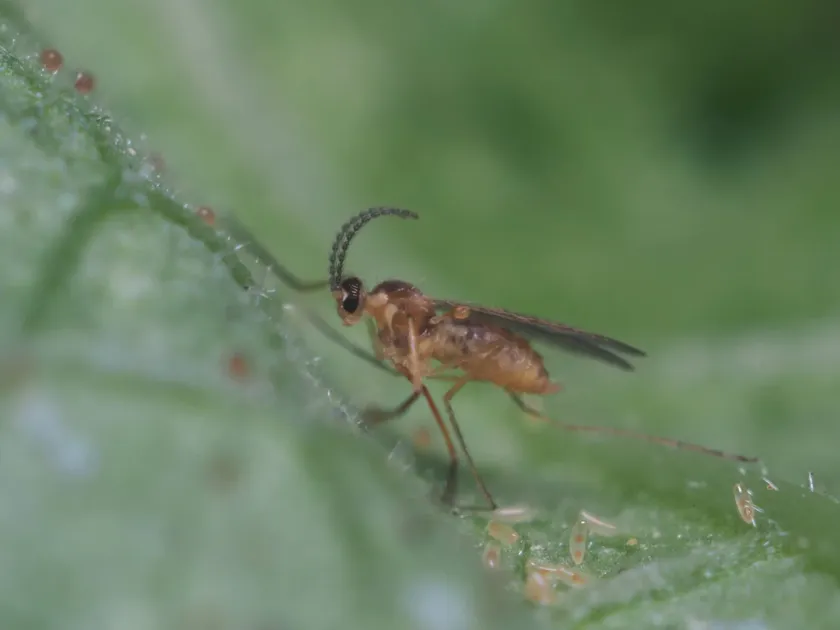
Description
How to identify
Feltiella (Feltiella acarisuga) is a predatory gall midge belonging to the Cecidomyiidae family of the order Diptera. It is widely recognized as a highly effective natural enemy of various species of spider mites (Tetranychidae).
The adult midge is a delicate insect with a wing span of about 2 mm. It is nocturnal, and its primary task is to locate spider mite colonies using volatile chemical cues emitted by infested plants. Once a colony is detected, the female lays its eggs nearby.
The larval stage is the most important for pest control. These bright orange, legless larvae are highly mobile. They move through the spider mite webbing, consuming eggs, nymphs, and adult mites with high efficiency.
The developmental cycle from egg to adult takes approximately 12–15 days under favorable conditions. Temperature is a key driver, with the midge thriving in the same warm, humid conditions that favor spider mite proliferation.
Being a specialist predator, Feltiella acarisuga focuses its energy exclusively on mites, making it one of the safest and most sustainable options for integrated pest management.
What it damages
Feltiella does not damage crops. On the contrary, it acts as a primary control agent against the two-spotted spider mite (Tetranychus urticae) and other related species that frequently infest greenhouse crops.
The larvae are voracious predators. A single larva can consume dozens of mites during its development, effectively collapsing mite populations within a short timeframe.
By targeting the mites in their own web-nests, the larvae prevent the rapid spread of infestation across the plant canopy, which is otherwise difficult to achieve with conventional contact-based treatments.
Feltiella is particularly effective in high-density greenhouse environments where spider mite outbreaks can lead to complete loss of marketable yield if not managed immediately.
Using this predatory midge helps maintain the ecological balance of the greenhouse, reducing the reliance on chemical pesticides and minimizing the risk of pesticide residues on produce.
When it appears
Feltiella activity is temperature and humidity-dependent. It performs best in conditions ranging from 20°C to 28°C and relative humidity above 60%.
In seasonal outdoor agriculture, these midges appear when temperatures rise and mite populations begin to grow. In greenhouses, they can be utilized year-round provided that the climate is controlled.
The population growth of Feltiella is rapid, often tracking the availability of its host. When mite numbers are high, the midge population booms, effectively exerting pressure on the pest.
In cooler or drier periods, the efficiency of Feltiella may decline. Agronomists often supplement or time their releases to coincide with the most favorable weather windows for the midge.
Regular releases are recommended to ensure a constant presence of the predator, especially in crops prone to chronic spider mite problems like cucumbers and peppers.
Signs of infestation
The presence of Feltiella is characterized by the visual identification of small, bright orange larvae crawling amidst spider mite webs on the underside of leaves.
As the predatory midge feeds, the spider mite colonies begin to appear withered or abandoned. The destruction of egg clusters is a clear sign that the Feltiella larvae are successfully active.
A reduction in the density of web-nesting areas is a primary field observation that indicates the pest population is being suppressed.
The absence of fresh mite-feeding symptoms, such as the characteristic stippling on leaves, indicates that the biological control program is functioning as expected.
Monitoring the underside of leaves for these orange larvae is the most reliable method for an agronomist to confirm that the biocontrol is established and working.
Control measures
Successful management with Feltiella requires a pesticide-free or pesticide-compatible approach. Many common synthetic pesticides, especially broad-spectrum insecticides, are lethal to these beneficial midges.
- Maintain high humidity levels (60%+) to facilitate successful midge development.
- Avoid broad-spectrum chemical sprays; use selective bio-pesticides when necessary.
- Perform localized releases directly into identified mite hotspots for maximum impact.
- Avoid overcrowding of plants to ensure the adults have space to fly and distribute their eggs.
- Coordinate with greenhouse climate control to optimize temperature for the predator's cycle.
Feltiella is often used in combination with predatory mites like Phytoseiulus persimilis. This combination provides both a mobile predator (midge) and a ground-based climber (mite), covering all levels of the plant.
Proper storage of the biological material before release is crucial; ensure that the product is handled carefully to maintain the viability of the insects.
By monitoring the pest-to-predator ratio, growers can decide when additional releases of Feltiella are needed to maintain the stability of the crop environment throughout the season.
Taxonomy
- Latin name
- Feltiella
- Order
- Diptera (flies)
- Family
- Cecidomyiidae
- EPPO code
- FLTLSP
Discussion
No discussions yet — be the first.