
Citrus weevil
Exophthalmus jekelianus
Description
How to identify
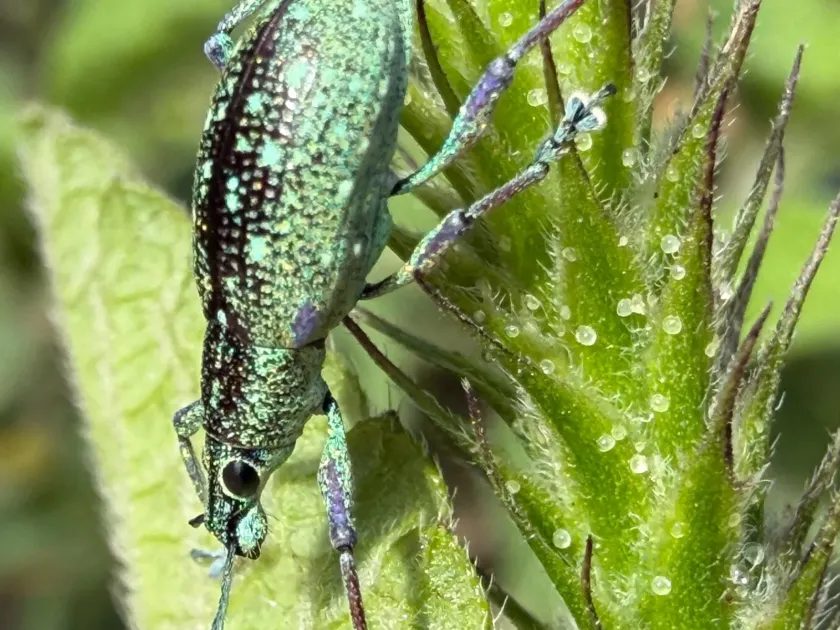
The citrus weevil (Exophthalmus jekelianus) belongs to the Curculionidae family, order Coleoptera. Adult beetles are easily recognized by their distinct, elongated snout known as a rostrum.
Their bodies are covered with fine scales, providing a natural camouflage that helps them blend into tree bark. This protective coloration makes them difficult to spot during daylight hours.
Larvae of this species are legless, C-shaped, and usually creamy-white. They remain hidden beneath the soil surface for the majority of their development, feeding on the plant's roots.
The pupal stage occurs within the soil, where the insect constructs a small chamber. This stage is relatively brief but is highly susceptible to environmental changes in the soil moisture.
As a specialized pest, Exophthalmus jekelianus is highly adapted to tropical and subtropical environments where citrus production is dominant.
What it damages
The citrus weevil primarily attacks plants in the Rutaceae family, specifically citrus trees such as oranges, lemons, and grapefruits. It poses a significant threat to both commercial orchards and home gardens.
Adult beetles feed on young leaves and tender shoots, leaving characteristic jagged edges and notches. In severe infestations, this can lead to significant defoliation of the canopy.
Larval damage is generally considered more severe as they consume fine root hairs. This interferes with the tree's uptake of water and nutrients, leading to poor growth and vigor.
Root damage provides entry points for soil-borne pathogens, such as fungi causing root rot. This can lead to the systemic decline of the tree and, eventually, tree mortality.
Reduced fruit set and premature fruit drop are common outcomes of significant root and canopy damage, leading to substantial losses in agricultural productivity.
When it appears
Adult activity typically begins at the onset of the growing season when new leaf growth provides an abundant food source. Monitoring should intensify as temperatures rise.
The peak activity period occurs during the summer months when warm conditions facilitate mating and egg-laying. Beetles are nocturnal, hiding during the heat of the day.
Eggs are deposited in sheltered areas, such as bark crevices or folded leaves. This strategy protects the offspring from predators and environmental stressors while they hatch and migrate to the soil.
Overwintering occurs primarily in the soil as larvae. However, in certain climates, adults may find protected sites to survive the colder months before resuming activity.
Effective management relies on monitoring the orchards from early spring to identify the first signs of adult emergence and initiate control measures accordingly.
Signs of infestation
The most visible sign of an infestation is the presence of notched or serrated leaf margins. This "ragged" appearance is the hallmark of adult beetle feeding.
Trees showing signs of sudden yellowing, reduced leaf turgor, or general decline often indicate significant root damage caused by larvae during the previous or current season.
Plants affected by root damage exhibit increased sensitivity to drought. Even with regular watering, the tree may appear stressed due to its compromised root system.
Observing the canopy at night with a flashlight can reveal the presence of adult beetles, confirming the need for immediate action.
Stunted branch growth and the overall lack of vigor in otherwise healthy trees are critical red flags that warrant a thorough inspection of the root zone and canopy.
Control measures
Cultural practices are essential for management. Regularly tilling or harrowing the soil under the canopy can disrupt the larval stage and expose them to predatory birds.
Biological control methods, such as the application of entomopathogenic nematodes or fungi, are highly effective against larvae in the soil without leaving chemical residues.
Chemical control involving systemic or contact insecticides may be necessary during peak adult activity. Applications should be timed carefully to minimize impact on beneficial pollinators.
- Hand-picking adults at night during peak emergence
- Using sticky barriers on the trunk to prevent climbing
- Ensuring strict quarantine of new nursery stock
- Promoting a healthy environment for natural predators
Integrated Pest Management (IPM) is the most sustainable approach, combining monitoring, cultural practices, and selective biological or chemical treatments to protect orchard yields.
Taxonomy
- Latin name
- Exophthalmus jekelianus
- Order
- Coleoptera (beetles)
- Family
- Curculionidae
- EPPO code
- EXOHJE
Discussion
No discussions yet — be the first.