
Green anaconda
Eunectes murinus
Description
How to identify
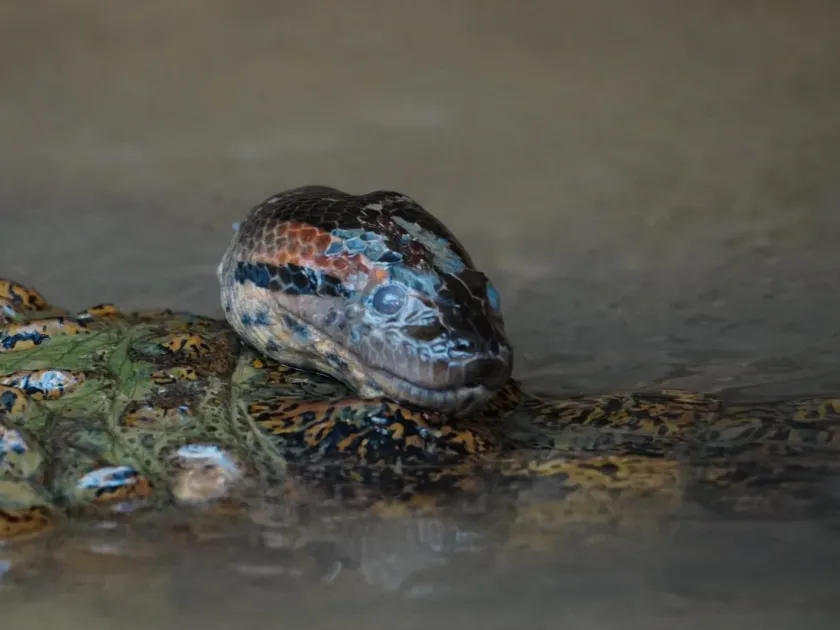
The green anaconda, or Eunectes murinus, is one of the world's heaviest snakes, belonging to the family Boidae. It is characterized by its massive body size and dark olive-green coloration with black spots, which provide excellent camouflage.
This species is semi-aquatic and often inhabits flooded areas, slow-moving rivers, and irrigation networks found within tropical agricultural landscapes. It is a highly specialized predator of the aquatic environment.
Taxonomically, it belongs to the order Squamata. While it does not consume crops, its behavioral patterns significantly impact the management of moist agricultural fields and irrigation systems.
The life cycle involves an ovoviviparous reproduction process, meaning the female gives birth to live young. These reptiles reach maturity over several years and exhibit high site fidelity when environmental conditions remain favorable.
Identifying features include nostrils and eyes positioned on the dorsal side of the head, allowing the animal to remain almost entirely submerged while waiting for potential prey in irrigation channels.
What it damages
Although the anaconda is not a herbivore, it causes mechanical damage to agricultural infrastructure. Large individuals frequently create tunnels in mud dams, leading to structural failures and water loss.
The physical presence of the snake leads to the trampling of crops near irrigation ditches. This causes localized crop lodging and can lead to significant yield reduction in heavily infested peripheral areas.
The snake's hunting habits disrupt the local biological control of pests. By preying on small mammals and birds that typically eat crop pests, the anaconda can indirectly lead to increased pest pressure on crops.
Erosion of embankments caused by snake movement weakens the soil structure along canal banks. This instability may lead to increased maintenance costs and potential flooding of the adjacent fields.
Field operations are often disrupted when workers avoid areas with large snakes, leading to delays in irrigation management and essential maintenance tasks that are critical for crop health.
Signs of infestation
Signs of an anaconda presence often include clear drag marks or «trails» on wet, soft soil, which are created by the heavy body of the snake as it moves between water bodies.
Flattened vegetation near the banks of irrigation ditches, often referred to as basking sites, provides a clear visual signal that an individual is using the area for thermoregulation.
Structural damage to water barriers, such as cracks in mud-based levees or unexplained water breaches, strongly suggests that a large reptile is burrowing in the embankment.
Discovery of shed skins, also known as sloughs, along the water edges is definitive evidence that the species is residing within the perimeter of the agricultural facility.
A noticeable decrease in the presence of natural rodent populations around water sources is a secondary sign that a major predator may have occupied the local territory.
Control measures
The most effective strategy for managing anaconda presence is maintaining clear vegetation along irrigation banks to reduce the cover and hiding opportunities available to the snake.
Installing sturdy wire mesh or screens at irrigation water intake points effectively prevents the entry of large snakes into the farm’s closed-loop water distribution system.
Regular maintenance and stabilization of canal embankments, coupled with immediate repair of any discovered burrows, help to minimize the suitability of the landscape for these reptiles.
Implementing effective rodent control programs reduces the food availability that attracts predators, encouraging the anaconda to relocate to natural, non-agricultural ecosystems.
Monitoring the water levels within drainage networks and keeping them well-maintained prevents the formation of stagnant pools that are highly preferred by the green anaconda.
Taxonomy
- Latin name
- Eunectes murinus
- Family
- Boidae
- EPPO code
- EUNEMU
Discussion
No discussions yet — be the first.