
Boa constrictor
Boa constrictor
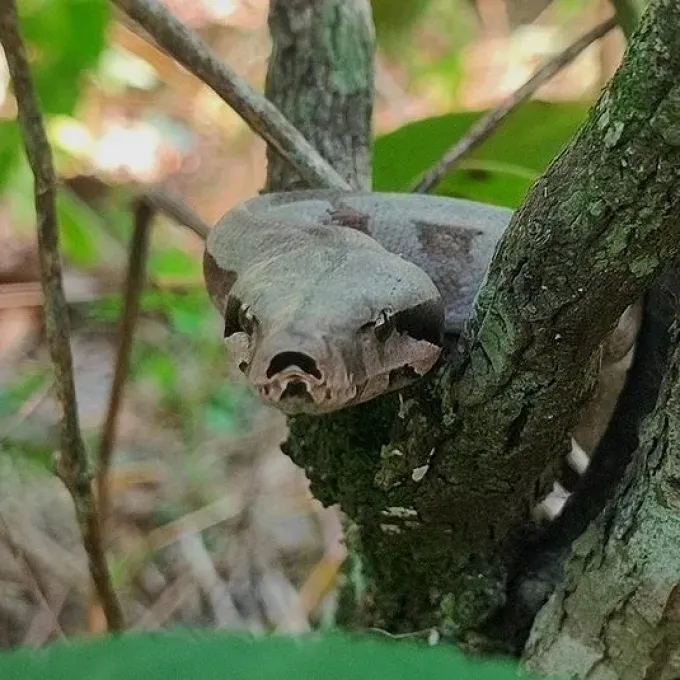
Description
How to identify
The *Boa constrictor* belongs to the Boidae family within the order Squamata. This species is recognized for its impressive size and complex, patterned dorsal markings that serve as effective camouflage.
Anatomically, they possess vestigial pelvic spurs, a common trait in basal snakes. They are non-venomous constrictors that rely on their muscular power to immobilize prey rather than toxins.
Taxonomically, they are widely studied in herpetology, native to various habitats in the Americas. Their biology is adapted for tropical forests, showing a preference for high humidity and cover.
The reproductive cycle is viviparous, with females giving birth to live young. Their life span is long, reflecting a low-density population structure in the wild.
It is important to note for agricultural professionals that *Boa constrictor* does not function as a plant pest. It holds no destructive potential for agricultural crops or nursery stock.
What it damages
The *Boa constrictor* causes no damage to crops. As an obligate carnivore, its digestive system is specialized for animal proteins, lacking the enzymes to process plant matter.
There are no recorded instances of this species inflicting damage on roots, stems, leaves, or fruits. Consequently, it is not listed in any agricultural pest registry.
In agricultural settings, these snakes play a beneficial role by predating on rodents. Rodents are known to destroy grains and structural components of farming facilities.
By keeping rodent populations in check, the *Boa constrictor* can serve as a natural biological control agent against genuine agricultural pests, effectively protecting investments.
No economic damage thresholds are associated with this snake, as its presence does not interfere with cultivation, harvest, or storage processes.
Control measures
No control measures are needed for the *Boa constrictor* in an agricultural context. Since the species is harmless to crops, it does not require monitoring or eradication efforts.
If management is required to relocate an individual, it should be done using professional, humane capture techniques and release protocols outside of active farmland.
The use of chemical pesticides or rodenticides for the purpose of controlling this snake is strictly prohibited. Such actions disrupt ecological services and cause unnecessary environmental harm.
Agricultural safety protocols should prioritize staff education. Understanding that the snake is not an agricultural pest prevents unnecessary intervention and promotes safety.
The most sustainable management approach is passive coexistence. Maintaining a balance where natural predators exist helps keep harmful pest levels lower without chemical intervention.
Taxonomy
- Latin name
- Boa constrictor
- Family
- Boidae
- EPPO code
- BOAXCO
Discussion
No discussions yet — be the first.