
Boa constrictor
Boa
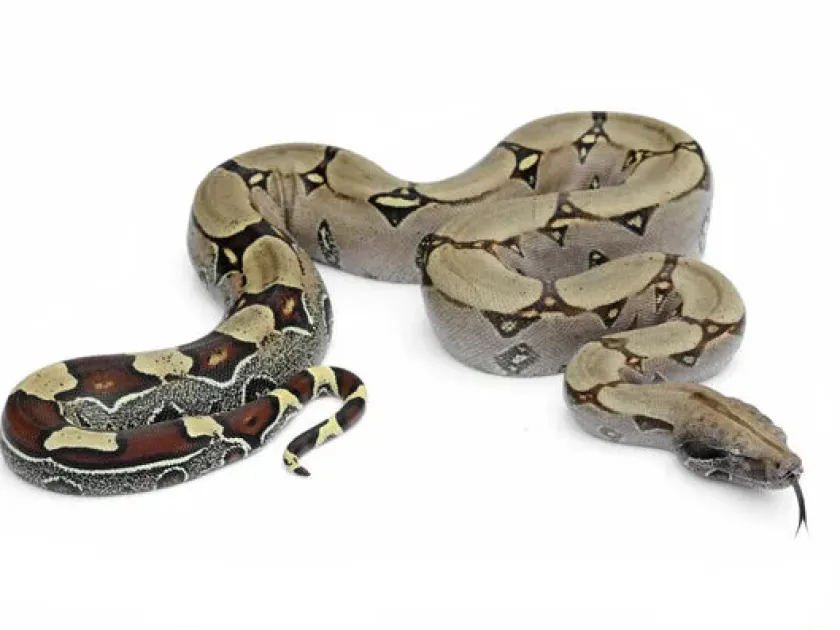
Description
How to identify
The Boa constrictor is a large, non-venomous snake belonging to the Boidae family. It is widely distributed across Central and South America, inhabiting diverse tropical environments ranging from rainforests to dry savannas.
Taxonomically, it falls under the order Squamata. Its morphology is adapted for ambush predation, characterized by a muscular body and cryptic coloration that allows it to remain unnoticed within the agricultural landscape.
Unlike many agricultural pests, the Boa constrictor does not possess any mouthparts or digestive enzymes capable of consuming or breaking down plant tissues, such as leaves, roots, or stems.
The biological life cycle of the species is characterized by long periods of inactivity between meals, which means they do not exhibit the rapid population growth or intensive feeding behaviors associated with typical crop pests.
In a field setting, these snakes are solitary and territorial, often patrolling areas near field margins where small mammals are abundant, without ever interacting with the cultivated crops.
What it damages
The Boa constrictor causes no damage to crops or agricultural produce. It is a strictly carnivorous predator that feeds exclusively on vertebrate prey, such as rodents, birds, and occasionally lizards.
In tropical agriculture, these snakes provide a valuable ecosystem service by reducing populations of rodents that are notorious for damaging crops, destroying stored grain, and spreading diseases.
There is no evidence of Boas causing physical harm to plants. They do not consume fruits, they do not damage stems, and their movement through a field is insufficient to cause any economic impact on crop productivity.
Therefore, classifying the Boa constrictor as a pest is scientifically incorrect. Their presence within a farm is generally beneficial rather than detrimental to the farming operation.
Farmers operating in the native range of these snakes often view them as a natural form of pest management, capable of controlling rodent numbers far more effectively than manual trapping methods.
Control measures
No protection or control measures are required for the Boa constrictor, as it is not a pest organism. Efforts should focus on coexistence and safety protocols for field workers rather than eradication.
When working in areas where these snakes are present, standard safety precautions include wearing protective footwear and being aware of surroundings, especially in dense vegetation or during harvesting operations.
Agricultural management should prioritize the preservation of the local ecosystem. Excessive use of rodenticides or indiscriminate habitat destruction can negatively impact natural predators like the Boa constrictor.
Maintaining a balanced ecosystem where natural predators thrive is a pillar of sustainable agriculture, particularly in tropical regions where biological pest control is highly effective.
In summary, the Boa constrictor should be protected as a beneficial component of the local fauna, as its role in suppressing rodent pests far outweighs any potential for human-wildlife conflict.
Taxonomy
- Latin name
- Boa
- Family
- Boidae
- EPPO code
- BOAXSP
Discussion
No discussions yet — be the first.