
Cactus moth
Euclemensia bassettella
Description
How to identify
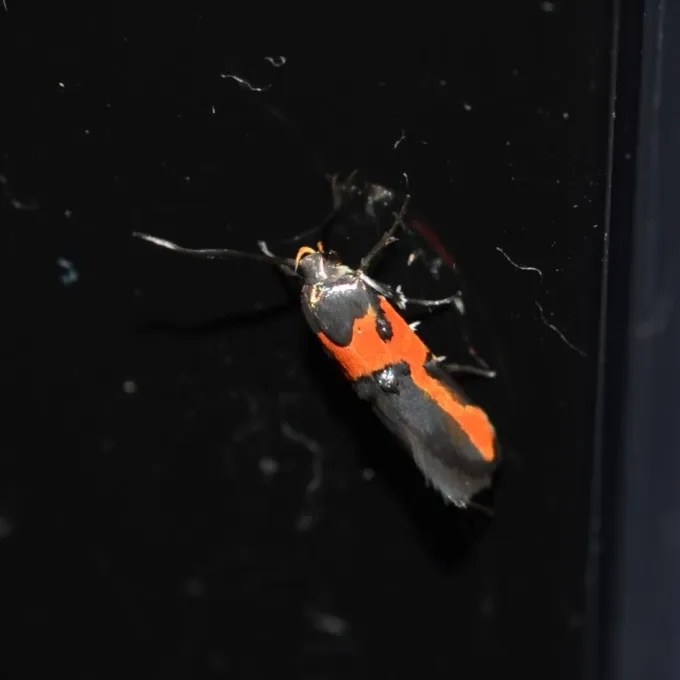
The cactus moth (Euclemensia bassettella) is a member of the Cosmopterigidae family. Adults are small, inconspicuous moths with a wingspan of approximately 12–15 mm, featuring dark wings with distinct orange or yellowish spots.
The life cycle encompasses egg, larva, pupa, and adult stages. Females typically deposit their eggs near the areoles or on damaged epidermal areas of the host plant, facilitating the larvae's entry upon hatching.
Larvae are characterized by a yellowish-white body and a darkened head capsule. They are strictly endophagous, meaning they spend their entire development feeding inside the succulent tissue of the cactus.
Pupation occurs either within the feeding tunnels created by the larva or in a secure cocoon attached to the plant surface. The speed of development is highly correlated with ambient temperature.
This species is highly specialized, primarily targeting cacti of the genus Opuntia. Its evolutionary strategy is perfectly suited for navigating and exploiting the internal architecture of cacti stems.
What it damages
The larvae primarily damage Opuntia species by tunneling through the internal flesh of the pads. This internal feeding disrupts the plant's vascular system, preventing the transport of water and essential nutrients.
As the larvae create extensive galleries, the structural integrity of the cactus pad is compromised. Affected areas often collapse, leading to significant loss of plant vigor and growth potential.
Furthermore, the tunnels serve as entry points for opportunistic pathogens, including various bacteria and fungi, which trigger secondary rot. This combined stress often results in the rapid death of the infested plant segment.
In nursery settings, a heavy infestation can cause rapid decline and destruction of valuable stock. The presence of the pest is often masked by the succulent's exterior until extensive internal damage has occurred.
Losses are particularly devastating for ornamental cactus collections, where the aesthetic value is diminished or destroyed by the internal tunneling and resulting superficial necrosis.
Signs of infestation
The most reliable sign of an infestation is the presence of small entry holes on the cactus surface. These are often surrounded by granular frass (larval waste), which resembles fine sawdust.
Affected tissues may exhibit localized discoloration, appearing yellowish or brownish and slightly sunken. This is a direct indication of the tissue necrosis occurring along the larval feeding path.
Upon examination, one may observe internal chambers filled with larval debris. In advanced cases, the internal tunneling causes the pad to feel soft or spongy when pressed gently.
Secondary symptoms include the development of wet or dry rot around the entry points, which can spread to healthy tissue if the infestation is not intercepted early.
Adult moth activity, observed during dusk or dawn, serves as a critical warning sign that the population is actively breeding and that immediate monitoring is required to prevent new egg-laying.
Control measures
Mechanical control involves the precise excision of infested pads. The affected areas must be removed down to healthy, clean tissue, and the resulting wound should be treated with a fungicide to prevent rot.
Systemic insecticides are the most effective chemical control. Products containing imidacloprid or similar active ingredients can be applied via soil drench, allowing the plant to absorb the toxin and kill larvae feeding inside.
Pheromone traps are essential for monitoring and early detection. By tracking the adult moth population, growers can schedule preventative treatments precisely when the risk of egg-laying is highest.
Rigorous quarantine procedures for all new plant additions are vital. Each specimen should be closely inspected for entry holes and frass over a period of at least four weeks before being introduced to the main collection.
Biological control agents, such as entomopathogenic nematodes, can provide effective suppression of larval populations when environmental conditions are suitable for their application in outdoor settings.
Taxonomy
- Latin name
- Euclemensia bassettella
- Order
- Lepidoptera (butterflies)
- Family
- Cosmopterigidae
- EPPO code
- EUKLBA
Discussion
No discussions yet — be the first.