
Euclemensia
Euclemensia
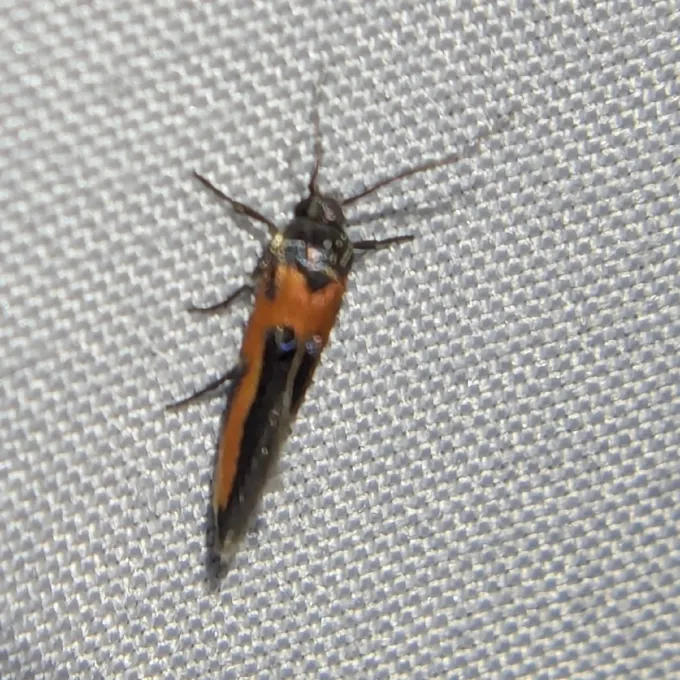
Description
How to identify
Euclemensia belongs to the family Cosmopterigidae, which is part of the order Lepidoptera. These are small nocturnal moths that often remain unnoticed due to the cryptic lifestyle of the adults.
Adult individuals have modest coloration, allowing them to camouflage against tree bark. Narrow, fringed wings are characteristic of members of this micro-moth family.
The larvae of Euclemensia possess specialized mouthparts adapted for feeding inside dense plant tissues. During development, they go through several larval stages while increasing in size.
The insect's life cycle is closely linked to the phenology of its host plant. Larval development occurs inside the fruit, which protects them from most external factors and natural enemies.
Accurate species identification requires entomological analysis of genitalia, as these moths may visually resemble other members of the Cosmopterigidae group.
What it damages
The primary food source for Euclemensia larvae is the acorns of various oak species. The pest causes significant damage to the tree seed bank by consuming the internal parts of the acorns.
The larva eats the inside of the acorn, completely destroying the embryo and cotyledons. As a result, damaged fruits lose their viability and are unsuitable for forest regeneration.
Mass outbreaks of this pest can lead to a drastic reduction in acorn yields in oak stands. This creates serious challenges for forestry management and natural forest succession.
In addition to direct damage to seeds, the tunnels bored by the larva inside the acorn create conditions for the development of secondary fungal infections and mold, accelerating decay.
The damage caused by Euclemensia is considered substantial in regions with high oak density, as it directly impacts the natural reproduction cycle of the trees.
Signs of infestation
The first sign of infestation is the presence of small holes on the surface of the acorn shell, through which the larva enters the fruit.
Often, near these holes, one can notice the larva's frass, which looks like small brown grains. This indicates active feeding by the larva inside the acorn.
Damaged acorns often fall prematurely from the trees. If such an acorn is opened, a hollowed-out cavity and the larva or its waste products are found inside.
During the pupation period, moths may leave traces of silken threads, although this sign is often hidden from visual inspection when development occurs inside the acorn.
The presence of moths during their flight period can be confirmed using light traps installed in the oak canopy during evening hours.
Control measures
The primary protective measure is the collection and immediate destruction of fallen acorns before the larvae emerge for pupation, which interrupts the pest's life cycle.
It is recommended to treat seed material using fumigation methods in specialized storage facilities if the acorns are intended for nursery sowing.
Biological control methods involve the use of entomophages, particularly parasitic Hymenoptera, which infect the larvae and pupae of the pest.
In forest stands, it is important to maintain high levels of biodiversity by attracting insectivorous birds, which help regulate micro-moth populations.
Chemical treatment of oak canopies with insecticides during moth flight is rarely performed due to environmental restrictions and the high costs involved in forest environments.
Taxonomy
- Latin name
- Euclemensia
- Order
- Lepidoptera (butterflies)
- Family
- Cosmopterigidae
- EPPO code
- EUKLSP
Discussion
No discussions yet — be the first.