
Ethmia nigroapicella
Ethmia nigroapicella
Description
How to identify
Ethmia nigroapicella belongs to the order Lepidoptera, family Ethmiidae. The adult moth is small, with a wingspan of approximately 20-25 mm.
The insect's wings feature a distinctive light coloration with numerous dark spots and a prominent black patch at the apex of the forewing, which characterizes the species.
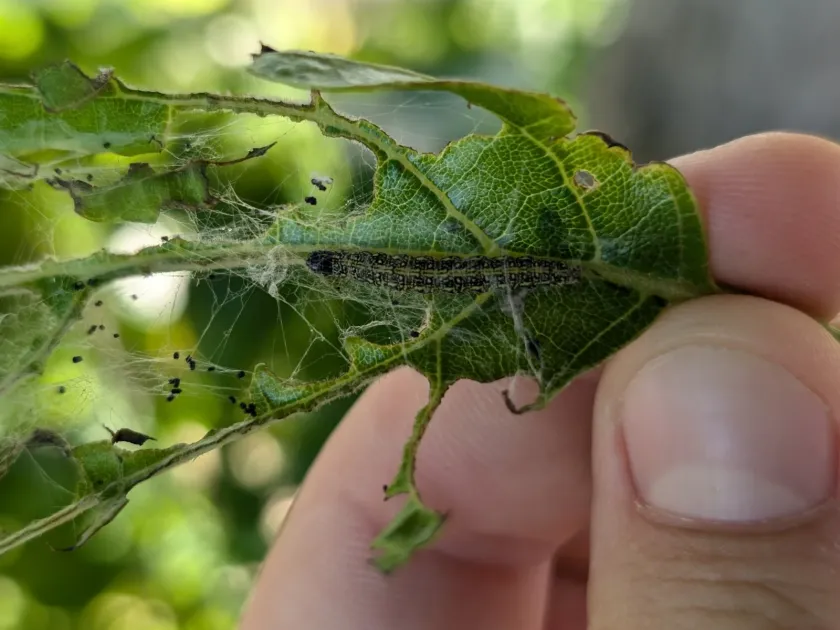
The larvae (caterpillars) are highly active and possess a specific coloration that aids in camouflage against the foliage of their host plants.
The development of this insect follows a complete metamorphosis cycle: egg, larva (caterpillar), pupa, and adult.
In its natural habitat, this species is most prevalent in regions with warmer climates, where conditions favor the development of multiple generations per season.
What it damages
The primary damage is caused by the caterpillars, which feed on the leaves of various trees, shrubs, and herbaceous plants.
This species poses a significant threat to ornamental plantings and certain fruit crops, where mass outbreaks of reproduction have been observed.
In intensive farming conditions, the pest can defoliate leaves until they are skeletonized, which significantly weakens the plant.
Damage to the leaf apparatus leads to the disruption of photosynthesis, a decrease in the plant's overall immunity, and delays in fruit development.
At high population densities, the larvae can consume almost the entire green mass, leading to the death of young seedlings or loss of aesthetic value in park areas.
When it appears
The emergence of adult Ethmia nigroapicella typically coincides with the beginning of the growing season, when stable positive temperatures are established.
Maximum caterpillar activity is observed in mid-summer, when the food source is most available for feeding and larval growth.
Depending on weather conditions, the pest can produce two to three generations per season, which significantly complicates population control.
The overwintering stage usually occurs as a pupa within a cocoon, located in the surface layer of the soil or in sheltered areas on tree trunks.
Timely monitoring in early summer allows for the detection of early infestations and prevents mass reproduction in orchards.
Signs of infestation
The first sign of the pest's presence is characteristic damage to the leaf edges, which the caterpillars consume starting from the periphery.
The presence of larval excrement on leaf surfaces and silk threads used to web leaves together serve as direct signals to initiate protective measures.
During heavy infestations, massive leaf curling is observed, as caterpillars create shelters inside to pupate or hide during the day.
Visual inspection of the underside of leaves allows for the detection of egg clutches, which are usually arranged in compact groups.
In neglected cases, one can notice the stripping of branches and a significant change in the appearance of shrubs, indicating the prolonged presence of the pest.
Control measures
The primary control method involves the use of biological insecticides, which effectively target younger larval instars without harming beneficial insects.
In cases of high population density, systemic chemical pesticides from the organophosphate or pyrethroid groups are applied according to established regulations.
Agrotechnical measures, such as collecting and destroying fallen leaves where cocoons may hide, significantly reduce the population for the following year.
It is recommended to maintain an ecological balance in the garden by encouraging birds and entomophagous insects that are natural enemies of Ethmia caterpillars.
- Conducting preventive insecticide treatments during periods of mass egg hatching.
- Regular inspection of plantings for early detection of infestation hotspots.
- Mechanical cleaning of tree trunks from bark and moss, where the pest may overwinter.
Taxonomy
- Latin name
- Ethmia nigroapicella
- Order
- Lepidoptera (butterflies)
- Family
- Ethmiidae
- EPPO code
- ETHMCO
Discussion
No discussions yet — be the first.