
Alder sawfly
Eriocampa ovata
Description
How to identify
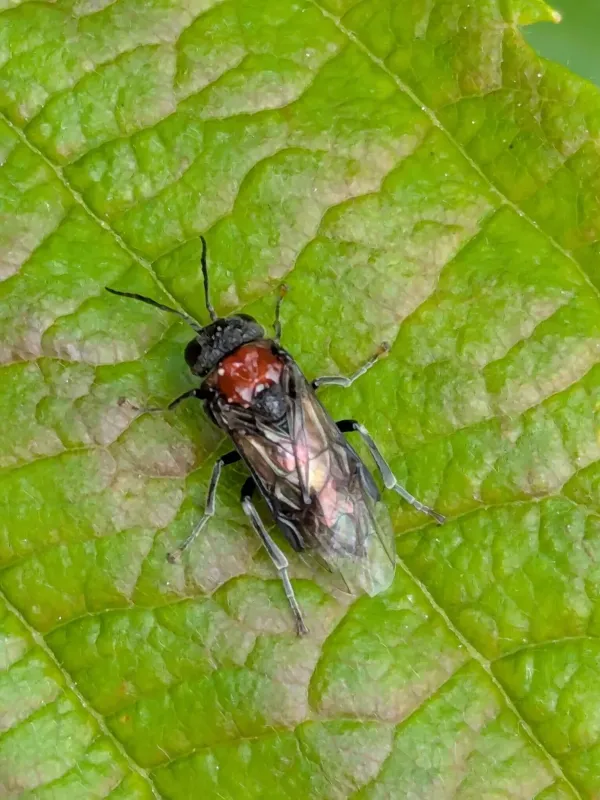
The alder sawfly (Eriocampa ovata) is a member of the Hymenoptera order and the Tenthredinidae family. Adults are small, shiny black insects, typically measuring about 5–6 mm in length.
The larvae are caterpillar-like and are covered with a characteristic white, slimy-looking secretion that protects them from predators and desiccation. They reach up to 12 mm before pupation.
The life cycle undergoes complete metamorphosis, including egg, larva, pupa, and adult stages. They typically overwinter as larvae in cocoons within the soil or leaf litter.
Adults emerge in spring, coinciding with the development of alder leaves. Females use their saw-like ovipositor to insert eggs into the leaf tissue.
There are usually one or two generations per year depending on local weather conditions, making timing crucial for effective pest management in nurseries or gardens.
What it damages
The primary host for this pest is the alder tree (Alnus spp.), though it may occasionally attack hazel. The larvae are voracious leaf-feeders.
Larvae skeletonize the leaves, eating the green tissue and leaving only the network of veins. This significantly reduces the tree's ability to photosynthesize effectively.
Heavy infestations can lead to premature leaf drop and overall stress, which weakens the tree and makes it susceptible to opportunistic diseases and environmental stress.
Young trees are particularly vulnerable, as repeated defoliation can stunt their growth and significantly reduce their vigor over several growing seasons.
In ornamental plantings, the damage caused by the alder sawfly detracts from the aesthetic value of the trees, often leaving them looking unhealthy or sickly.
Signs of infestation
Small holes appearing on the foliage in late spring or summer are the first signs of larval activity. These holes grow larger as the larvae continue to feed.
Skeletonized leaves that have turned brown or brittle indicate a significant presence of the pest. The damage often progresses from the inner canopy outward.
Accumulation of fine, dark larval frass on the leaves or the ground beneath the tree canopy is a clear indicator of an ongoing infestation by the sawfly larvae.
The presence of the larvae themselves, which can be found feeding in groups on the underside of the leaves, is the most accurate diagnostic sign during the active season.
Sparse canopy growth and premature yellowing of leaves in mid-summer, while surrounding trees remain lush, suggest that the alder sawfly is present and active.
Control measures
Sanitation is a key control method. Raking and removing fallen leaves in the autumn can remove many overwintering larvae, reducing the population for the next year.
Cultivating the soil beneath the canopy in the autumn or early spring helps destroy the cocoons buried in the top layer of the earth, disrupting the life cycle.
If the infestation is severe, application of appropriate insecticides is recommended. Contact and systemic insecticides can be effective when applied during larval feeding.
Biological control agents, such as specialized bacterial sprays (e.g., Bacillus thuringiensis), are effective options that minimize harm to beneficial insects and the environment.
Encouraging natural predators, such as birds, parasitic wasps, and predatory beetles, can help keep the population of the alder sawfly under control in stable ecosystems.
Taxonomy
- Latin name
- Eriocampa ovata
- Order
- Hymenoptera
- Family
- Tenthredinidae
- EPPO code
- ERIAOV
Discussion
No discussions yet — be the first.