
Allardi flea beetle
Epitrix allardi
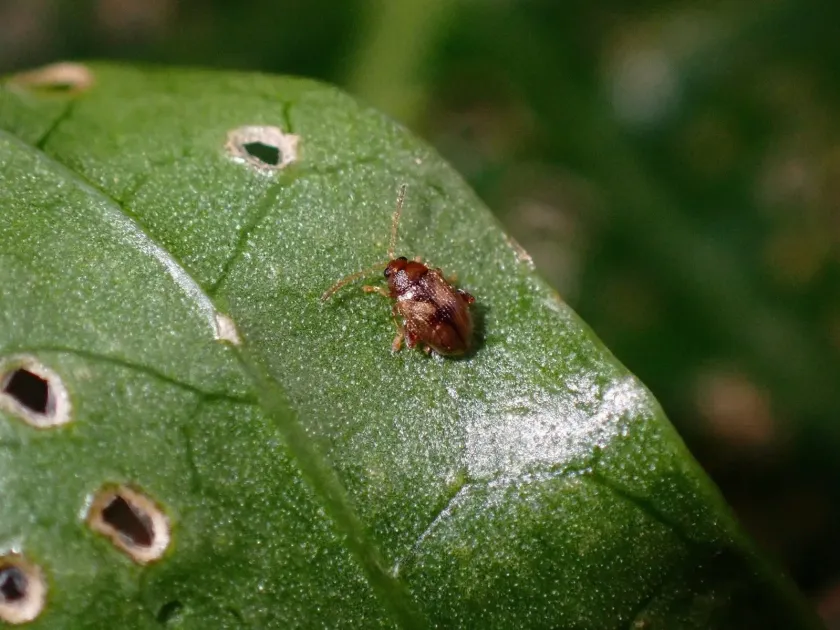
Description
How to identify
The Allardi flea beetle (Epitrix allardi) is a small member of the Chrysomelidae family, recognized as a specialized pest of solanaceous crops. The adult beetle typically measures between 1.5 and 2 mm in length, possessing a dark, metallic bronze or black coloration.
As suggested by its common name, the beetle features robust hind legs adapted for jumping, allowing it to quickly escape potential threats when disturbed. The elytra (wing covers) display distinct longitudinal rows of punctures.
The larvae are small, slender, and white, spending their entire developmental period in the soil. They possess a chewing mouthpart structure that is perfectly suited for feeding on the roots and tubers of host plants.
Distinguishing Epitrix allardi from related species within the Epitrix genus requires professional entomological inspection of male genital characteristics, as they are morphologically nearly identical to other flea beetles.
The pest is highly resilient and thrives in various environments, utilizing its ability to survive in diverse micro-climates, from open field agricultural systems to sheltered vegetable garden environments.
What it damages
This pest targets members of the Solanaceae family, with potatoes, tomatoes, eggplants, and peppers being the most frequent hosts. It poses a significant threat to commercial vegetable production.
Adult beetles cause damage to foliage by consuming small, round pits, resulting in a characteristic "shot-hole" appearance. Severe infestations can lead to significant defoliation, severely inhibiting the plant's ability to produce energy through photosynthesis.
Larval stages inflict damage below the soil surface. They feed on roots, causing stunted growth and poor nutrient uptake. On potatoes, they create shallow, winding tunnels in the skin and flesh of tubers, which lowers market quality and creates entry points for diseases.
Plant mortality is a common outcome in younger crops, particularly when pest pressure coincides with dry environmental conditions that prevent the plants from recovering from root damage.
The indirect economic impact includes the potential transmission of plant viruses and the increased costs of washing and sorting damaged produce prior to market delivery.
When it appears
The life cycle begins in early spring, when overwintering adults emerge from the soil or plant debris. They initially colonize weed species within the Solanaceae family before moving to cash crops.
Active flying and mating occur during the warmer months, typically from late spring through mid-summer. Females deposit eggs in the soil near the root zone of host plants to ensure immediate access to food for hatching larvae.
The time from egg to adult is influenced by soil and air temperature, generally spanning 4 to 6 weeks. In temperate zones, this results in one or two generations per growing season.
Peak populations often align with the critical development stages of crops, such as the tuber initiation phase in potatoes or the fruit-set phase in tomatoes, necessitating focused monitoring.
As autumn temperatures drop, the beetles cease activity and prepare for diapause, seeking refuge in protected areas such as soil cracks or leaf litter to survive the winter months.
Signs of infestation
Early warning signs include the rapid appearance of numerous small pin-prick holes on the undersides and surfaces of leaves, often accompanied by the yellowing of leaf edges.
At harvest, tubers may display irregular, rough-surfaced lesions or shallow grooves, which are tell-tale signs of larval feeding activity during the growing season.
A simple field test for detection involves using a sweep net or tapping foliage over a white surface to capture jumping beetles, allowing farmers to quantify the pest density.
Plants showing signs of unexplained wilting or drought stress despite adequate irrigation often indicate significant root damage caused by high larval populations in the root zone.
Increased activity of the pest is frequently correlated with the presence of unmanaged solanaceous weeds (such as black nightshade) in the field margins or nearby abandoned areas.
Control measures
Management strategies must be integrated, focusing on both the prevention of colonization and the reduction of active pest populations through several combined methods.
- Practice long-term crop rotation to break the pest's reproductive cycle.
- Implement rigorous weed control programs targeting wild Solanaceae host plants.
- Apply preventative soil-applied insecticides or foliar sprays based on economic injury thresholds.
- Utilize yellow sticky traps to detect initial migration and monitor population trends.
- Conduct deep tillage post-harvest to expose overwintering larvae and pupae to environmental stressors.
Chemical control should be applied during the early morning or evening hours, when the beetles are most active on the plant surfaces and not hiding in the soil or lower canopy.
Biological control options, including the use of entomopathogenic fungi, can be effective in reducing larval populations in the soil when applied under correct moisture and temperature conditions.
Always prioritize the use of selective insecticides to preserve beneficial predatory insects that naturally suppress flea beetle populations in the ecosystem.
Taxonomy
- Latin name
- Epitrix allardi
- Order
- Coleoptera (beetles)
- Family
- Chrysomelidae
- EPPO code
- EPIXAL
Discussion
No discussions yet — be the first.