
Empusa pennicornis
Empusa pennicornis
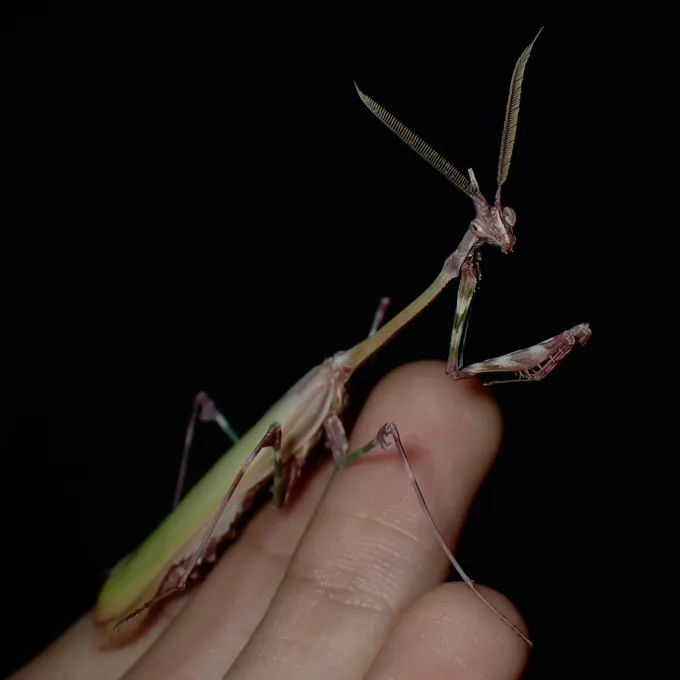
Description
How to identify
Empusa pennicornis is a species of praying mantis belonging to the family Empusidae, distinguished by its unique morphological adaptations.
Adult males are characterized by feather-like (pectinate) antennae, which distinguish them from females and other mantid species in the same habitat.
The body is elongated with a distinct cone-shaped protrusion on the head, which serves as camouflage within vegetation to avoid detection by both predators and prey.
The insect undergoes incomplete metamorphosis, proceeding through egg, nymph, and adult stages without a pupal phase.
They are primarily found in dry, warm environments, often inhabiting grasslands, shrublands, and the edges of agricultural fields.
What it damages
This species is predominantly a predator rather than a plant-eating pest, meaning it does not cause direct damage to agricultural crops.
Its primary diet consists of various arthropods, including other insects, which may include both potential pests and beneficial pollinators.
There is no evidence of tissue damage, such as leaf chewing or stem boring, typically associated with agricultural pest infestations.
Their presence in the field is usually indicative of a complex ecosystem with available prey, which is often a sign of a healthy, biodiverse environment.
They serve as natural biological control agents, contributing to the regulation of populations of smaller insect species within the agroecosystem.
When it appears
Adults are typically active during the mid-to-late summer months, coinciding with peak temperatures that favor their metabolic activities.
Nymphs emerge in the spring and develop throughout the warmer months, undergoing several molts as they grow.
The insect's life cycle is strictly seasonal, with adults mating and laying egg cases (oothecae) in late summer or early autumn.
Overwintering occurs at the nymph stage, often in sheltered locations such as dense vegetation or leaf litter to survive cold temperatures.
Seasonal activity is highly temperature-dependent, and development slows significantly as temperatures drop during the autumn period.
Signs of infestation
The primary sign of their presence is the visual observation of nymphs or adults during field scouting in sunlit areas.
Egg cases (oothecae) can sometimes be found attached to plant stems or twigs, serving as the overwintering structure for the next generation.
A reduction in the population of smaller, more mobile insects in a specific area may indicate the presence of a predator like the mantis.
Due to their highly effective crypsis (camouflage), detecting them requires careful inspection of the foliage and stems of plants.
Since they do not cause direct damage to the crop, they are rarely detected by standard crop injury monitoring methods used for herbivores.
Control measures
Because Empusa pennicornis is not a crop-damaging pest, specific control measures are generally unnecessary and not recommended.
Maintaining biological diversity, including hedgerows and unsprayed buffer strips, provides habitat for such beneficial insects.
The use of broad-spectrum insecticides should be minimized to avoid harming beneficial predatory insects that contribute to natural pest control.
Manual removal of egg cases or individuals may be performed if an unusual concentration is observed in sensitive areas like greenhouses.
Ultimately, the presence of these mantids is generally considered a positive indicator of ecological health in an agricultural landscape.
Taxonomy
- Latin name
- Empusa pennicornis
- Family
- Empusidae
- EPPO code
- EMPUPC
Discussion
No discussions yet — be the first.