
Empusa pennata
Empusa pennata
Description
How to identify
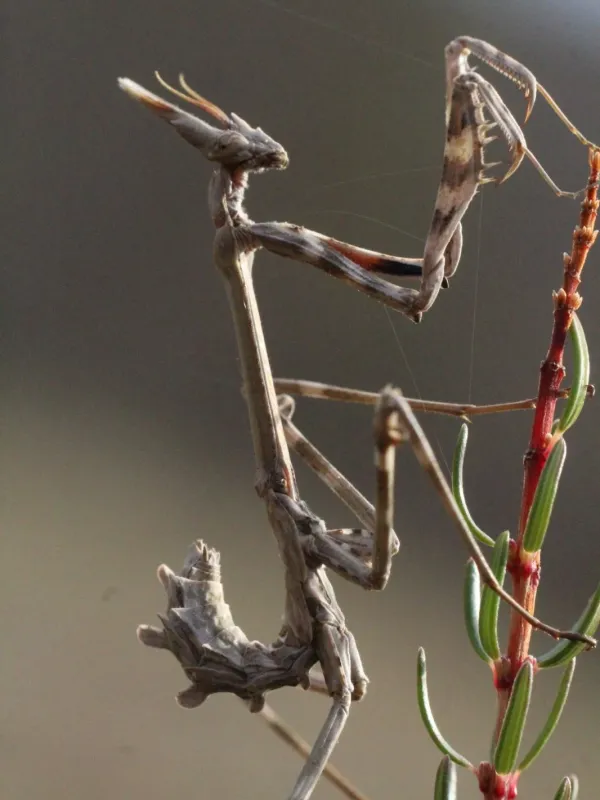
Empusa pennata, commonly known as the conehead mantis, belongs to the order Mantodea and the family Empusidae. It is easily recognized by its elongated body and the distinctive cone-shaped crest on its head.
Adult insects can grow up to 6–7 centimeters in length. Their coloration ranges from bright green to brown, providing perfect camouflage against dry vegetation or grass stems.
Males are distinguished by their long, feathery antennae used for tracking female pheromones, whereas females possess shorter, thread-like antennae.
These mantises move very slowly, typically remaining motionless while waiting for prey, which makes them expert at avoiding detection.
The species is well-adapted to arid environments, often inhabiting sunny meadows, clearings, and open spaces where vegetation is sparse.
What it damages
It is crucial to understand that Empusa pennata is not a pest; it does not feed on plant tissues, leaves, or roots, and therefore causes zero damage to crops.
Instead, as a predator, it consumes various small insects, including potential pests found in gardens, orchards, and field borders.
In agronomy, Empusa pennata is regarded as a beneficial entomophage that contributes to the natural regulation of insect populations.
There is no reason to initiate any control measures against this species, as it represents no threat to agricultural productivity or plant health.
Their presence is a positive indicator of a healthy, diverse ecosystem where natural biological control is actively functioning.
When it appears
The life cycle of the conehead mantis is unique, with nymphs frequently remaining active throughout the year, even during milder winter months.
The peak activity of adult mantises occurs during late spring and summer, which is the primary season for mating and egg-laying.
Overwintering usually occurs at the nymph stage, with the insects hiding in dense grass or leaf litter to survive colder temperatures.
As temperatures rise, these insects increase their activity levels, feeding continuously to support their growth and reproductive cycles.
During the hottest periods of summer, they often switch to nocturnal habits to prevent overheating and conserve moisture.
Signs of infestation
You can identify the presence of Empusa pennata by observing their unique, elongated body shape, which allows them to blend in perfectly with plant stems.
When searching for them, look for motionless insects perched on tall grasses with their front legs folded, maintaining a characteristic prayer-like posture.
A noticeable decrease in small pest insects, such as aphids or leafhoppers, in a particular area may indicate the presence of these predatory mantises.
They are more easily spotted in the evening, as they become slightly more mobile and active while hunting for nocturnal prey.
Seeing them in your garden is a sign of ecological balance, as they are selective predators that do not harm the plants themselves.
Control measures
No specific control measures are needed for Empusa pennata, as they are valuable allies in integrated pest management programs.
Avoid the use of broad-spectrum pesticides, as these chemicals kill beneficial predators, including mantises, along with the targeted pests.
Maintaining strips of natural vegetation around field edges is highly recommended to provide habitats for these beneficial insects to thrive.
If you encounter them in areas where you are working, simply relocate them to a safe patch of vegetation rather than eliminating them.
By protecting natural predators like the conehead mantis, you reduce the overall need for chemical interventions and promote sustainable farming practices.
Taxonomy
- Latin name
- Empusa pennata
- Family
- Empusidae
- EPPO code
- EMPUPE
Discussion
No discussions yet — be the first.