
Donacia crassipes
Donacia crassipes
Description
How to identify
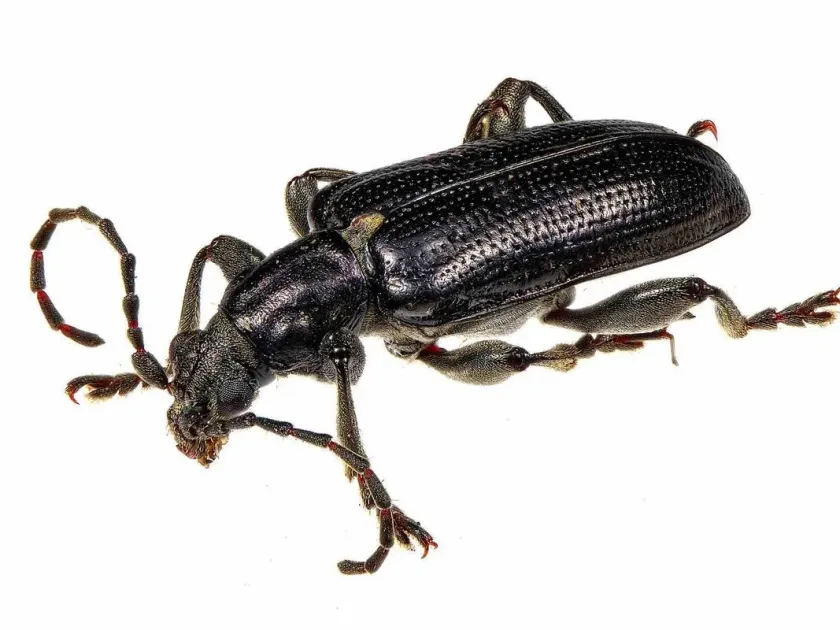
Donacia crassipes is a member of the leaf beetle family (Chrysomelidae) within the order Coleoptera. This beetle is relatively large, measuring between 9 and 14 mm in length, and is easily recognized by its vibrant metallic luster in shades of gold, green, or bronze.
A distinctive anatomical feature of this species is the enlarged, thickened hind femora (thighs), which are more pronounced in males. This unique physical trait serves as a key identifier for the species.
The larvae are white or cream-colored, exhibit a worm-like appearance, and possess a dark head. They spend their entire developmental phase underwater, attached to the submerged parts of aquatic vegetation.
Adult beetles live semi-aquatically and are commonly found resting or feeding on the floating leaves of water lilies and other similar aquatic plants. They are agile and will quickly drop into the water when disturbed.
The body of the adult is covered with dense, fine, water-repellent hairs. This covering allows the beetle to trap air and remain dry even when completely submerged under the water surface.
What it damages
Donacia crassipes primarily feeds on aquatic plants from the Nymphaeaceae family, including white water lilies and yellow water lilies, as well as various species of pondweed (Potamogeton).
The larvae inflict the most significant damage by feeding on the juices of submerged roots and stems. This nutritional drain weakens the plant, often causing it to become stunted or die off entirely.
Adult beetles damage the floating foliage by chewing distinct elongated holes through the leaf blades. In cases of high infestation, this can severely impact the decorative quality of a pond.
Reduction of the photosynthetic leaf area directly hinders the plant's growth and flowering cycles. A weakened plant is also significantly more susceptible to secondary environmental stresses.
Furthermore, the damaged plant tissues provide easy entry points for various aquatic pathogens, including fungal and bacterial infections, which can lead to complete rot of the aquatic plants.
When it appears
The life cycle of this beetle is strictly synchronized with the growth phases of its host plants. Larvae typically overwinter either within the plant tissue or in the muddy substrate at the bottom of the pond.
As water temperatures rise in the spring, the larvae conclude their feeding phase and form cocoons on the submerged parts of the plants to undergo pupation.
Adult beetles emerge in early summer, typically between June and July. This period coincides with the peak feeding and mating activity of the population.
After mating, females lay their eggs in clusters on the underside of floating leaves. Once the eggs hatch, the larvae immediately migrate to the water to find their host plant.
By autumn, the larvae reach the required developmental stage for hibernation. They seek refuge in the deep muddy layers of the pond floor to survive the cold winter months.
Signs of infestation
The primary symptom of an infestation is the appearance of numerous narrow, longitudinal holes or streaks on the water lily leaves, caused by the adult beetles feeding.
Upon inspecting the underside of the leaves in June, one can often find small clusters of eggs deposited in neat rows, protected by a thin, translucent layer of mucus.
The presence of shiny, metallic-looking beetles resting on the surface of the lily pads during sunny days is a clear indicator that the population is actively feeding.
Wilting, yellowing, or structural collapse of the floating leaves may indicate that the root system has been heavily compromised by the feeding of the larvae underneath.
Accumulation of fine organic debris or slight discoloration of the water around the infested plants may also signify that the beetles are currently active within that area.
Control measures
The most effective and eco-friendly way to manage this pest is manual collection. In the cool morning hours, adults can be easily gathered from the leaves before they become active.
Regular maintenance of the pond, including the removal of dead plant material and excess silt during the off-season, helps eliminate the overwintering sites for the larvae.
The use of chemical insecticides in ponds is strongly discouraged, especially if fish or other sensitive aquatic life are present, due to potential toxicity and ecological imbalance.
Encouraging the presence of natural predators, such as larger dragonflies or aquatic beetles that prey on smaller larvae, can help keep the population in check naturally.
- Frequent monitoring of floating foliage.
- Manual removal of egg clusters.
- Draining and cleaning small decorative ponds periodically.
Taxonomy
- Latin name
- Donacia crassipes
- Order
- Coleoptera (beetles)
- Family
- Chrysomelidae
- EPPO code
- DONACR
Discussion
No discussions yet — be the first.