
Dolerus gonager
Dolerus gonager
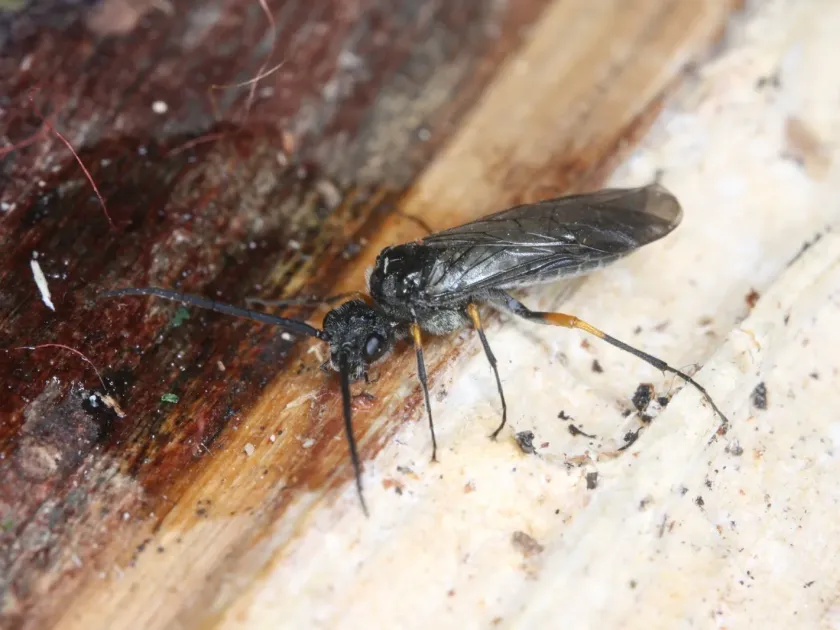
Description
How to identify
Dolerus gonager is a species of sawfly belonging to the family Tenthredinidae. These insects are known as significant pests of various cereal crops, characterized by their robust, shiny black appearance and distinct wings.
The larvae, known as false caterpillars, are typically greenish or grayish in color, which helps them blend into the foliage of grain crops. They possess several pairs of abdominal prolegs, distinguishing them from butterfly caterpillars.
The life cycle involves complete metamorphosis, including egg, larva, pupa, and adult stages. The overwintering phase occurs in the larval stage, residing in protective cocoons within the soil layer.
Adult sawflies emerge in the spring once soil temperatures reach adequate levels. They are active fliers and seek out host plants to lay their eggs, using their specialized saw-like ovipositor.
The duration of the larval stage depends on climatic conditions, with moisture and temperature playing a critical role in the development and survival rates of the population.
What it damages
Dolerus gonager primarily affects cereal crops, with wheat, barley, rye, and oats being the most common hosts. The damage is largely caused by the feeding behavior of the larvae.
Larvae consume the leaves of young cereal plants, often skeletonizing them or creating irregular jagged edges. This feeding significantly reduces the photosynthetic capacity of the plant.
Heavy infestations can lead to substantial thinning of the crop stand, which negatively impacts plant vigor and reduces overall grain yield during the harvest.
While adults also feed on plant tissues, the larval phase is responsible for the majority of the economic loss due to the high volume of foliage consumed during their growth.
Stressed crops are particularly susceptible to the damage, as they struggle to recover from the loss of photosynthetic tissue, leading to stunted growth or crop failure in severe cases.
Signs of infestation
The most visible sign of an infestation is the presence of eaten or ragged leaf margins on cereal plants. Larvae are often found resting on the leaves during the cooler parts of the day.
If left unchecked, areas of the field will appear significantly defoliated, with patches of damaged plants clearly visible against the healthier parts of the crop.
A secondary sign includes the detection of overwintering cocoons in the soil during tillage operations, which indicates the potential for a larger population in the subsequent season.
Growers should look for the presence of larvae near the base of the stems or along the leaf blades, as these are the primary feeding sites for the pest.
Early identification of feeding damage is crucial for effective management, as larvae can quickly consume large amounts of biomass once they reach later instars.
Control measures
The primary control strategy involves effective cultural practices, with deep autumn plowing being the most effective method for disrupting the life cycle of overwintering larvae.
Crop rotation is essential for managing Dolerus gonager, as maintaining diverse cropping systems prevents the build-up of larval populations in the soil.
Chemical control via approved insecticides should be reserved for instances where the population exceeds the economic threshold, ensuring minimal impact on beneficial insects.
- Weed management to remove alternative host plants.
- Monitoring adult flight activity with sticky traps.
- Encouraging natural predators such as parasitic wasps.
Integrated Pest Management (IPM) strategies, combining biological, cultural, and chemical controls, provide the most sustainable long-term solution against this cereal pest.
Taxonomy
- Latin name
- Dolerus gonager
- Order
- Hymenoptera
- Family
- Tenthredinidae
- EPPO code
- DOLEGO
Discussion
No discussions yet — be the first.