
Dolerus
Dolerus
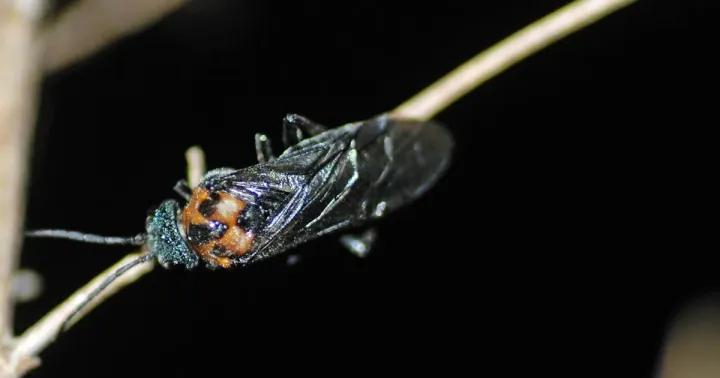
Description
How to identify
Dolerus is a genus of insects belonging to the family Tenthredinidae (common sawflies) in the order Hymenoptera. These insects are characterized by their robust bodies and specific wing venation patterns that help experts distinguish them from other hymenopterans.
The larvae, often referred to as false caterpillars, possess multiple pairs of abdominal prolegs. Their appearance is distinct, and they are known for their habit of curling into a spiral shape when disturbed, which is a key diagnostic behavior.
The lifecycle consists of four stages: egg, larva, pupa, and adult. Females use a saw-like ovipositor to insert eggs into plant tissues, which often creates small, visible scars on the stems or leaves of the host plants.
Adults are generally pollinators or nectar feeders, but their emergence corresponds with the growth stages of cereal crops. Understanding the phenology of the adult stage is critical for timing field scouting and potential control measures.
Most species overwinter as prepupae in the soil. This dormancy allows them to survive harsh winter conditions, leading to re-emergence in the spring just as new growth begins in the fields.
What it damages
Dolerus species are primarily pests of cereal crops including wheat, barley, and rye. While they have a preference for certain grasses, they can become significant pests in commercial monocultures during outbreaks.
The damage is caused primarily by the larvae consuming the foliage. By feeding on the leaves, they significantly reduce the photosynthetic capacity of the plant, which is vital during the stem elongation and grain-filling stages.
Heavy infestations can lead to stunted plant growth and reduced grain weight. In severe cases, the structural integrity of the leaf may be compromised, making the plant more vulnerable to secondary fungal or bacterial pathogens.
The damage often starts in patches, particularly along the borders of the fields where adults initially settle. This patchy distribution is a common pattern in the early stages of a population buildup.
Yield losses are directly proportional to the density of the larvae per square meter. Monitoring these density levels allows farmers to make informed decisions regarding the necessity of intervention.
Signs of infestation
The most evident sign of a Dolerus infestation is the presence of irregular, notched feeding holes in the leaf blades. Larvae are often found on the underside of leaves or hiding near the base of the stems.
The presence of larval frass (droppings) on the leaves or at the base of the plant serves as a clear indicator of active feeding. This is often the first thing scouts look for during field inspections.
A notable sign is the behavior of the larvae; if touched or approached, they instantly curl up. Finding these "coiled" larvae on wheat or barley leaves is a definitive indication of a sawfly infestation.
Premature leaf yellowing or necrosis, which does not follow a typical pattern of drought stress or nutritional deficiency, may suggest the presence of larvae damaging the vascular tissues of the plant.
Observers might also notice the adult sawflies flying low over the canopy on warm, sunny days. Their appearance in the spring is a clear sign that egg-laying is likely underway.
Control measures
Crop rotation is the most effective cultural practice for managing Dolerus populations. By rotating wheat or barley with non-host crops, farmers can disrupt the lifecycle and starve the emerging larvae of their required food source.
Deep plowing after harvest is an essential mechanical control method. By burying the top layer of soil, prepupae are displaced, and their survival rate during the winter is drastically reduced.
Maintaining clean field borders by removing wild grasses helps eliminate alternate host plants. This practice reduces the number of sites available for adults to feed and lay eggs, thereby limiting the initial population size.
When chemical intervention is required, systemic or contact insecticides should be applied based on economic thresholds. It is crucial to choose products that are selective to minimize the impact on beneficial insects.
Encouraging natural predators, such as parasitic wasps, is a key component of integrated pest management. Protecting these biological control agents helps maintain balance in the agroecosystem and reduces the frequency of chemical applications.
Taxonomy
- Latin name
- Dolerus
- Order
- Hymenoptera
- Family
- Tenthredinidae
- EPPO code
- DOLESP
Discussion
No discussions yet — be the first.