
Gall midge
Diplosis
Description
How to identify
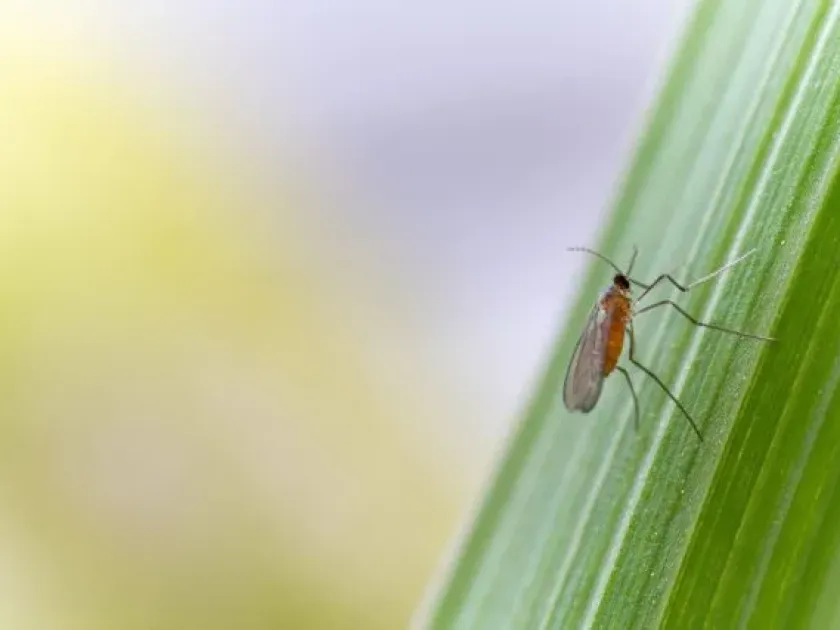
Gall midges (Cecidomyiidae) belong to the order of Diptera. They are tiny, often almost microscopic flies with long antennae and narrow wings covered with fine hairs.
Adults live for a very short time, ranging from a few hours to a few days. During this period, they are focused exclusively on reproduction, so they often do not feed at all.
Gall midge larvae are characteristically spindle-shaped, legless, and usually yellow, orange, or white, which helps them blend in within plant tissues.
The taxonomy of this family is extremely complex, as many species are highly specialized and feed only on specific plants, creating unique growths known as galls.
Identification of a specific species is often possible only by analyzing the shape of the gall formed by the larva on the plant organs or by microscopic examination of the adult's mouthparts.
What it damages
Gall midges damage a wide range of crops, from cereals and vegetables to fruit trees and ornamental shrubs, causing significant harm to agriculture.
The primary damage is caused by larvae that, during feeding, secrete enzymes that induce pathological tissue overgrowth and the formation of galls.
Cereal gall midges, such as the Hessian fly, infest cereal stems, causing them to break, leading to lodging and a sharp decline in grain quality.
Fruit gall midges can damage the ovaries of berry crops, causing premature fruit drop or deformity, making them unsuitable for market.
In floriculture, gall midges can lead to bud and leaf distortion, which significantly reduces the commercial value of ornamental plants in nurseries and greenhouses.
When it appears
The activity of gall midges is directly dependent on climatic conditions and the phenological development of the host plant, usually starting in spring when temperatures stabilize.
The mass emergence of adults often coincides with the flowering or active growth phase of crops, facilitating easy access for larvae to nutrient-rich tissues.
Depending on the species, several generations can develop within a single season, with those coinciding with critical stages of crop development being the most dangerous.
Gall midges typically overwinter in the larval stage inside cocoons within the soil, in plant debris, or under bark scales, waiting for favorable spring conditions.
Sudden fluctuations in humidity during the spring and summer can trigger population explosions, as larvae are extremely sensitive to the state of plant tissues.
Signs of infestation
The main sign of infestation is the presence of galls — tumor-like growths on leaves, stems, buds, or flowers where the larvae develop.
- Leaf deformation and curling;
- Stunted shoot growth and swelling;
- Premature yellowing and dropping of fruits;
- Presence of tiny larvae inside stems when damaged areas are cut;
- Lodging of cereal crops in the lower stem area without apparent cause.
Affected plants show general distress, slowed growth, and reduced yields due to the disruption of their nutrient transport system.
In cereal crops, a characteristic bend in the stem is visible, which becomes brittle at the site of larval activity.
In ornamental flowers, "stony" buds may be observed; these fail to open because the feeding and biological activity of the pest inside prevent normal flower development.
Control measures
Effective protection starts with proper crop rotation, which breaks the pest's life cycle and prevents them from feeding on their usual hosts.
A critical agronomic practice is deep autumn plowing, which helps destroy the overwintering population of larvae in the soil and plant debris.
Timely cleaning and disposal of crop residues are recommended, as is weed control, as weeds can act as alternative hosts for various gall midge species.
Using resistant crop varieties significantly reduces the risk of mass infestation and minimizes the need for chemical interventions in the fields.
In cases of high pest pressure, systemic or contact-stomach insecticides are used, which should be applied strictly according to regulations during periods of maximum vulnerability for the adults.
Taxonomy
- Latin name
- Diplosis
- Order
- Diptera (flies)
- Family
- Cecidomyiidae
- EPPO code
- DIPOSP
Discussion
No discussions yet — be the first.