
Cassava gall midge
Dicrodiplosis manihoti
Description
How to identify
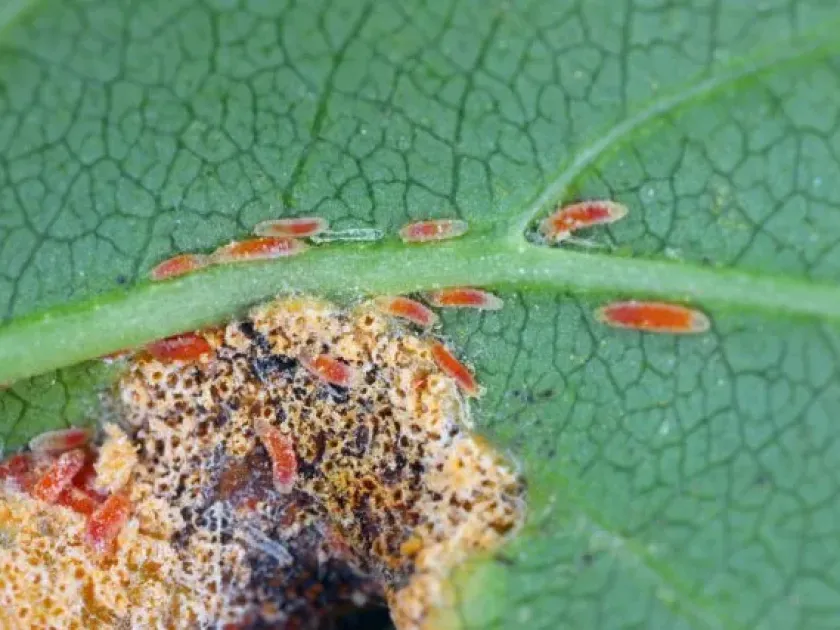
The cassava gall midge Dicrodiplosis manihoti is a tiny insect belonging to the order Diptera, family Cecidomyiidae. Adult flies are extremely small and delicate, making them difficult to spot in the field without using specialized sweeping nets or magnification tools.
The larvae, which are the primary damaging stage, possess a cylindrical body and are usually pinkish or yellowish. They go through several developmental stages within the host plant, hidden from external threats.
This species is a highly specialized phytophage, meaning its entire life cycle is strictly dependent on the tissues of its host plant. Scientific studies confirm that its development is synchronized with the vegetative growth phases of cassava.
Female midges lay their eggs directly into the tissues of terminal buds or young leaf axils. This provides the emerging larvae with immediate access to essential nutrients for their growth and survival.
Detection is particularly challenging due to the hidden nature of the larvae, as they live and feed inside the plant's developing organs, shielded by distorted leaf tissue.
What it damages
The primary host for this pest is cassava Manihot esculenta. The midge specifically targets the youngest, most actively growing parts of the plant, which are crucial for overall development and yield.
Feeding by the larvae interferes with the normal development of terminal shoots. This leads to reduced plant height and stunted growth, directly impacting the photosynthetic capacity of the crop.
In regions with high infestation levels, the cassava gall midge can cause widespread damage across plantations. Heavy attacks often result in significant reductions in root tuber yield.
The damage caused by these insects can also facilitate secondary infections. Bacterial and fungal pathogens often enter the plant through the wounds created by the midge, further weakening the host.
Economic damage is categorized by the loss of foliage, which is essential for the accumulation of starch in the tubers, thus directly affecting food security in local communities.
Signs of infestation
The most common sign of an infestation is the curling and distortion of young leaves. The foliage becomes wrinkled, asymmetrical, and often exhibits chlorotic (yellowish) discoloration.
In response to larval feeding, the plant often develops specific growths known as galls. These structures protect the larvae while providing them with a constant source of nutrients.
Affected terminal shoots may display a 'witches' broom' growth pattern, where internodes are significantly shortened, and leaves are crowded, preventing the shoot from extending properly.
Early-stage monitoring can reveal tiny black or brown larval excrement particles near the petioles. The presence of these droppings is a clear indication of an active pest population.
In severe cases, the infested parts of the plant may undergo necrosis, leading to premature leaf drop and the death of the main growing tip, which stops the vertical growth of the cassava stem.
Control measures
Using certified, pest-free planting material is the most effective preventative measure. Cuttings should be thoroughly inspected for symptoms of larval presence before being introduced to a new field.
Biological control methods, focusing on the preservation and augmentation of natural enemies (parasitoid wasps), show promising results in maintaining midge populations below economic threshold levels.
Agrotechnical practices, including crop rotation and ensuring sufficient spatial separation between old and new cassava fields, are essential to break the insect's life cycle.
If population levels exceed the damage threshold, systemic insecticides may be applied. However, this must be done according to precise guidelines to ensure the chemical reaches the hidden larvae inside the galls.
- Implement regular scouting programs in cassava plantations.
- Sanitation by removing and destroying heavily infested plant parts.
- Maintain soil fertility to support the plant's natural defense mechanisms.
- Manage surrounding vegetation to remove potential alternative hosts for the midge.
Taxonomy
- Latin name
- Dicrodiplosis manihoti
- Order
- Diptera (flies)
- Family
- Cecidomyiidae
- EPPO code
- DICDMA
Discussion
No discussions yet — be the first.