
Dicerura gall midge
Dicerura
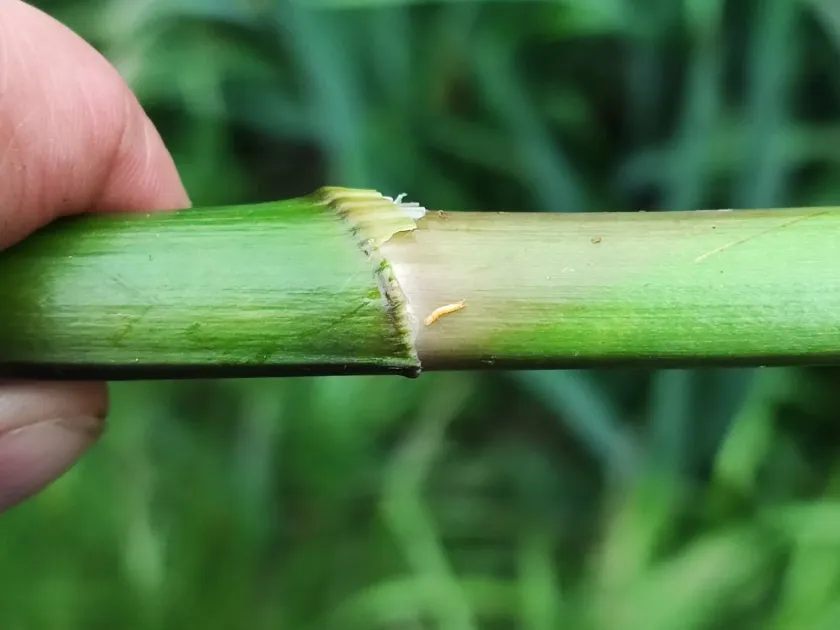
Description
How to identify
The Dicerura genus belongs to the order Diptera, family Cecidomyiidae (gall midges). These are tiny insects, with adults often remaining unnoticed due to their small size and very short lifespan.
The larvae of these insects lead a cryptic lifestyle, often living inside plant tissues or organic debris. Physically, the larvae are legless, maggot-like organisms that rarely exceed a few millimeters in length.
The taxonomy of the Dicerura genus includes several species specialized for specific host plants. Identification down to the species level often requires microscopic analysis of adult genitalia to ensure accuracy.
Adult insects have delicate legs and transparent wings with distinct venation. Their life cycle is tightly synchronized with the phenology of their host plants, making them highly specialized pests.
For an agronomist, it is essential to distinguish Dicerura gall midges from other family members by observing the specific type of damage and host plant preferences.
What it damages
This pest mainly affects woody plants and shrubs. Certain Dicerura species can be found in forest plantations and nurseries, damaging buds and young shoots during the growing season.
The range of host plants includes species sensitive to gall formation and tissue deformation. The pest is particularly active on new growth, which can significantly stunt the plant's development.
Larvae feeding on plant tissues disrupt sap flow and metabolic processes. This leads to localized changes in tissue structure, which are often misidentified as plant diseases or fungal infections.
The economic impact involves reduced vigor of seedlings and saplings. In cases of severe infestation, bud death and premature leaf drop occur, which weakens the overall health of the plant.
Damages caused by this genus provide entry points for secondary infections, such as fungal pathogens and bacterial rots, which further suppress the development of the host plant.
When it appears
Gall midge activity peaks during the spring and summer. Adult emergence typically coincides with the active growth phase of plants and bud break, which is critical for successful egg-laying.
Depending on regional climatic conditions, the development of one generation can take from several weeks to several months, with parts of the population potentially entering diapause.
The most active period for larval feeding damage is late spring and the first half of summer. This is the optimal window for conducting regular monitoring of the plantations.
Overwintering usually occurs at the larval or pupal stage in the soil or leaf litter, making autumn sanitation of the planting site a key factor in controlling the population.
Temperature and humidity levels significantly influence the speed of generations, which is why infestations can increase drastically during years with a warm, humid spring.
Signs of infestation
The primary sign of infestation is the appearance of characteristic deformations on shoots. These may include swellings, twists, or discoloration of leaf blades where the larvae are feeding.
Traces of insect secretions are often visible on damaged areas, creating a favorable environment for mold. Leaves may turn yellow prematurely and drop off the plant.
- Presence of unnatural growths or galls on shoots
- Stunted growth of young branches
- Distortion and curling of young leaves
- Development of necrotic zones where larvae are localized
- Wilting of terminal plant parts under heavy infestation
Dissecting the galls or damaged tissue often reveals small white, yellowish, or pinkish larvae, which serve as direct evidence of the pest's presence.
Visual inspections should be performed during early morning or late evening hours, when pests are most vulnerable and damage symptoms are more prominent against healthy tissue.
Control measures
Controlling gall midges requires a multi-faceted approach. The foundation of protection is the agronomic method: regular pruning and destruction of infested shoots where larvae are localized.
Crop rotation and spatial isolation of nurseries from potential infestation zones are crucial. Thorough autumn cleaning of plant debris helps prevent the mass buildup of the pest population.
Chemical control is most effective during the adult flight period, before egg-laying is completed. Systemic insecticides are often required to target larvae feeding within plant tissues.
Biological control using entomopathogenic fungi or nematodes shows promising results in reducing population density without harming beneficial insect fauna.
Consistent monitoring using pheromone or sticky traps allows for precise timing of chemical applications, significantly increasing the cost-effectiveness of management measures.
Taxonomy
- Latin name
- Dicerura
- Order
- Diptera (flies)
- Family
- Cecidomyiidae
- EPPO code
- DICUSP
Discussion
No discussions yet — be the first.