
Diabrotica speciosa
Diabrotica speciosa
Description
How to identify
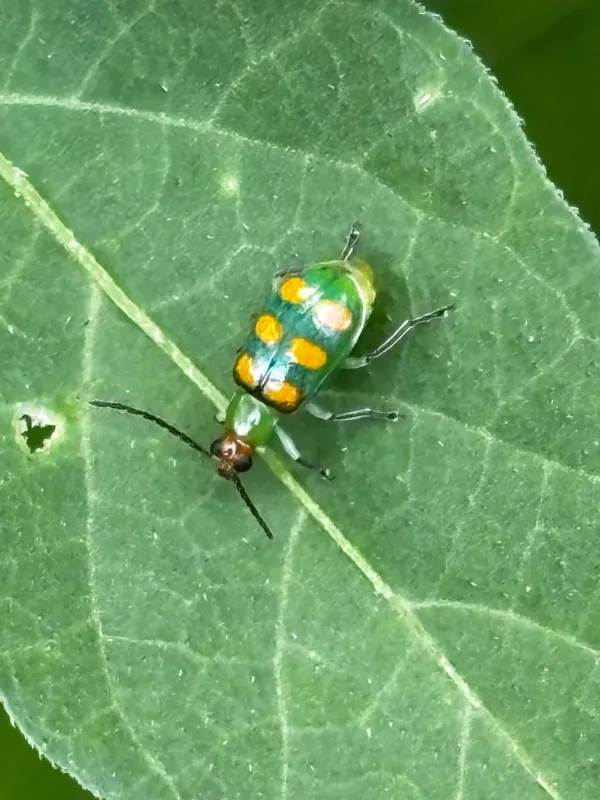
The Diabrotica speciosa, commonly known as the cucurbit beetle or leaf beetle, belongs to the Chrysomelidae family and the order Coleoptera. Adult beetles are easily recognized by their vibrant yellow-green elytra adorned with four distinctive dark spots.
The adult insect reaches approximately 6–7 millimeters in length. The larvae are slender, white with a brown head capsule, and live exclusively underground, feeding on plant roots. Pupation typically occurs in small earthen chambers at a depth of up to 15 centimeters below the soil surface.
What it damages
This beetle is a polyphagous pest that causes significant economic loss across a variety of agricultural crops. The larvae cause the most damage by feeding intensively on root systems, which severely hinders the plant's ability to absorb water and essential nutrients.
The primary host crops include maize, soybeans, beans, potatoes, and various vegetable crops. Young plants often die upon infestation, while mature plants suffer from reduced stability and increased susceptibility to various soil-borne fungal pathogens.
Adult beetles prefer feeding on the reproductive tissues of plants, including leaves, blossoms, and pollen. In maize, they often feed on the silk, which disrupts pollination, leading to poorly filled ears and significantly reduced grain yields and quality.
When it appears
The life cycle of this insect is highly influenced by regional climatic conditions. In warmer South American climates, where it is most prevalent, the species may complete several generations within a single growing season, making it a persistent threat to farmers.
The insects typically overwinter as adults, though the specific timing of the life cycle can vary based on soil temperature and humidity levels. Activity peaks generally correlate with the flowering stages of the target host crops.
Signs of infestation
The primary sign of infestation is the appearance of distinct, sieve-like holes on the leaves, created by the adults. In severe cases, wilting and yellowing of the plants become evident, particularly during the heat of the day when transpiration stress is highest.
A classic indirect sign of larval damage in maize is "gooseneck lodging," where the stalks bend into a swan-neck shape due to the loss of root structural integrity. Uneven plant height across the field is another common indicator of an underlying larval problem.
Control measures
Crop rotation remains the most effective long-term management strategy, as the larvae have limited mobility and cannot survive without their preferred hosts. Removing maize from a specific field for at least one or two seasons significantly suppresses the population.
Chemical control measures include applying systemic insecticides to seeds or soil at planting to protect the root zone during critical early growth stages. Foliar sprays are also utilized during the peak emergence of adults to stop them from feeding and laying eggs.
Biological alternatives involve the use of entomopathogenic nematodes, which actively target and parasitize larvae within the soil. Regular field scouting using yellow sticky traps is crucial for accurately timing interventions and preventing large-scale economic damage.
Taxonomy
- Latin name
- Diabrotica speciosa
- Order
- Coleoptera (beetles)
- Family
- Chrysomelidae
- EPPO code
- DIABSC
Discussion
No discussions yet — be the first.