
Diabrotica significata
Diabrotica significata
Description
How to identify
Diabrotica significata is a beetle species belonging to the order Coleoptera and the family Chrysomelidae. It is closely related to the well-known western corn rootworm species.
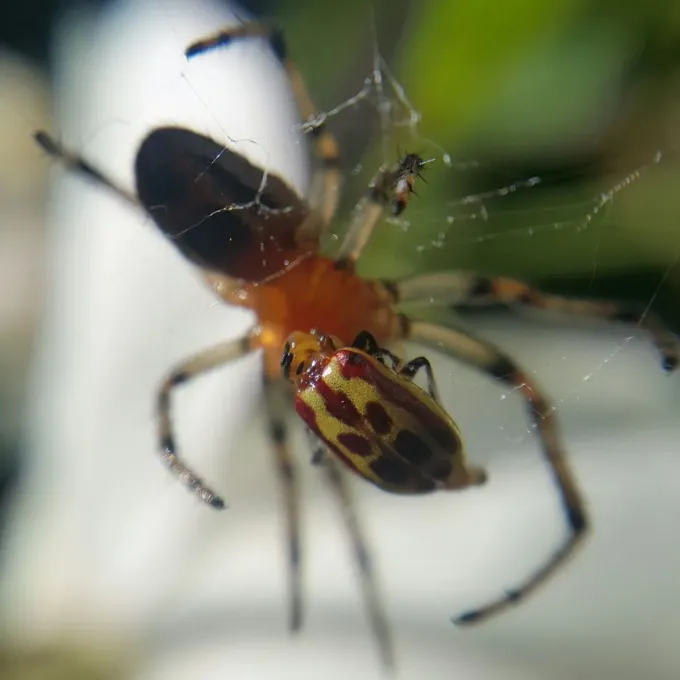
Adult beetles are relatively small and characterized by their distinct coloration, which often includes patterns on the elytra that assist in species identification within the genus Diabrotica.
The larval stage occurs underground and is characterized by a slender, cylindrical, white-to-yellowish body with a sclerotized brown head capsule. These larvae are specialized root feeders.
Adults are highly mobile and exhibit strong flight capabilities, which they use to disperse across fields and search for suitable host plants for feeding and mating.
The species undergoes complete metamorphosis, consisting of egg, larva, pupa, and adult stages, with each stage specifically adapted to its role in the life cycle.
What it damages
The primary hosts for Diabrotica significata are members of the Poaceae family, with maize being the most significant agricultural target for this pest.
Larval feeding on the root system destroys the plant's ability to uptake water and nutrients. This damage leads to lodging, where plants lean over and become difficult to harvest with machinery.
Adult beetles cause damage by feeding on the reproductive parts of the plant, specifically the silks and pollen of maize, which interferes with proper pollination and results in lower grain yield.
Secondary damage includes the physiological stress on the plant, which makes it more susceptible to various pathogens and environmental stressors.
The degree of economic loss is highly correlated with the population density of the beetle and the specific timing of the infestation relative to the plant's growth stage.
When it appears
The life cycle is strictly seasonal, with eggs overwintering in the soil. Development is triggered by rising temperatures and soil moisture levels in the spring.
Larval activity begins in late spring, coinciding with the early development of crop roots. This is the period when the most significant subterranean damage occurs.
Adult emergence generally occurs during mid-to-late summer, corresponding with the flowering period of maize, which provides a high-quality food source for the beetles.
As the season progresses toward autumn, mating and oviposition occur, with eggs being deposited in the soil to initiate the cycle for the following year.
Regular monitoring during the mid-summer months is critical for assessing the population pressure and determining the necessity of management interventions.
Signs of infestation
Visible signs of infestation include uneven crop growth and lodging (leaning stems), which are often indicative of previous root damage by larvae.
On the ears of corn, feeding damage on silks is a primary indicator of adult presence. Silks may appear clipped or entirely absent, leading to patchy grain set.
Leaves might show characteristic surface-feeding marks, described as linear or longitudinal scarring where the beetle has removed the green epidermal tissue.
The physical presence of the adult beetles on the ears or foliage during the flowering stage is a clear sign that the population has reached an active phase.
Root excavations during the early vegetative stage can reveal larvae or signs of tunneling, confirming the presence of the pest before significant above-ground damage appears.
Control measures
Effective management begins with crop rotation, which is the most reliable method for reducing the larval population in the soil by eliminating the host plant.
- Seed treatments with systemic insecticides.
- Application of soil-applied granular insecticides at planting.
- Foliar insecticide applications to control adults during peak flight periods.
- Maintenance of weed-free fields to reduce alternative host plants.
- Utilization of pheromone traps for decision-based insecticide application timing.
Integrated Pest Management (IPM) programs emphasize the use of economic thresholds to ensure that chemical applications are used only when necessary, preserving beneficial insects.
Advances in agricultural biotechnology and biological control agents, such as nematodes, offer sustainable alternatives to conventional chemical control measures.
Taxonomy
- Latin name
- Diabrotica significata
- Order
- Coleoptera (beetles)
- Family
- Chrysomelidae
- EPPO code
- DIABSI
Discussion
No discussions yet — be the first.