
Green corn rootworm
Diabrotica porracea
Description
How to identify
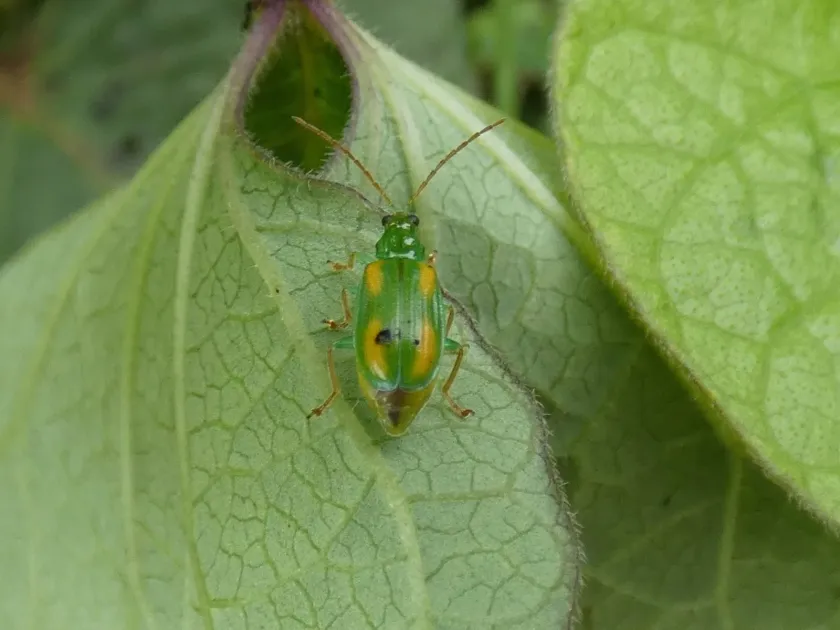
The green corn rootworm (Diabrotica porracea) is a beetle belonging to the Chrysomelidae family. Adult beetles are characterized by their vibrant green or yellowish-green coloration, providing excellent camouflage on host plant leaves.
Adult beetles have an elongated body, typically measuring 6–7 millimeters in length. Their cuticle is smooth and often exhibits a metallic luster, which helps distinguish this species from other closely related rootworms.
The larvae are white or yellowish with a distinct brown head capsule. They live and develop exclusively within the soil, feeding specifically on the root systems of grasses and corn plants.
The life cycle encompasses four main stages: egg, larva (three instars), pupa, and adult. The completion of this cycle is highly dependent on ambient soil temperature and moisture levels.
The biology of Diabrotica porracea is tightly coupled with the presence of cereal crops, which provide necessary nutrients for the successful reproduction and development of the species.
What it damages
Corn (maize) is the primary host of the green corn rootworm, although the pest can also thrive on various other grass species. The feeding activity causes significant physiological stress to the plants.
Larval feeding is the most destructive phase, as they prune the root system. This damage limits the plant's ability to uptake water and nutrients, leading to stunted growth and reduced vigor.
Adult beetles feed on foliage, pollen, and young silk of the corn ears. High beetle populations can cause substantial defoliation and interfere with the pollination process, reducing grain set.
Root destruction often leads to lodging, where corn stalks lean or fall over. This mechanical damage makes harvesting difficult and can result in significant yield losses due to dropped ears.
The wounds created by rootworm feeding serve as entry points for soil-borne pathogens, increasing the incidence of root rot and other secondary infections that compromise overall crop health.
When it appears
Adult activity usually begins in late spring, continuing throughout the summer. These beetles are diurnal, moving actively across fields to find food and optimal sites for oviposition.
Females deposit eggs in the soil near the base of corn plants. Embryonic development is rapid, and upon hatching, larvae immediately move toward the roots to begin their destructive feeding.
The larval stage coincides with the rapid vegetative growth of corn. During this time, the root system is highly vulnerable, and pest pressure can have severe implications for the final harvest.
Pupation occurs in the soil, lasting several weeks before emerging as new adult beetles. These beetles then engage in maturation feeding before laying the next batch of eggs.
In regions with mild climates, multiple generations per year are possible. As temperatures drop in autumn, the beetles' activity levels decline significantly as they prepare for winter.
Signs of infestation
Early signs of infestation include wilting of lower leaves during the hottest parts of the day. This indicates compromised root function and inability to meet the plant's transpirational demands.
Physical inspection of the roots often reveals characteristic gouging and pruning. In severe cases, the entire root mass may be significantly reduced, making plants easy to pull from the soil.
Visible symptoms on leaves include elongated, irregular feeding holes caused by adults. Beetles are also often observed hiding in leaf whorls or feeding on the silks of the ears.
Lodging or "goose-necking" of corn stalks is a hallmark sign of historical root damage. The plants attempt to re-orient themselves upright after being weakened, resulting in a curved stem base.
Lack of kernel fill in ears can also be a sign, resulting from adults clipping silks during the critical pollination window, preventing proper fertilization of the developing kernels.
Control measures
Crop rotation is the most effective cultural control strategy. By moving corn away from infested fields for one or more years, larvae are deprived of their primary food source, leading to high mortality.
Tillage practices can disrupt the soil environment and expose larvae to predators or desiccation. Furthermore, ensuring optimal planting times helps crops establish robust root systems before peak pest activity.
Chemical control options include soil-applied insecticides at planting to protect roots from larval feeding. Foliar sprays may be necessary when adult populations reach economic thresholds.
Biological control, such as the use of entomopathogenic nematodes, offers a sustainable method for managing larval populations in the soil without the negative environmental impact of synthetic pesticides.
Regular monitoring using pheromone or sticky traps is essential for informed decision-making. Scouting allows growers to apply treatments only when necessary, improving economic and ecological outcomes.
Taxonomy
- Latin name
- Diabrotica porracea
- Order
- Coleoptera (beetles)
- Family
- Chrysomelidae
- EPPO code
- DIABPO
Discussion
No discussions yet — be the first.