
Windowed Rootworm
Diabrotica fenestralis
Description
How to identify
The Windowed Rootworm (Diabrotica fenestralis) is a beetle species belonging to the Chrysomelidae family, the leaf beetles, within the order Coleoptera. This species is a significant agricultural pest that presents distinct challenges for farmers due to its lifecycle and feeding habits.
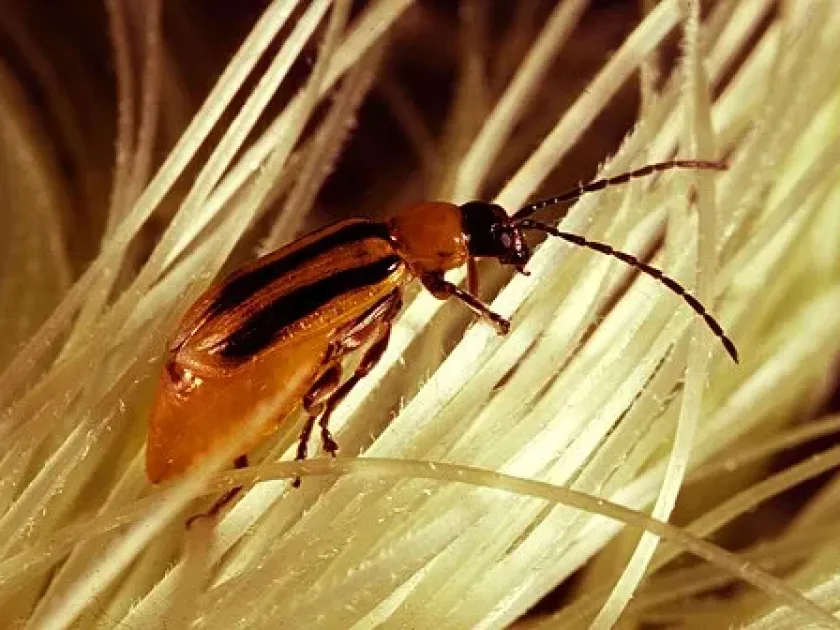
Adults are small, typically ranging from 5 to 7 millimeters in length, and are characterized by a specific color pattern on their elytra that resembles "windows," which is the source of their common name. Their body shape is generally oval and elongated with well-developed antennae.
The larvae are white or creamy with a darkened head capsule and three pairs of thoracic legs. They dwell primarily in the soil around the rhizosphere, making them difficult to detect without digging into the root zone of the host plants.
Accurate identification is essential for effective pest management. Because they share many features with other Diabrotica species, agronomists often rely on the examination of adult morphology and population monitoring via traps to confirm the species presence and density.
Understanding their distribution is key, as these pests thrive in environments where their host crops are grown in consecutive years. Their presence requires consistent monitoring to prevent the establishment of dense populations in cornfields.
What it damages
Corn is the primary crop damaged by the Windowed Rootworm. The larvae are particularly destructive, feeding on the primary and secondary root systems of corn, which severely hinders the plant's ability to absorb water and nutrients.
Adult beetles feed on the above-ground parts of the plant. They consume silk, pollen, and leaves, which disrupts the pollination process and results in poorly filled ears with fewer kernels, leading to significant yield losses.
The feeding activities of both larvae and adults create entry wounds for various pathogens, including fungi and bacteria. This secondary infection often leads to root and stalk rot, which further weakens the crop's physiological state.
Severe root damage often causes "lodging," where corn stalks bend or fall over, especially under windy or wet conditions. This lodging makes mechanical harvesting extremely difficult and results in significant harvest losses.
In high-density scenarios, the combination of root pruning and poor pollination can reduce total crop production by a substantial percentage, making this pest a critical concern for maize production systems.
When it appears
The lifecycle of the Windowed Rootworm is typically univoltine, meaning it completes one generation per year. Adults appear in mid-summer, mate, and lay eggs in the soil near the base of the host plants, where these eggs overwinter.
As soil temperatures rise in the spring, the eggs hatch into larvae, which immediately begin searching for roots to consume. This stage is perfectly synchronized with the early growth phase of corn, providing abundant food for larval development.
The larval stage consists of three instars, followed by pupation within the soil. After approximately two weeks of pupation, the new generation of adult beetles emerges to repeat the cycle and expand the population.
The peak activity of adults usually coincides with the flowering and silking stages of corn. This period is critical for field management, as monitoring during this stage can provide early warning for potential infestations.
Knowledge of their phenology allows agronomists to optimize pest control efforts, such as targeted insecticide applications or the planning of crop rotations to break the lifecycle effectively.
Signs of infestation
One of the most obvious signs of a Windowed Rootworm infestation is uneven crop growth or yellowing of the lower leaves. Plants that can be easily pulled from the soil often indicate that the root system has been severely compromised by larval feeding.
Visually, the silk of the corn ears may appear clipped or chewed, which is a symptom of adult feeding. This typically results in deformed or incomplete ear development, known as "blanking" or poor kernel set.
Adult beetles can be spotted by inspecting corn tassels or silk in the morning or evening. They are highly active and may hide within the whorl or between leaves, so thorough inspection is necessary.
Stalk lodging, also known as the "gooseneck" effect, is a late-season symptom that occurs when wind forces push over plants with damaged roots. By the time this symptom is visible, damage to the yield potential is usually already severe.
The use of yellow sticky traps or pheromone baits is highly recommended for detecting the pests early. These traps help measure population density and determine whether economic thresholds for control measures have been reached.
Control measures
Crop rotation is the most effective cultural practice for managing the Windowed Rootworm. Planting non-host crops like soybeans for at least two years significantly reduces larval populations by depriving them of their primary food source.
Soil-applied insecticides are commonly used at planting time to protect the developing root system from larval feeding. This provides a crucial window of protection during the most vulnerable stage of the corn plant.
For adult beetle control, foliar insecticides may be applied when population levels exceed economic thresholds. It is vital to select products that are effective while minimizing harm to beneficial insects and pollinators in the area.
Tillage practices, such as deep autumn plowing, can disrupt the overwintering sites of the eggs in the soil. This physical disturbance often reduces the survival rate of the next generation and improves general soil health for crop growth.
Biological control methods, such as the use of entomopathogenic nematodes or specialized fungi, are gaining popularity as sustainable alternatives to traditional chemicals, helping to keep larval populations under control within the soil matrix.
Taxonomy
- Latin name
- Diabrotica fenestralis
- Order
- Coleoptera (beetles)
- Family
- Chrysomelidae
- EPPO code
- DIABFE
Discussion
No discussions yet — be the first.