
Short-beaked common dolphin
Delphinus delphis
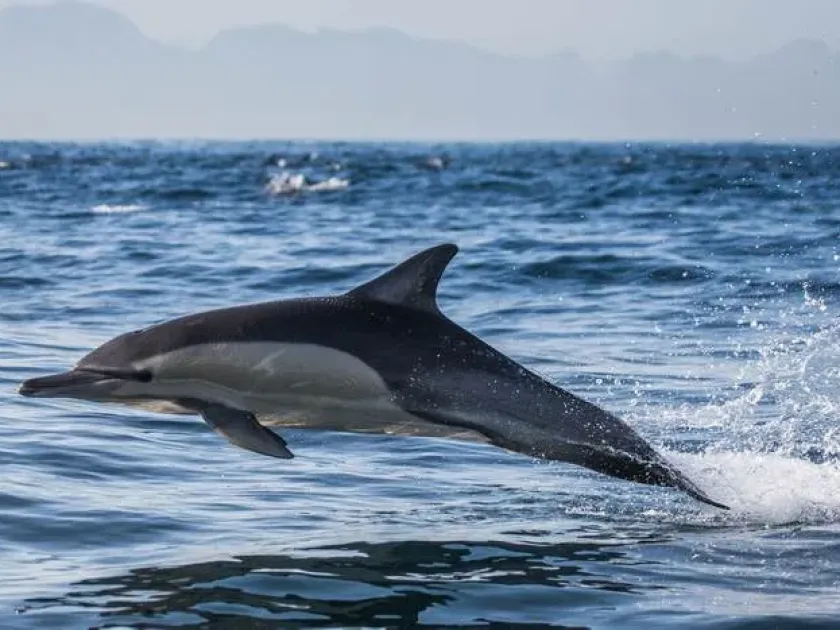
Description
How to identify
The short-beaked common dolphin (Delphinus delphis) is a marine mammal belonging to the order Artiodactyla and family Delphinidae.
It is recognized by its streamlined body, distinct hourglass-patterned coloration, and a dorsal fin that is typically curved and pointed.
While primarily a marine species, its habitat proximity to aquaculture facilities classifies it as a potential biological risk factor for coastal operations.
Adult individuals can reach sizes between 1.7 and 2.5 meters, making them significant enough to cause mechanical structural damage.
They are highly social, intelligent animals that frequently travel in pods, which increases the cumulative impact on surrounding environments.
What it damages
The primary agricultural-related damage involves the destruction of anti-predator netting used in aquaculture, leading to high stock losses.
Dolphins can tear through standard nets, allowing cultured fish to escape into the open ocean, which represents a massive economic setback.
Beyond physical damage, the presence of dolphins causes severe stress to farmed fish, reducing their growth rates and overall health.
Maintenance costs for facilities surge due to the need for frequent repairs and the installation of more durable, expensive protective barriers.
In certain coastal regions, the disruption of water flow near intake systems can impact the water quality necessary for irrigation or farming processes.
When it appears
Activity patterns are strictly dictated by water temperature shifts and the seasonal migration of forage fish stocks.
The highest frequency of encounters occurs during the spring and summer months when prey availability is at its peak near the coastline.
In winter, pods tend to follow deeper, warmer currents, but local variations in climate can lead to year-round presence in some areas.
Biological maturity takes several years, ensuring that local populations remain a constant factor in coastal management plans.
Managers must align their protective measures with these biological cycles to be effective throughout the most vulnerable growth periods of the stock.
Signs of infestation
Physical evidence of intrusion includes wide, irregular rips in net pens that suggest forceful tearing rather than wear and tear.
Farmed fish display erratic behavior, often grouping at the bottom of enclosures or showing signs of panic when the predator is near.
Surface activity, such as leaps or splashing around the perimeter of the facility, is a clear visual indicator of their presence.
High-pitched clicks and whistles are often audible near the shoreline during dawn or dusk, indicating active foraging behavior.
A sudden, unexplained depletion of biomass within a pen is a strong signal that the integrity of the barrier has been breached.
Control measures
Effective management involves the deployment of acoustic deterrent devices that discourage dolphins from approaching the farm boundaries.
High-tensile, chain-link or rigid polymer netting serves as a more reliable alternative to soft mesh for protecting sensitive installations.
Integrating sonar or drone surveillance systems allows managers to detect pods early and deploy active deterrents proactively.
Proper waste management is critical, as discarding fish scraps into the water can attract dolphins to the farm perimeter, creating habituation.
- Utilizing state-of-the-art acoustic harassment devices.
- Upgrading to reinforced mesh materials.
- Implementation of exclusion zones.
- Training staff on non-lethal deterrent protocols.
Taxonomy
- Latin name
- Delphinus delphis
- Family
- Delphinidae
- EPPO code
- DLPNDE
Discussion
No discussions yet — be the first.