
Apple leaf-curling midge
Dasineura tortrix
Description
How to identify
The apple leaf-curling midge (lat. Dasineura tortrix) is a small dipteran insect belonging to the Cecidomyiidae family. The adult midge is a tiny, fragile fly measuring only 2-3 millimeters in length.
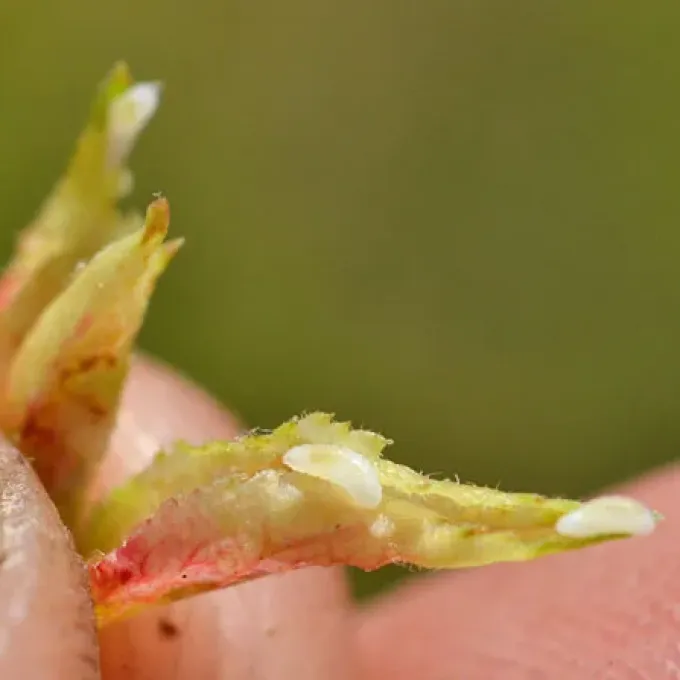
The damage is caused by the larvae, which are legless and typically whitish to yellowish in color. These larvae develop inside the host plant's tissues, where they are protected from environmental hazards.
Systematically, this species is known for its high host specificity, primarily targeting apple trees. The life cycle involves complete metamorphosis, with the pupal stage often occurring in the soil.
Adult midges are rarely observed by orchardists due to their small size and rapid movement during their short lifespan, which is focused on mating and egg-laying.
Identification is most commonly achieved by observing the unique symptoms on the foliage rather than catching the insects themselves, making early scouting essential for monitoring.
What it damages
The apple leaf-curling midge mainly affects apple trees, targeting the tender foliage of young, developing shoots. The larvae feed on the leaf margins, triggering the curling behavior.
By secreting enzymes during feeding, the larvae induce localized physiological changes in the leaf tissue, causing it to curl and harden, which severely impacts photosynthesis.
High infestation levels lead to stunted growth of new shoots. This reduction in the plant's leaf area can decrease the tree's vigor and its ability to store energy for the following season.
For young trees and nursery stock, the damage is particularly critical, as it can deform the tree structure and hinder the development of a healthy canopy.
Overall vitality of the tree is compromised, leading to reduced yield potential and increased sensitivity to secondary environmental stresses or other pathogenic attacks.
When it appears
The emergence of adult midges is closely synchronized with the bud burst and initial foliage development of the apple tree in the spring, typically starting in early spring.
The species is capable of producing multiple generations per season, depending on the climatic conditions and temperature, which dictate the developmental rate of the larvae.
Summer generations continue to infest new, succulent shoots as they appear, extending the period of risk throughout the majority of the growing season until the wood matures.
Late in the season, mature larvae drop to the soil, where they spin cocoons and enter diapause, overwintering in the surface layer of the earth under the tree canopy.
Orchard scouting should begin early in the spring, specifically targeting the young, expanding leaves where the first generation is most likely to establish itself.
Signs of infestation
The most diagnostic sign of an infestation is the inward curling of the leaf edges, forming a tight, tube-like roll. These rolls serve as both a food source and a shelter for the larvae.
Upon unrolling the leaf, one can usually find several larvae clustered inside. The affected area often becomes discolored, showing yellowing or even reddish hues due to the damage.
The tips of the affected shoots appear distorted and visually stunted. Despite normal irrigation, the branches may exhibit signs of stress due to the impairment of leaf functions.
In cases of severe damage, the rolled leaves may wither, turn brown, and drop prematurely, leaving the terminal parts of the shoots bare or deformed.
Key symptoms include:
- tightly rolled leaf margins;
- presence of white/yellowish larvae inside the folds;
- distorted shoot tips;
- discoloration of leaf tissues;
- premature leaf drop in severe cases.
Control measures
Management of the apple leaf-curling midge relies on integrated pest management practices. Pruning and removing infested shoot tips early can significantly reduce the pest population.
Biological control agents, such as predatory mites or parasitic wasps, can play a role in suppressing midge numbers if the orchard's natural balance is maintained.
If chemical control is necessary, systemic insecticides are the most effective when applied before the leaves have tightly curled, as the rolls protect the larvae from contact sprays.
Cultivation of the soil under the tree canopy in the autumn and early spring is a recommended practice to disrupt the overwintering pupae and larvae, reducing the next season's potential.
Regular monitoring combined with good horticultural practices that promote vigorous growth helps trees recover from damage and maintain their health throughout the year.
Taxonomy
- Latin name
- Dasineura tortrix
- Order
- Diptera (flies)
- Family
- Cecidomyiidae
- EPPO code
- DASYTO
Discussion
No discussions yet — be the first.