
Swaine spruce gall midge
Dasineura swainei
Description
How to identify
The Swaine spruce gall midge (Dasineura swainei) is a small insect belonging to the family Cecidomyiidae (gall midges) in the order Diptera. Adults are minute and rarely seen by the naked eye due to their tiny size and very short lifespan.
Damage is exclusively caused by larvae that feed within the spruce plant tissues. The female adult lays eggs directly on the developing needles, ensuring that the larvae have immediate access to nutrients upon hatching.
The life cycle of this species is synchronized with the growth phases of the spruce tree. Larval development occurs inside distinctive galls formed on the needles, which serves as a primary diagnostic indicator of its presence.
This species is classified as a specialized pest of coniferous trees, primarily targeting Norway spruce and other Picea species. Its specialized feeding habit makes it a significant concern in nurseries and young plantations.
The insect overwinters as a larva in the litter or soil surface beneath the host tree. After pupation in the soil, the next generation of adults emerges during the following growing season.
What it damages
The primary host for this pest is Norway spruce (Picea abies) and related species. It predominantly attacks young trees that are in active growth stages, which hinders their development and aesthetic value.
Larvae consume the juices of young needles, leading to significant physiological stress. Affected needles lose chlorophyll, turn yellow, and eventually drop prematurely from the twigs.
The damage results in a reduction of annual shoot growth. In cases of high population density, trees may show partial needle loss, which severely degrades the decorative quality of the trees and reduces their overall vigor.
Disruption of photosynthesis in damaged needles lowers the tree's immune response. Weakened specimens become more susceptible to secondary fungal infections and infestations by other pests.
Significant economic losses occur in nursery settings, where the disfigurement of saplings makes them commercially unacceptable for landscape or timber production markets.
When it appears
Adult emergence typically coincides with the beginning of the spruce growing season and bud break. Depending on the geographical region, this usually happens in late spring or early summer.
Larval feeding inside the galls occurs throughout most of the summer season. During this period, characteristic needle malformations become visible on the tree branches.
By late summer or early autumn, the larvae complete their development. They emerge from the galls through small exit holes and migrate into the soil to begin their dormant stage.
This species has a monovoltine life cycle, meaning it produces only one generation per year. This predictable cycle allows for targeted pest management strategies.
Recognizing the timing of larval emergence from the galls is crucial for implementing control measures, as this is the period when the pest is most vulnerable to external interventions.
Signs of infestation
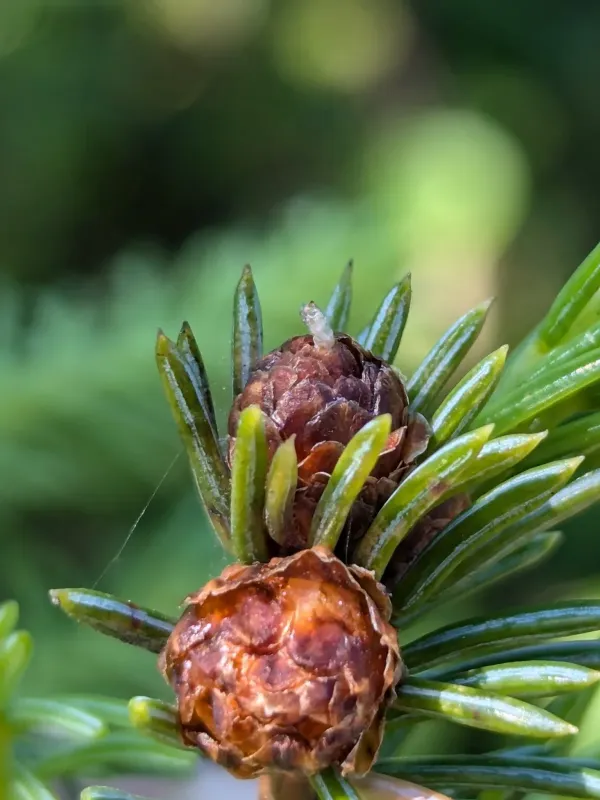
The primary symptom of infestation is the presence of distinctive galls. These are swellings or curls on the young needles that often exhibit abnormal discoloration compared to healthy foliage.
Damaged needles often turn yellow or reddish-brown. Unlike healthy needles, these tissues become thickened, brittle, and lose their natural flexibility.
Close inspection reveals that affected needles are shorter than healthy ones and noticeably distorted. In the base or side of the gall, one can often see a small exit hole left by the larva.
Heavy infestations are easily spotted from a distance, with the tree crown appearing ragged and thin. Premature needle drop is a common observation in the area of the current year's growth.
If galls are dissected during the summer, one can find small, white to yellowish larvae inside, which are the direct cause of the plant tissue deformity.
Control measures
An effective cultural control method involves collecting and destroying fallen needles or pruning infested shoots, which removes the overwintering larvae and reduces the population for the following year.
In nurseries, constant monitoring using pheromone or sticky traps during adult emergence helps determine the optimal window for targeted insecticide applications.
Chemical control focuses on applying systemic or contact insecticides during the early larval stage, before the larvae become protected within the needle tissues.
Biological control emphasizes the conservation of natural enemies, such as parasitic wasps, which help suppress midge populations under natural forest conditions.
Maintaining tree health through proper irrigation and balanced fertilization is recommended to help the spruce withstand minor infestations and recover effectively.
Taxonomy
- Latin name
- Dasineura swainei
- Order
- Diptera (flies)
- Family
- Cecidomyiidae
- EPPO code
- RHABSW
Discussion
No discussions yet — be the first.