
Currant bud midge
Dasineura ribis
Description
How to identify
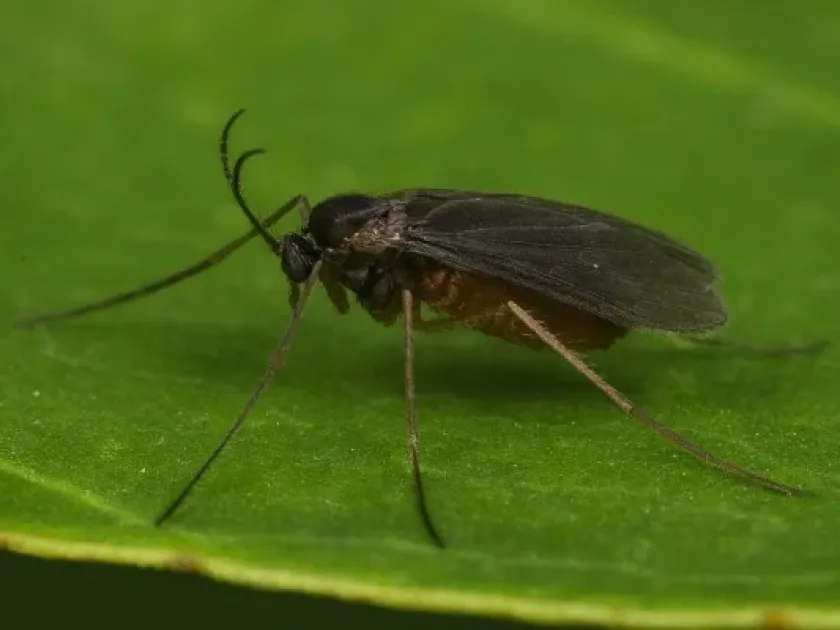
The Currant bud midge (Dasineura ribis) is a small dipteran insect belonging to the Cecidomyiidae family. The adult form is a tiny, delicate gnat measuring only a few millimeters.
The larvae, which are the main cause of damage, are small, legless, and white to yellowish in color, typically found clustered inside the plant buds.
The life cycle is closely synchronized with the phenology of host plants, ensuring that larval stages coincide with bud development.
These insects are highly elusive, and the damage they cause is often noticed only after the pest has significantly affected the plant’s growth.
Environmental conditions, particularly humidity and temperature, play a crucial role in the survival and reproductive rate of each generation throughout the season.
What it damages
The primary host for this pest is the black currant, though red currants and gooseberries can also be affected if the infestation is severe.
The larvae feed on the internal tissues of the buds, specifically targeting the generative parts responsible for flower formation.
Severe infestations lead to the destruction of entire buds, resulting in a significant decrease in berry yield for the current or following year.
Plants infested with the Currant bud midge show stunted growth and an overall decline in vigor, making them susceptible to other stressors.
The internal destruction caused by the larvae disrupts the normal development of the plant, often leading to total bud failure and branch dieback.
When it appears
Adult midges emerge in the spring, usually during the initial stages of bud burst on currant bushes.
Females lay eggs inside the developing buds, where the larvae hatch and immediately begin feeding on the internal tissues.
The midge can complete several generations throughout the growing season, depending on local climate conditions and available host plants.
As winter approaches, the final generation of larvae moves into the soil beneath the bushes to undergo pupation or dormancy.
Monitoring for adults should be prioritized during the early spring period to intercept the pest before egg-laying occurs.
Signs of infestation
The most distinctive sign is the appearance of swollen, abnormally enlarged buds that stand out from the normal, slender dormant buds.
Infected buds often fail to open in the spring, eventually drying out and turning dark or black before falling off.
Opening an infected bud usually reveals a cluster of pale yellow or white larvae feeding inside the hollowed-out cavity.
Affected branches appear noticeably thinner with gaps in foliage and flowers due to the high mortality rate of the buds.
- Presence of swollen, deformed buds.
- Premature browning and shedding of bud scales.
- Reduced flower set and fruit production.
- Larval activity visible upon dissection of the bud.
Control measures
Manual removal and destruction of infested, swollen buds in early spring is an essential cultural control measure.
Cultivating or turning the soil beneath the bushes during late autumn or early spring can expose larvae and pupae to predators and winter conditions.
Chemical control with systemic insecticides can be effective if applied during the adult flight period prior to the flowering stage.
Selecting and planting resistant currant cultivars is the most sustainable approach to minimizing losses from the Currant bud midge.
Maintaining healthy, well-pruned bushes with adequate spacing helps reduce humidity within the canopy, making it less favorable for midge development.
Taxonomy
- Latin name
- Dasineura ribis
- Order
- Diptera (flies)
- Family
- Cecidomyiidae
- EPPO code
- DASYRS
Discussion
No discussions yet — be the first.