
Rose midge
Dasineura rhodophaga
Description
How to identify
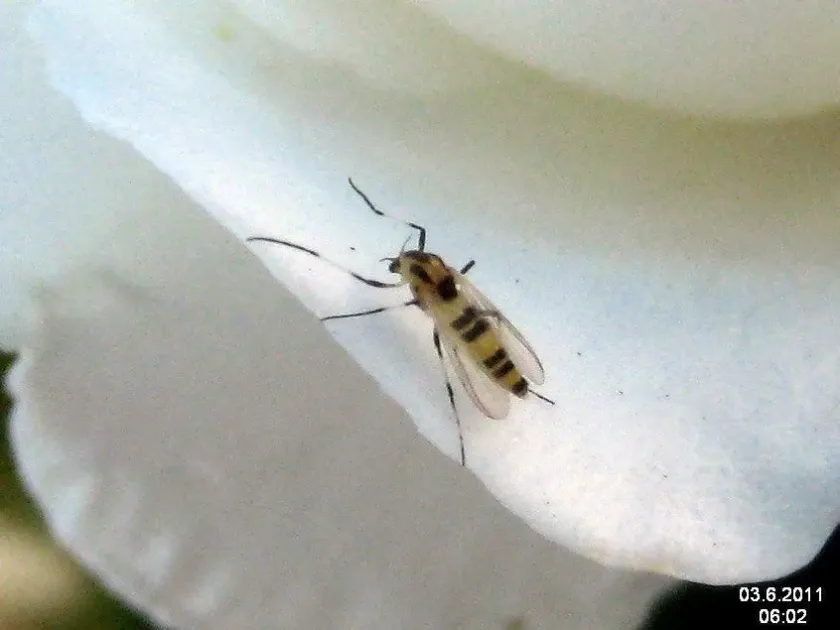
The rose midge (Dasineura rhodophaga) is a small dipteran insect belonging to the Cecidomyiidae family. Adults are delicate, mosquito-like flies measuring about 1.5 to 2 mm in length, often difficult to spot in a garden setting.
The life cycle of the adult midge is very short, primarily focused on mating and laying eggs. Females deposit their eggs deep within the folded sepals of rose buds or near the tips of succulent new shoots.
The larvae are the destructive stage of the pest. These are tiny, legless, creamy-white or yellowish maggots that feed gregariously within the plant tissues, protected from external environmental factors.
Once mature, the larvae drop from the plant to the soil to pupate. They remain in the soil until the next generation emerges, effectively bridging the life cycle during the growing season.
Depending on environmental conditions, this pest can complete several overlapping generations within a single season, allowing populations to escalate rapidly if left unchecked.
What it damages
Rose midges are highly host-specific, primarily attacking various cultivars of garden roses. They show a strong preference for tender, developing tissues where they can easily access plant juices.
Feeding larvae cause severe damage to buds. Infested buds often fail to open properly, or they emerge twisted, deformed, and brown. In many cases, the buds simply wither and fall off prematurely.
New, developing shoots are also targeted. When larvae feed on the growing tip, the shoot becomes stunted, curls, and eventually blackens and dies, halting the plant's vertical growth.
The cumulative damage leads to a significant reduction in the plant's decorative value, effectively ending the blooming season for the affected rose bushes.
In addition to direct feeding damage, the wounds created by the larvae provide entry points for secondary infections like botrytis (gray mold), which further compromises the health of the rose bush.
When it appears
The activity of the rose midge begins in late spring, generally coinciding with the development of the first buds on rose plants. Monitoring should start as soon as buds begin to form.
The peak activity period occurs throughout the summer months, particularly during warm and humid weather conditions, which accelerate the larval development cycle.
Since generations overlap, the pest is present throughout the entire blooming season, requiring persistent monitoring and management from late May through late summer.
By late autumn, as temperatures drop, the larvae move into the soil to overwinter as pupae, emerging only when the next spring brings favorable temperatures.
Frequency of generations is influenced by climate; in warmer regions, the pest may remain active for a longer duration, leading to greater potential damage to late-blooming rose varieties.
Signs of infestation
A classic sign of infestation is the ‘burnt’ appearance of the edges of the sepals or petals on unopened buds, which turn black or brown and become brittle.
Closer inspection of a damaged bud will reveal a cluster of small, whitish maggots feeding deep within the flower's reproductive organs.
On infested shoots, you will notice a characteristic ‘hooking’ or twisting of the stem tip, often accompanied by the yellowing and necrosis of the new leaves.
A lack of blooms on an otherwise healthy-looking plant, combined with stunted shoot tips, is a strong indicator of rose midge presence.
- Deformed, blackened, or stunted rose buds.
- Premature abscission (dropping) of developing buds.
- Twisted and dying tips of new rose shoots.
- Presence of tiny larvae inside buds during physical inspection.
Control measures
Rigorous sanitation is the primary control method. All infested buds and shoots must be pruned and disposed of immediately to remove larvae before they drop to the soil to pupate.
Cultivation of the soil surface under rose bushes can help disrupt the pupation process, as it exposes the pupae to predators and environmental stress.
Applying a layer of landscape fabric or mulch under the bushes can act as a physical barrier to prevent emerging adults from reaching the plant or to trap larvae trying to enter the soil.
In cases of severe infestation, systemic insecticides are recommended. These products must be applied carefully to ensure they are absorbed by the plant, as larvae feed internally and are sheltered from contact sprays.
Maintaining strong plant health through proper fertilization and watering helps roses withstand light infestations, though proactive scouting and rapid removal of damaged parts remain the most effective management strategy.
Taxonomy
- Latin name
- Dasineura rhodophaga
- Order
- Diptera (flies)
- Family
- Cecidomyiidae
- EPPO code
- DASYRH
Discussion
No discussions yet — be the first.