
Pear leaf midge
Dasineura pyri
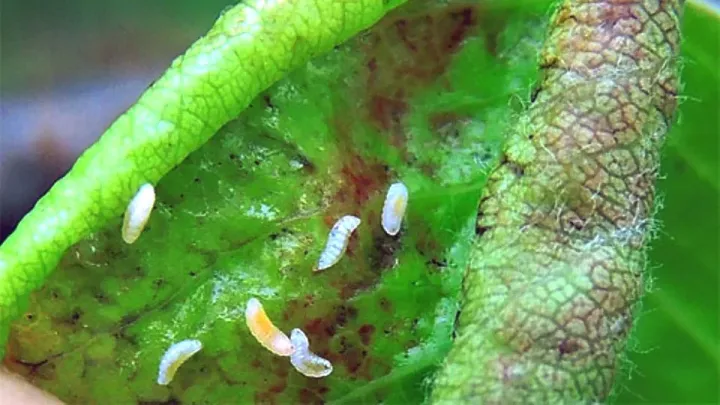
Description
How to identify
The pear leaf midge (Dasineura pyri) is a small insect belonging to the Cecidomyiidae family (gall midges) within the order Diptera, known for causing specific leaf damage.
Adult midges are extremely small, measuring about 2 mm, with delicate wings and a dark body, often going unnoticed by orchardists during routine inspections.
The larvae are small, legless, and typically yellowish-white in color, residing inside the protective galls they induce on the host plant's leaves.
The life cycle involves several generations per year, with the emergence of adults highly synchronized with the spring phenology of pear trees.
Overwintering occurs as mature larvae or pupae within silken cocoons located in the soil or under leaf litter, waiting for favorable spring temperatures.
What it damages
The primary host for this pest is the pear tree (Pyrus species), with young trees in nurseries and intensive orchards being the most susceptible targets.
Feeding occurs on the youngest, unfolding leaves at the tips of shoots, where larvae inject substances that induce leaf rolling and tissue distortion.
Damage results in stunted shoot growth, which is particularly detrimental to young trees that require vigorous development to establish their structure.
The galls prevent normal leaf expansion and photosynthesis, leading to reduced overall tree health and potential loss of yield in bearing trees.
In severe infestations, the cumulative damage can lead to premature leaf drop and increased vulnerability of the tree to winter frost or secondary diseases.
Signs of infestation
The hallmark sign of infestation is the tightly rolled leaves along the midrib, forming characteristic tube-like structures at the terminals of pear shoots.
Initially, these rolled leaves may appear yellowish or light green, but as the larvae feed, the tissue turns brown, necrotic, or develops reddish hues.
Inside the rolled leaves, the presence of numerous small, yellowish larvae confirms a Dasineura pyri infestation, often accompanied by moist, damaged leaf tissue.
In late spring and early summer, the presence of stunted and curled terminal shoots is a clear indicator that the midge population is actively feeding.
Failure to observe the early stages of curling often leads to a rapid increase in population, as the lifecycle is short and multiple overlapping generations may occur.
Control measures
Cultural control is a cornerstone of management, involving the prompt removal and disposal of infested shoot tips during the early stages of gall development.
Maintaining clean orchard floors by removing fallen leaves and lightly tilling the soil under the canopy can disrupt the pupation and emergence cycle of the midges.
Chemical control is effective when timed correctly, focusing on systemic insecticides applied just before egg-laying or when larvae are newly emerged.
Orchardists should monitor the emergence of adults using sticky traps to determine the precise timing for intervention and minimize the need for broad-spectrum spraying.
- Pruning infested shoots early in the season.
- Monitoring adult flight periods with traps.
- Encouraging natural predators like lacewings and parasitic wasps.
Taxonomy
- Latin name
- Dasineura pyri
- Order
- Diptera (flies)
- Family
- Cecidomyiidae
- EPPO code
- DASYPY
Discussion
No discussions yet — be the first.