
Blackberry leaf midge
Dasineura plicatrix
Description
How to identify
The blackberry leaf midge (Dasineura plicatrix) is a small dipteran insect belonging to the family Cecidomyiidae. Adult midges are tiny, fragile flies typically measuring about 1.5 to 2 mm in length with delicate, dark bodies.
The larval stage is the primary cause of concern for growers. These larvae are small, legless, and translucent-white or pale yellow, living protected within the curled leaf tissues of the host plant throughout their developmental cycle.
What it damages
This pest specifically targets blackberry plants (Rubus spp.) and can also impact raspberries grown in the vicinity. The larvae concentrate on the tender, expanding foliage of the growing shoot tips.
Damage to the leaves disrupts photosynthesis, leading to reduced plant vigor and stunted growth of the shoots. Severe infestations can significantly lower the overall yield and reduce the plant's ability to survive harsh winter conditions.
When it appears
The life cycle is closely synchronized with the growth phases of blackberry plants. Adult emergence typically begins in late spring when temperatures are conducive to flight and mating.
Multiple generations can occur throughout the growing season, with peak activity often observed from late spring through mid-summer. Consequently, the threat persists for several months, necessitating ongoing monitoring of the plantation.
Signs of infestation
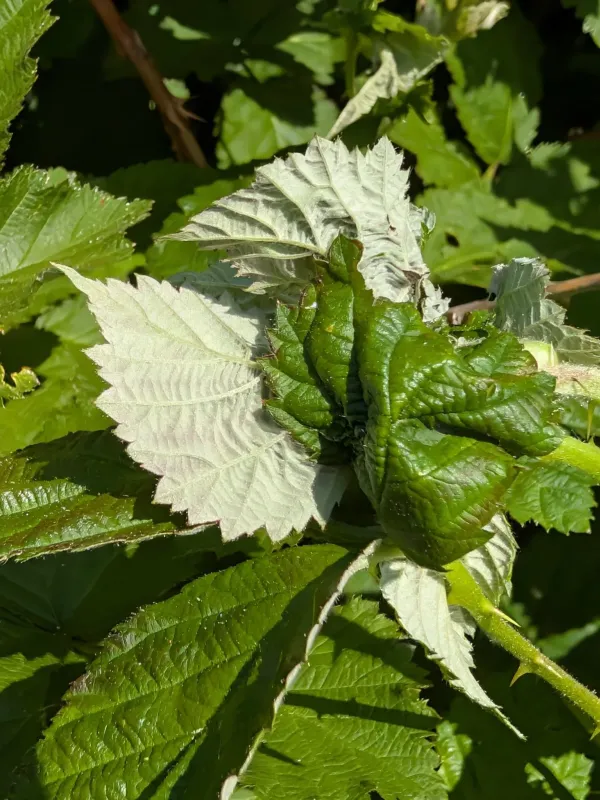
The most distinctive symptom of infestation is the curling and distortion of the leaves. As larvae feed on the leaf margins, the tissues thicken and curl inward, creating a protective roll or fold.
Inspecting the underside of these rolled margins reveals the presence of tiny, pale larvae. Over time, affected leaf margins may become necrotic, turning brown or black, and the entire leaf may eventually wither and drop prematurely.
Control measures
Effective management requires an integrated approach that focuses on both physical sanitation and the judicious use of chemical treatments. Early detection is crucial to preventing the midge from spreading across the field.
- Prompt removal and destruction of infested tips to reduce the local midge population.
- Monitoring the plantation during the flushing of new leaves in the spring.
- Application of approved systemic insecticides when larvae are active and visible.
- Maintenance of balanced soil fertility to ensure rapid shoot recovery after damage.
- Encouraging natural predators and parasitoids that help regulate midge populations.
Taxonomy
- Latin name
- Dasineura plicatrix
- Order
- Diptera (flies)
- Family
- Cecidomyiidae
- EPPO code
- DASYPL
Discussion
No discussions yet — be the first.