
Cranberry tipworm
Dasineura oxycoccana
Description
How to identify
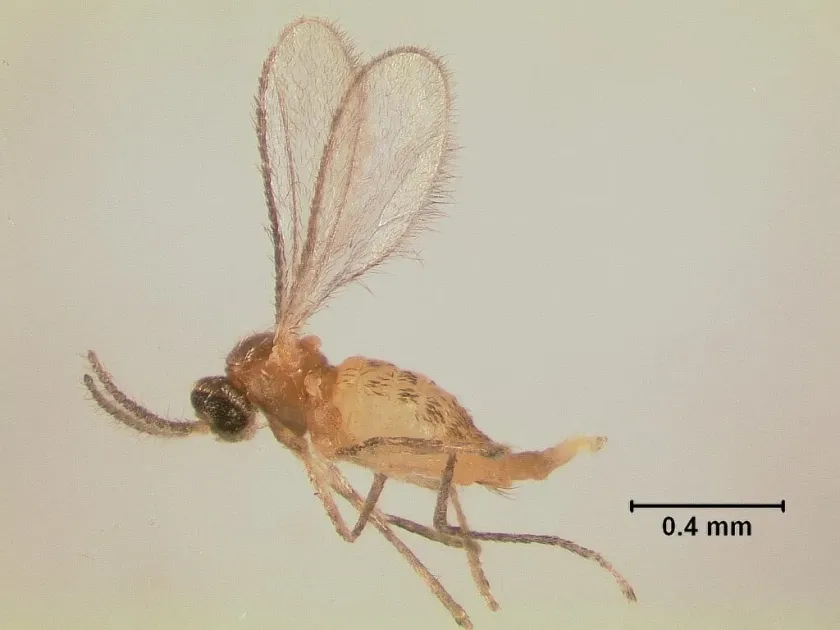
The Cranberry tipworm (Dasineura oxycoccana) is a member of the Diptera order and the Cecidomyiidae family. These tiny midges are characterized by their fragile appearance and small size, measuring just a few millimeters.
The adult midge is rarely seen by growers due to its secretive nature, but the larval stage is responsible for significant economic losses in berry production.
The larvae are legless, ranging from white to bright orange as they mature, which makes them easier to spot when inspecting the damaged tissue of the host plant.
This pest is highly prolific, completing multiple generations throughout the growing season, which allows the population to explode if weather conditions are favorable.
Overwintering occurs in the pupal stage within the soil profile, ensuring that the pest is ready to emerge as soon as temperatures rise in the spring.
What it damages
The Cranberry tipworm primarily attacks plants in the Ericaceae family, with cranberries and blueberries being the most economically important targets.
The larvae feed on the apical meristem of the new shoots, which causes the developing leaves to curl and fail to expand properly, effectively killing the terminal bud.
This feeding damage results in stunted shoot growth, forcing the plant to divert energy into lateral branches that are often less productive than the original leader stem.
In high-pressure years, the tipworm can cause extensive damage, leading to significant yield reductions by destroying the flower buds that develop on the terminals.
Beyond direct growth inhibition, the wound sites caused by larvae can invite secondary infections, further weakening the overall health of the blueberry or cranberry bushes.
Signs of infestation
The most distinctive symptom of infestation is the curling and reddening of the terminal leaves, which fold over to form a tight, protective shell around the feeding larvae.
Growers should monitor for these "rosette" or "cupped" leaf structures on the tips of new shoots, as these are tell-tale indicators of tipworm presence.
When these folded leaves are carefully pulled apart, the orange-colored larvae can usually be found inside, actively feeding on the internal tissues.
A sudden lack of vertical growth on new shoots during the mid-summer period is a clear sign that the apical buds have been compromised by this pest.
- Curled, reddened terminal leaves.
- Rosette-like structures at shoot tips.
- Stunted or stopped apical growth.
- Presence of orange larvae within leaves.
- Browning and eventual death of shoot tips.
Control measures
Effective management begins with monitoring populations using pheromone traps to pinpoint the exact timing of adult emergence and peak activity.
Cultural practices, such as removing infested shoot tips during the early stages of an outbreak, can help lower the larval population and reduce future damage.
Timing insecticide applications is critical; treatments should target the adult phase or newly hatched larvae before they manage to encase themselves within the protective leaf folds.
Maintaining optimal plant health through balanced fertilization and irrigation helps the bushes recover more quickly from larval feeding damage and secondary stress.
Integrated pest management (IPM) strategies, including the promotion of natural predators and the use of targeted biological controls, are highly recommended to keep populations below economic thresholds.
Taxonomy
- Latin name
- Dasineura oxycoccana
- Order
- Diptera (flies)
- Family
- Cecidomyiidae
- EPPO code
- DASYVA
Discussion
No discussions yet — be the first.