
Japanese gall midge
Dasineura nipponica
Description
How to identify
The Japanese gall midge (Dasineura nipponica) belongs to the order Diptera, family Cecidomyiidae. These are minute insects, with adults typically measuring only 2–3 mm in length.
The adults have fragile bodies, transparent wings with simplified venation, and long antennae. Their coloration usually ranges from yellowish-brown to nearly black, making them difficult to spot against the foliage.
The primary damage is caused by the larval stage of the gall midge. The larvae are tiny, legless, and often display a bright orange or yellowish hue, developing entirely within the host plant tissue.
Precise identification of the species requires microscopic examination of the larval structure and male genitalia, as many Cecidomyiidae species appear very similar to the naked eye.
The life cycle of this insect is closely linked to the formation of specialized plant growths known as galls, which provide the larvae with both protection and food.
What it damages
The primary host plants for this species are members of the Verbenaceae family, specifically the Callicarpa genus, commonly grown as decorative shrubs.
The pest targets young leaves and growing points, leading to significant physiological disruptions in the development of ornamental plants.
As the larvae feed on plant sap, they induce pathological tissue growth, resulting in the characteristic leaf galls that define this pest's presence.
Heavy infestations can lead to a total loss of the plant's aesthetic value, as well as stunted shoot growth and a decline in the plant's overall vigor.
In nurseries and public parks, this pest can cause substantial economic losses by degrading the quality and marketability of the stock.
When it appears
The activity of the pest is directly influenced by regional climatic conditions and the phenology of the host plant.
Adult emergence typically coincides with the active unfolding of young leaves on the shrubs, which provides the larvae with an ideal nutritional base.
The development of multiple generations per season is characteristic of this species in temperate and subtropical climates.
The pest typically overwinters in the larval stage, residing within fallen galls or in the top layer of the soil beneath the host plant.
Pupation occurs in the spring, followed by the emergence of adults, which then mate and lay eggs within the tissues of the developing buds.
Signs of infestation
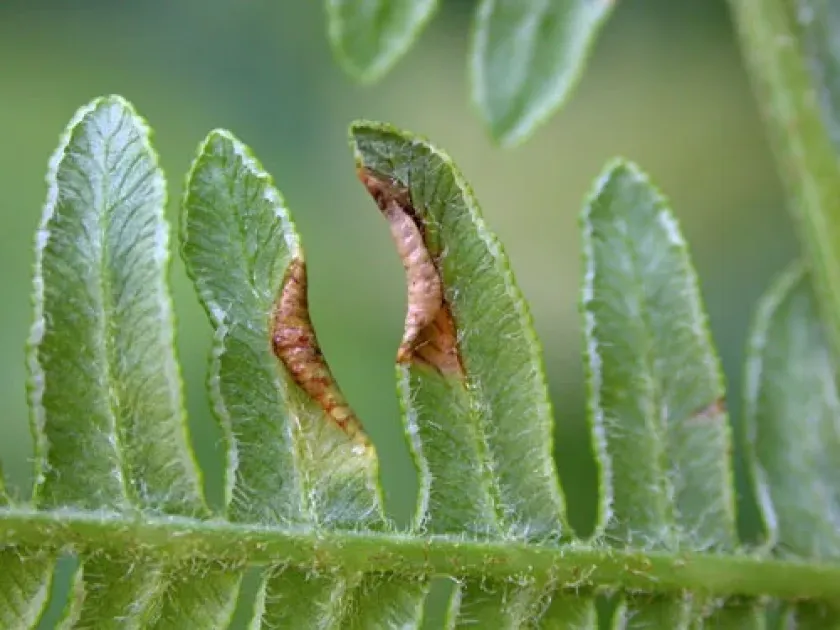
The most prominent sign of infestation is the emergence of characteristic swellings or deformed areas on the leaf blades.
Affected leaves often curl, turn pale or yellowish, and frequently drop prematurely from the host shrub.
Inside the swellings (galls), a careful inspection will reveal colonies of tiny orange larvae, which are responsible for the pathological process.
While early-stage galls may be subtle, they thicken as the larvae grow, eventually forming dense and clearly visible plant growths.
Indirect symptoms include distorted shoots that stop growing in length and appear significantly weaker compared to healthy plants.
Control measures
Effective management requires an integrated strategy that combines cultural, mechanical, and chemical control methods.
Mechanical removal and destruction of fallen leaves and infested shoots in autumn are critical for reducing the next generation's population.
Systemic insecticides applied during the peak adult emergence window are highly effective, as the active ingredients are absorbed into the plant tissue.
Biological control, such as the introduction of natural predators or parasitoids, may be viable in greenhouse or controlled settings.
- Regular monitoring of shrub health.
- Timely sanitary pruning of affected branches.
- Application of approved insecticides as per local guidelines.
- Efficient disposal of infested plant debris.
Taxonomy
- Latin name
- Dasineura nipponica
- Order
- Diptera (flies)
- Family
- Cecidomyiidae
- EPPO code
- DASYNI
Discussion
No discussions yet — be the first.