
Apple leaf midge
Dasineura mali
Description
How to identify
The apple leaf midge Dasineura mali is a species of dipteran insect belonging to the Cecidomyiidae family. Adult midges are small, measuring about 2 mm in length, with a delicate appearance and transparent wings.
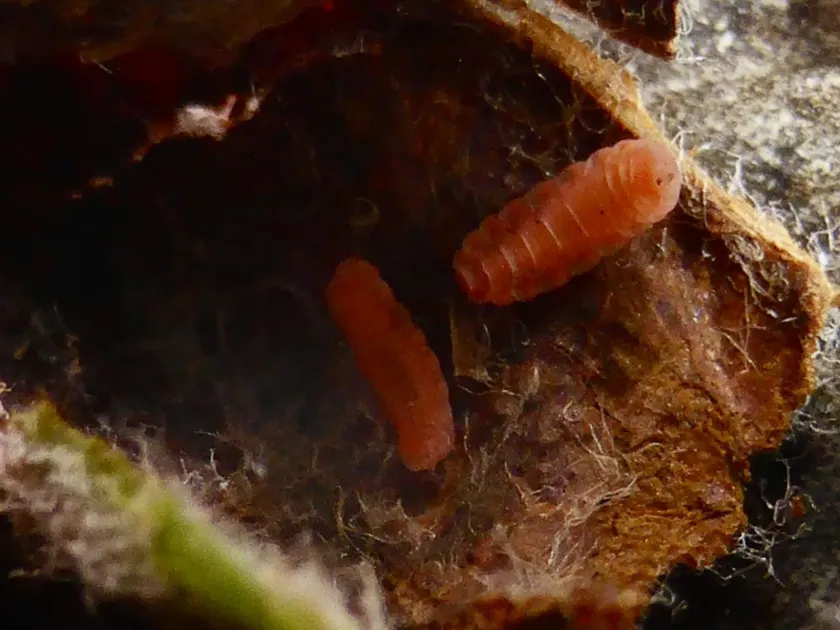
The larvae are the primary stage causing damage. They are initially white, transitioning to a distinct bright orange or reddish color as they grow, making them easy to spot within the leaf rolls.
The life cycle consists of four stages: egg, larva, pupa, and adult. They overwinter as pupae within protective cocoons in the soil surface or under leaf litter beneath the canopy of apple trees.
Adult emergence occurs in early spring, synchronized with the bud break of apple trees. Females deposit their eggs into the folds of newly emerging terminal leaves.
There are typically three to four overlapping generations per growing season, which allows the population to build up rapidly if conditions are favorable for their development.
What it damages
The primary host for Dasineura mali is the apple tree Malus domestica. It is a particularly significant pest in nurseries and young orchards where rapid growth is desired.
Larvae feed on the sap of young, developing leaves, causing the edges of the leaf blades to curl tightly toward the midrib, forming characteristic galls or rolls.
This feeding damage stunts the growth of terminal shoots. For young trees, this can significantly delay development and reduce the overall structural integrity of the canopy.
Persistent infestations lead to necrosis of the curled leaves, which eventually dry up and fall off, causing the tree to expend energy on new foliage instead of growth or fruit production.
In heavy infestations, the loss of photosynthetic area and shoot dieback can weaken the tree significantly, making it more susceptible to environmental stressors.
Signs of infestation
The most diagnostic sign of an infestation is the inward curling of young leaf margins, which creates tight, tube-like rolls along the leaf edges.
These curled sections often turn reddish-brown or necrotic over time. When unrolled, the presence of numerous small, orange-colored larvae inside the roll confirms the presence of the midge.
Affected terminal shoots become distorted and stop growing properly. The terminal leaves are the most susceptible, while fully expanded older leaves remain largely unaffected.
The infestation is typically localized at the tips of the shoots, which helps differentiate it from diseases like powdery mildew or aphid damage.
- Tightly curled margins on young terminal leaves.
- Reddish discoloration of the affected leaf edges.
- Presence of small orange larvae within the leaf rolls.
- Stunted shoot growth and distorted leaves.
- Early leaf senescence and drop in heavily infested areas.
Control measures
Cultural control is the first line of defense. Cultivating the soil under the trees in late autumn or early spring can expose and destroy overwintering pupae.
Mechanical removal is effective in smaller settings; hand-picking and destroying infested terminal shoots during the early stages of the season can significantly reduce the next generation's population.
Chemical control should be targeted based on the emergence of adults and egg-laying periods. Systemic insecticides are generally the most effective way to reach larvae hidden within the rolled leaves.
Encouraging natural biological control is essential. Predatory insects such as anthocorid bugs and various parasitic wasps often play a key role in suppressing midge populations.
Orchard management should include monitoring programs using yellow sticky traps to detect adult flight patterns, allowing for precise timing of any necessary intervention.
Taxonomy
- Latin name
- Dasineura mali
- Order
- Diptera (flies)
- Family
- Cecidomyiidae
- EPPO code
- DASYMA
Discussion
No discussions yet — be the first.